The Independent Electoral and Boundaries Commission (IEBC) is tapping scientific data from the National Registration Bureau (NRB) and immigration services to set its voter registration targets ahead of the 2027 General Election, shifting away from the traditional census-based model.
IEBC commissioner Anne Nderitu says the shift has been informed by the fact that relying on census data to set voter registration targets “has proven inaccurate, unsustainable and not veritable.”
“We are using the voter eligibility criteria that is determined by the people who are holding national identity cards or have applied for them,” Ms Nderitu said.
Interestingly, the 6.3 million target was set using the census-based model, which relied on the Voting Age Population (VAP), the model the commission is now abandoning in favour of the “more accurate” NRB and immigration services data based on the Voter Eligible Population (VEP).
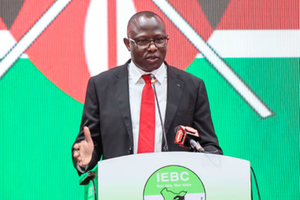
Independent Electoral and Boundaries Commission (IEBC) Commissioner Anne Njeri Nderitu.
Photo credit: Dennis Onsongo | Nation Media Group
The commission had indicated its intention to shift to the new model in a report by the National Assembly Committee on Constitutional Implementation Oversight (CIOC), which was adopted by the House.
“The commission noted that it is shifting its target setting from VAP to VEP, which pays attention to the actual number of citizens who possess the requisite registration documents,” the CIOC report says.
Article 83 of the Constitution provides for the qualifications for voter registration, with the legal requirement being possession of a national identity card or a valid Kenyan passport.
If the commission achieves its target of registering 6.3 million new voters, the number of registered voters for the 2027 General Election will rise to 28.4 million, up from the 22.1 million who were eligible to vote in the August 9, 2022 General Election.
“The commission observed that the VEP model utilises data from NRB and immigration services, thereby narrowing the target setting on disaggregated identity cards and passports issued,” the CIOC report reads.
The report adds that “this actual national identity card/passport data-driven targeting approach ensures that resources are deployed efficiently and performance benchmarks are realistic and attainable.”
An Independent Electoral and Boundaries Commission (IEBC) staff register a new voter at the Nakuru-East registration office on March 31, 2026.
Photo credit: Boniface Mwangi | Nation
The commission has been using census data to estimate the eligible population and set voter registration targets by calculating the number of people who would have attained the voting age of 18 by the time of the General Election.
However, the CIOC report notes that census data includes people who are ineligible to register as voters.
These include non-citizens, undocumented citizens and refugees, “leading to target inflation that does not disaggregate data based on legal eligibility.”
On voter registration modalities, Ms Nderitu said that to achieve the target and ensure that “no Kenyan is disenfranchised”, the commission intends to adopt “several strategies”, including continuous voter registration at each of the 290 IEBC constituency offices.
Other strategies include the use of Huduma Centres as registration centres, ward-based enhanced registration drives, continuous voter registration in institutions of higher learning and registration of Kenyan citizens residing outside the country as voters.
The IEBC constituency offices serve as service points for voter registration and updating of voter particulars, allowing first-time voters to register at any time after obtaining a national identity card or passport.
“Registered voters can update or correct their information, while those who lost eligibility either by death, conviction or renouncing of citizenship can be purged through [a] formal process,” the CIOC report says.
The 290 IEBC constituency offices have been allocated additional voter registration kits to facilitate registration across the country, including allowing voters to choose their preferred voting area.
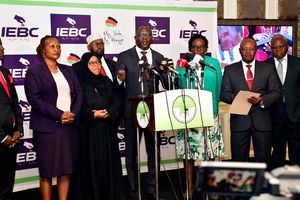
The Independent Electoral and Boundaries Commission (IEBC) Chairperson Erastus Edung Ethekon (center, podium) briefs the media on April 30, 2026, on the completion of the Enhanced Continuous Voter Registration (ECVR). With him are fellow IEBC Commissioners.
Photo credit: Francis Nderitu| Nation Media Group
On August 28, 2025, IEBC chairman Erastus Ethekon gazetted September 29, 2025 as the date for the resumption of continuous voter registration, allowing eligible Kenyans to register, transfer their registration, correct voter details or inspect their records at any of the 290 IEBC constituency offices across the country.
Nonetheless, the commission notes that, based on past experience, continuous voter registration, especially at the constituency level, “has proved to be unfruitful”.
It has therefore set its sights on the Enhanced Ward-based Continuous Voter Registration (ECVR) exercise.
“As a strategy to address this challenge, the commission intends to conduct ECVR and update the register of voters to improve the comprehensiveness of the register,” the IEBC says, noting that the strategy is aimed at achieving greater geographic and demographic representation in the voters’ register.