In a strategic push to unseat President William Ruto in 2027, former Deputy President Rigathi Gachagua has revealed that the united Opposition is crafting a formidable alliance to make Ruto a one-term president.
Multiple sources within the coalition’s technical committee disclosed that the unity talks have already produced at least five potential power-sharing scenarios.
Speaking from the United States, where he is on a month-long tour, Mr Gachagua—who has branded himself as one of the front-runners for the opposition coalition’s presidential ticket—noted, “Government is huge and there is space for everybody.”
“We will agree on who takes what position, provided we create a formula that guarantees good governance and eliminates corruption, killings and abductions. That is non-negotiable,” said Mr Gachagua, who held talks with former Interior Cabinet Secretary Dr Fred Matiang’i in the US on Saturday.
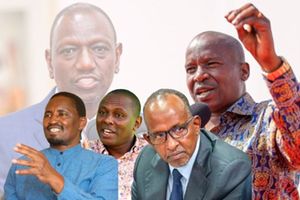
Mr Gachagua and Dr Matiang’i are among the key opposition luminaries—alongside Wiper leader Kalonzo Musyoka , People’s Liberation Party (PLP) chief Martha Karua , DAP-K’s Eugene Wamalwa and Justin Muturi —working to develop a framework to oust President Ruto.
Nation has established that the coalition’s technical committee has developed five power-sharing models to present to the principals.
These scenarios revolve around three top positions of President, Deputy President and Prime Minister, with additional roles—such as Senate and National Assembly Speaker—earmarked for senior figures who miss out on the top-tier slots.
Although the position of Prime Minister does not currently exist in the Constitution, the technical team intends to recommend constitutional changes to reintroduce the post after the 2027 elections.
In 2022, President Ruto created the position of Prime Cabinet Secretary (PCS)—currently held by Musalia Mudavadi —as part of his power-sharing arrangement after the Kenya Kwanza victory.
Ms Karua said the coalition’s technical team is still exploring options for 2027 and warned against premature speculation on flag bearers or line-ups not yet agreed upon by the principals.
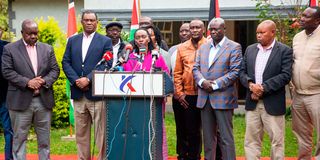
Opposition leaders (from left) Kalonzo Musyoka, Fred Matiang’i and Rigathi Gachagua address the media in Kisumu on July 3, 2025.
Photo credit: Alex Odhiambo | Nation Media Group
Speaking during NTV’s Fixing the Nation programme last Wednesday, Ms Karua cautioned against internal leaks and urged coalition members to respect the process.
“I want to caution those among our ranks to stop leaking proposals that have not been endorsed. If our principals have not debated or agreed on a line-up, it’s not official. Let’s avoid assigning people positions prematurely and allow the process to proceed,” she said.
DAP-K leader Eugene Wamalwa, one of the coalition principals, emphasised that the unity talks are still at an early stage. He stressed that no decision has been made on who will fly the presidential flag in 2027.
“The coalition technical committee is still at work. We are identifying possible scenarios. Coalition-building is a process, not an event. We have not arrived at a candidate. Our priority is to address underlying issues before making any announcements.”
The former Defence CS underlined the need for trust-building and alignment on policy priorities, urging patience from Kenyans.
“We have not settled on anyone yet. The only consensus is that Ruto must be a one-term president. As for his replacement—that is yet to be decided,” he said.
“But most Kenyans don’t even care who replaces him, as long as he leaves. What matters is ending his term in 2027,”said Mr Gachagua, who leads the Democracy for the Citizens Party (DCP).
The Nation has however, established that at least five potential line-ups have already been crafted.
The coalition is also set to conduct a SWOT (Strengths, Weaknesses, Opportunities and Threats) analysis of all potential presidential candidates to guide the selection process.
“It’s not just about popularity or seniority. We are assessing each candidate’s national appeal, baggage and ability to consolidate support,” a source within the technical team told Nation.
The process will also account for regional dynamics, historical performance and the ability to challenge Dr Ruto’s re-election campaign.
The first scenario is where Wiper’s Kalonzo Musyoka is the presidential candidate, with Fred Matiang’i, Eugene Wamalwa, or George Natembeya as possible running mates. In this proposal, Mr Gachagua is designated as Prime Minister.
Scenario 2 has Dr Matiang’i as the flag bearer, with Musyoka, Karua, or Muturi as running mates. Mr Gachagua, Mr Wamalwa, and Mr Natembeya are floated as potential Prime Ministers.
In the third possible scenario, Mr Gachagua is the presidential candidate, subject to court clearance following his October 2024 impeachment as deputy president. His running mate could be Mr Wamalwa, Dr Matiang’i, or Mr Natembeya, while Mr Musyoka would be Prime Minister.
Scenario four has Karua is the candidate, with Matiang’i, Wamalwa, or Natembeya as running mates. Musyoka is proposed as Prime Minister.
Scenario 5: Wamalwa is the flag bearer, with Kalonzo, Karua, or Muturi as running mates. Mr Gachagua and Dr Matiang’i are being floated for the premiership.
Opposition leaders (from left): George Natembeya, Justin Muturi, Fred Matiang’i, Rigathi Gachagua, Kalonzo Musyoka, and Eugene Wamalwa in Kisumu on July 3, 2025.
Photo credit: Alex Odhiambo | Nation Media Group
The final decision will be made by the principals, with the technical team proposing that all unsuccessful contenders sign formal declarations endorsing the chosen candidate to avoid internal betrayal.
The entry of former Dr Matiang’i and ex-CS Mukhisa Kituyi is expected to boost the coalition’s appeal among reform-minded voters and the Gen Z movement.
A source revealed that proposed names for the new coalition have already been submitted to the Office of the Registrar of Political Parties (ORPP).
“Our team is also working on an electoral strategy, a master plan that will ensure we field candidates from the president to the MCA level across the country and is developing a people-centred and reform-driven manifesto.”
He disclosed that the team is also keen on developing a proper conflict resolution mechanism to avert past mistakes of 2007, 2013, and 2022 polls, as well as putting in place an appropriate resource mobilisation framework for campaign sustainability.
Mr Gachagua accused President Ruto of attempting to divide the opposition by sowing discord among its leaders.
He urged Kenyans to remain patient until December 2026, when the coalition will unveil its candidate and power-sharing formula.
“We are patriotic and committed to doing the right thing for Kenya. We will delay the unveiling to prevent interference,” he said.
President Ruto has dismissed the opposition’s one-term agenda, saying they lack a real plan for the country.
“We won’t be distracted. If we listen to them, we won’t implement critical programmes like affordable housing or SHA,” the president said on Thursday.
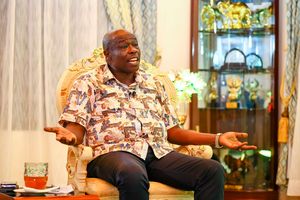
“It’s not about one or two terms. The real question is—who decides? It is the people at the ballot,” Mr Odinga said in an interview with Nation last Friday.
Despite the differing voices, the opposition remains bullish, vowing to deny Dr Ruto a second term and promising to field joint candidates in all upcoming by-elections under a negotiated democracy framework.
As the 2027 race looms, analysts say the united opposition must overcome both the strength of the Kenya Kwanza administration and its own internal contradictions.
“While the vision of a united front is taking shape, the battle over who should lead—and how—is far from settled,” said Advocate Chris Omore.
“With time running out, the opposition’s success will depend on more than slogans and scenarios. Managing egos, regional ambitions, and ideological rifts before December 2026 will be key.”