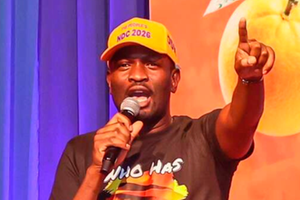
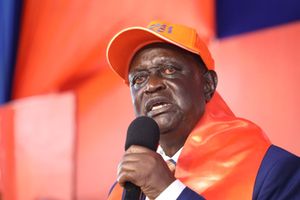
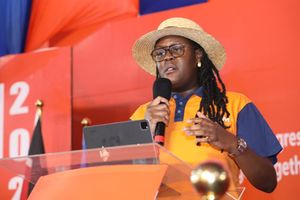
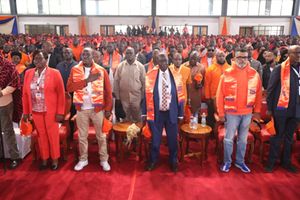
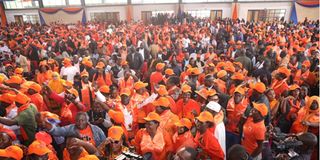
ODM supporters during the Orange Democratic Movement (ODM) Special Delegates Convention at the ASK Dome, Jamhuri Expo Centre in Nairobi on Friday, March 27.
The Orange Democratic Movement (ODM), the party formed by Raila Odinga in 2005 and which has been central to Kenya’s politics and five presidential elections over two decades, on Friday staged two parallel political theatres in Nairobi: one choreographed, procedural and steeped in institutional continuity at Jamhuri Grounds; the other defiant, chaotic and symbolically rooted in resistance at Ufungamano House, laying bare a party at a crossroads over both leadership and identity.
At Jamhuri Grounds, the orange wave still rolled in with familiar force. Delegates streamed in from across the country, ferried in buses and clad in party colours, as the Special Delegates Convention (SDC) unfolded with precision.
Yet, for the first time since its formation, ODM convened without Raila Odinga at the centre—an absence that hung heavily over the proceedings and turned what might have been routine into a quiet test of the party’s ability to function beyond its founding figure.
From the outset, the event projected order. By mid-morning, the grounds had transformed into a sea of orange, with party officials moving through tightly managed sequences: adoption of the agenda, ratification of resolutions and affirmation of a new leadership structure. Outside the gates, traders cashed in briskly, hawking party merchandise.
Security was visibly heightened. Police officers stood on alert, some mounted on horses, scanning the swelling crowd. Inside, MPs, governors, senators, MCAs and senior party figures arrived with security details in tow, occasionally causing bottlenecks as aides cleared paths through tightly packed delegates.
“It feels different, but the spirit is still here,” said a delegate from Kisumu, Mr Ojwang’ Ogendo.
Dr Oburu Oginga’s emergence as Party Leader was met with chants of “power! power! power!”, a carefully staged moment meant to signal continuity even as the party transitions into an uncertain post-Raila era.
By midday, it was clear the event had become a day of quiet but decisive political pruning. The apparent axing of some figures underscored shifting loyalties and the reconfiguration of power.
In a symbolic ceremony, Dr Oginga was handed the ODM Constitution and the Constitution of Kenya by Kilifi Senator Steward Madzayo, conferring legitimacy and continuity. Former Secretary-General Ababu Namwamba was briefly recognised, while Winnie Odinga’s appearance reinforced family presence, even as underlying tensions persisted.
At the historic Ufungamano House—synonymous with Kenya’s second liberation—a rival faction gathered under police resistance, framing its meeting as a continuation of dissent.
What began as a blocked gathering quickly turned into a charged spectacle, with youth pushing past police cordons after Siaya Governor James Orengo arrived.
Inside, chants erupted as leaders insisted they were the legitimate custodians of ODM. Raila Odinga’s legacy loomed large, invoked repeatedly as both tribute and rallying cry. As Secretary-General Edwin Sifuna spoke, tensions flared again when police attempted to halt the meeting, prompting resistance from supporters and leaders, including Embakasi East MP Babu Owino.
Governor Orengo described Ufungamano as the cradle of democratic struggle. “This hall is where the fight for multiparty democracy started,” he said. “We cannot allow one man to take away what Kenyans fought for.”
At times, the mood turned reflective, with speakers recalling moments with Raila.
Suba South MP Caroli Omondi described the meeting as solemn, accusing rivals of betraying the party’s founding ideals.
While the Jamhuri convention projected order and finality, the Ufungamano gathering challenged its legitimacy, insisting leadership must be determined through an open, constitutional process.
Follow our WhatsApp channel for breaking news updates and more stories like this.