The Azimio la Umoja One Kenya coalition party council yesterday ratified a major restructuring by bringing three new members aboard and initiating talks with the Democracy for Citizens Party (DCP) of Rigathi Gachagua and Linda Mwananchi of Nairobi Senator Edwin Sifuna.
The meeting, chaired by former President Uhuru Kenyatta , resolved to rebrand the coalition and bring together all the opposition parties under one umbrella before settling on a single candidate to face President William Ruto on August 10, 2027. Azimio coalition sponsored former Prime Minister Raila Odinga in the 2022 contest against Dr Ruto.
In the restructuring, the coalition admitted Jubilee presidential aspirant Fred Matiang’i, Party of National Unity leader Peter Munya and Devolution Empowerment Party leader Lenny Kivuti as new council members. The council is the top decision-making organ with representatives from the affiliate parties.
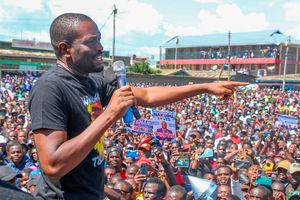
Linda Mwananchi rally: Nairobi Senator Edwin Sifuna (right), Trans Nzoia County Governor George Natembeya (left), Siaya County Governor James Orengo and Embakasi East MP Babu Owino (centre), who are in the Linda Mwananchi team, during a rally at Moi’s Bridge in Uasin Gishu County on July 25, 2026
Photo credit: Jared Nyataya | Nation
The Democratic Party of former National Assembly Speaker Justin Muturi , People’s Democratic Party led by former MP Omingo Magara and Umoja na Maendeleo Party of former Meru Governor Kawira Mwangaza became new Azimio members. The council also readmitted the Democratic Action Party of Kenya of Eugene Wamalwa. The outfit had initiated its exit from the coalition. Narc Kenya of Martha Karua successfully exited the coalition in November 2024. She has since rebranded the party to the People's Liberation Party.
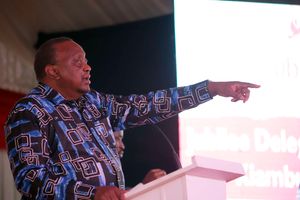
Former President Uhuru Kenyatta.
Photo credit: Bonface Bogita | Nation Media Group
Mr Kenyatta chaired the meeting virtually. Azimio Secretary-General Caroli Omondi – who is also a member of Linda Mwananchi – told the Nation that they plan to initiate talks with Mr Gachagua and Mr Sifuna to join the coalition. The plan by the Uhuru team is to cobble together a political juggernaut to face off with Dr Ruto. “The council resolved to reorganise various organs of the party, as well as to move forward with rebranding of Azimio,” said Mr Omondi, who added the work of rebranding the coalition had since started.
Mr Omondi said the coalition is actively reaching out to Mr Gachagua and former Chief Justice David Maraga. Mr Maraga is the party leader of the United Green Movement. He said Linda Mwananchi is also expected to join once it is registered as a party. “Linda Mwananchi will effectively replace ODM in Azimio,” Mr Omondi said.
He explained that once they have all the new members on board, they will come up with a new name that accommodates all the interests of the partners. He downplayed the role of Mr Kenyatta in the coalition’s grand plan. The former president is perceived to be stepping back into the centre of opposition politics ahead of next year’s election. “It should not be misconstrued that it is Uhuru organising us. He is just discharging his duties as the coalition’s chairperson,” Mr Omondi said.
The thinking behind rebranding Azimio is that Mr Odinga’s supporters can still identify with the coalition at the next election. In the grand scheme of things, Mr Kenyatta and his strategists seek to rebrand Azimio to make it more appealing to the youthful population and new partners. Mr Kenyatta is said to be pulling out all the stops to have one presidential candidate to avoid a repeat of the mistake made by the opposition in 1992 when having multiple opposition candidates consequently handed then-President Daniel Moi a win.
Prof David Monda, a US-based political analyst – says the manoeuvre by Mr Kenyatta all depends on whether other opposition members accept to work within the Azimio coalition. He says the revival of Azimio could be part of the grand plan to have Mr Musyoka as its candidate.
“At a bare minimum, it is Uhuru's effort to bring some type of unified structure around Kenya's fractured opposition. It is becoming clear that Kenyans know whom they will vote against. What is not clear is whom they will vote for,” he adds.
Prof Monda says reviving Azimio makes sense because it elevates Mr Musyoka and forces peripheral opposition power brokers either to play ball or leave Azimio. It also forces ODM factions to decide definitively if they will remain in ODM and Azimio, or jump ship and join Dr Ruto in a marriage with UDA, he says.
“In a sense, Uhuru's move to revive Azimio can be seen as an effort to fast-track the demise of ODM and its constituent parts. The more divided the opposition is, the more they do not offer the electorate a viable and superior option to Ruto and the stronger the incumbent becomes.”
Former Deputy President and DCP leader Rigathi Gachagua (left) Jubilee Party Deputy Leader Fred Matiang’i and Wiper Party leader Kalonzo Musyoka at a past function in Nairobi.
Photo credit: Wilfred Nyangaresi | Nation Media Group
Azimio is pushing for a coalition model inspired by the National Rainbow Coalition (Narc) that swept Mwai Kibaki to power in 2002. Under this arrangement, parties would retain their identities while rallying behind a common presidential candidate and a shared coalition platform.
In 2002, Mr Odinga’s Liberal Democratic Party joined Mr Kibaki’s National Alliance Kenya to form Narc, which fielded candidates in 205 out of 210 constituencies and won 125 of them, with 62 per cent of the presidential vote. However, even as Mr Kenyatta seeks to rally opposition leaders, DCP leader Rigathi Gachagua, widely seen as the de facto opposition chief, has fired a warning shot that has unsettled coalition-building efforts. Addressing supporters on Friday, Mr Gachagua dismissed suggestions that opposition leaders would simply meet and endorse one presidential candidate. “Let everybody market his party,” he said. “Don't imagine an endorsement from us.”
We are struggling day-and-night mobilising the public. Don't imagine that we shall sit somewhere and dish out positions. Never."
For months, opposition leaders have spoken about convening a grand retreat to unite all anti-Ruto formations under one umbrella.
However, the much-publicised United Opposition convention has yet to materialise, exposing the challenge of reconciling competing ambitions among leaders who all see themselves as presidential contenders.
The proposed Narc-like model would allow parties to field candidates under their own banners while cooperating within a larger coalition framework.
Supporters argue that such an arrangement would minimise internal competition while preserving the political identities that party leaders are reluctant to surrender.
"The probability of party leaders folding their parties and joining one united party is almost zero. Political parties give leaders negotiating power and a seat at the table. What is possible is a big-tent coalition where parties retain their identities but cooperate around a common presidential candidate," he said.
"The opposition's greatest challenge is not the coalition's name but whether it can agree on a common vision, governance agenda and decision-making structure," he said. "If Azimio becomes an inclusive umbrella that treats all parties as equal partners, then bringing everyone together is achievable."
Competing interests have in the past turned out to be costly for the opposition. In 1992, efforts to have a united opposition coalition in the multiparty era flopped dramatically, giving then President Daniel Moi another term in office.
The giant Ford that had led the clamour to move Kenya from Kanu’s single-party rule could not front a single candidate to face Mr Moi.
The competing interests in the movement led to the emergence of splinter parties, with Kenneth Matiba forming Ford-Asili and Mr Jaramogi leading Ford-Kenya. Mr Kibaki, another key opposition politician, ran for the presidency on the Democratic Party ticket.
In the end, Moi triumphed. In the presidential elections, Mr Moi garnered 1,927,645 votes against Mr Matiba’s 1,354,856. Mr Kibaki polled 1,035,507 while Mr Oginga got 903,886. The figures show the opposition would have easily floored Mr Moi had they fronted a joint candidate.
It was the same script in 1997 even after the ‘Hilton Agreement’ that indicated that all opposition candidates would renounce their claim to the presidency and consider a joint ticket.
Mr Moi polled 2,500,865 votes, followed by Mr Kibaki (1,911,742), Mr Odinga (667,886), Mr Kijana Wamalwa (505,704) and Ms Charity Ngilu (488,600), among others.
In 2007, a united Orange movement that beat Mr Kibaki in the 2005 referendum split in the run up to the presidential race, handing the incumbent a second term in the contest poll that plunged the country into a deadly post-election violence.
The split saw then Lang’ata MP Raila Odinga part ways with then Mwingi North MP Kalonzo Musyoka. Mr Musyoka led a group of ODM Kenya supporters, mainly from Eastern Province, while Mr Odinga’s camp included fellow ODM presidential aspirants William Ruto, Musalia Mudavadi, Najib Balala and Joseph Nyagah.
Mr Kibaki of PNU won a re-election after polling 4,584,721 votes against Mr Odinga’s 4,352,993 and Mr Musyoka’s 879, 903.