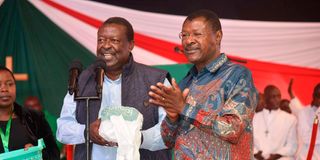
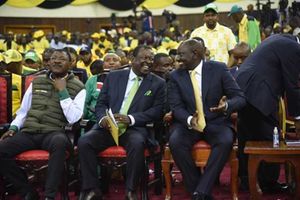
For about two decades, Prime Cabinet Secretary Musalia Mudavadi and National Assembly Speaker Moses Wetang’ula have towered over Western Kenya’s political scene, shaping national alliances and steering the region’s political direction.
The region covers Vihiga, Bungoma, Busia, Kakamega and Trans Nzoia counties.
The two, viewed as the most senior and influential politicians in the Luhya community, have commanded respect for their experience, political acumen and roles in shaping both regional and national governance.
Mr Mudavadi and Mr Wetang’ula assumed leadership of the Mulembe Nation following the death of former Vice President Michael Wamalwa in 2003, and since then they have been seen as the de facto kingpins of the Luhya community.
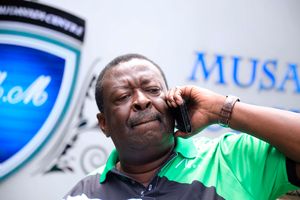
Prime Cabinet Secretary Musalia Mudavadi.
However, the political ground appears to be shifting. To address this, they have planned more grassroots engagement this year, which aims not only to clarify their cooperation with President William Ruto but also to explain why supporting him in the next polls would benefit the region. They hope to highlight government projects currently underway, those in the pipeline, and prominent appointments from the region.
Mr Mudavadi, who first entered Parliament in 1989, has held numerous senior roles, including Vice President, Finance Cabinet Minister and Party Leader of Amani National Congress, the outfit he founded, earning a reputation as a moderate and experienced statesman.
Mr Wetang’ula, a seasoned politician and Ford Kenya party leader, has similarly been influential, leveraging his government roles and partnership with the Foreign Affairs ministry to secure Western Kenya’s place in national politics.
After the 2022 General Election, the duo landed plum positions in the Kenya Kwanza administration, having backed President Ruto. The pair have held significant sway in regional and national politics.
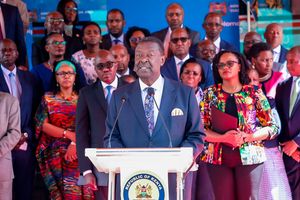
Speaker of the National Assembly Moses Wetang’ula.
Photo credit: File | Nation Media Group
However, in recent months, their dominance in Western Kenya has been challenged by a new wave of emerging leaders with fresh energy and strong grassroots connections.
Figures such as Trans Nzoia Governor George Natembeya, Senators Edwin Sifuna (Nairobi), Godfrey Osotsi (Vihiga) and Saboti MP Caleb Amisi have become a thorn in the duo’s side, questioning their leadership style and threatening their grip on the region.
Mr Mudavadi and Mr Wetang’ula have faced criticism mostly from youthful politicians who argue that there is little to show for their senior positions in government.
In an interview with Saturday Nation on Thursday, Governor Natembeya said he was not seeking to become a regional supremo, but rather to unite Western Kenya and the country ahead of the 2027 polls.
Although he did not reveal whether he is eyeing a national position, he said he is keen to work with other national leaders to steer the country towards growth after the 2027 elections.
“I have not been criticising the two leaders because I hate them. They have clearly failed in the leadership of Western Kenya and nationally. My aim is to unite the Western Kenya region and Kenyans at large as we head to the 2027 polls. Mudavadi and Wetang’ula have held senior positions in government for a very long time, but there is very little they have done for Western Kenya — no major development, no job creation,” said Governor Natembeya.
Trans-Nzoia Governor George Natembeya when he appeared before the Senate County Public Accounts Committee at Bunge Tower in Nairobi on September 23, 2025.
Photo credit: Dennis Onsongo | Nation Media Group
“They are just relevant because of the positions they were given by President William Ruto. They risk losing momentum in their political ambition because their status is hinged on President Ruto’s goodwill,” he added.
Governor Natembeya also explained that Western Kenya lacks a political head who can negotiate on behalf of the community at the national level, arguing that he is ready to provide the needed leadership.
“I want to unite the Luhya people and work with the rest of the country. In 2027, I want to take the people of Western Kenya to the table where key decisions are made,” he said.
In an interview with Saturday Nation on Thursday, Mr Mudavadi’s long-term spokesperson, Kibisu Kabatesi, maintained that the two remain the de facto kingpins of Western Kenya and that no one has successfully challenged their leadership.
De facto Luhya Nation kingpins
“Mudavadi and Wetang’ula are the de facto kingpins of the Luhya Nation. They have not lost any popularity, contrary to claims by some leaders. Mudavadi, for example, recently beat the opposition in the Malava parliamentary by-election. That clearly shows he still commands respect in Western Kenya,” stated Mr Kabatesi.
“I have seen young leaders, some just beginning their parliamentary journey, hurling insults at senior leaders like Mudavadi and Wetang’ula in public. This cannot earn them political mileage. Some of these leaders were inducted into politics by Mudavadi and Wetang’ula. They must respect them,” emphasised Mr Kabatesi.
“Political leadership is a journey built on patience, mentorship and unity — not just raw ambition. Climbing the political ladder takes time, but they will learn a lesson at the ballot in 2027,” he added.
Prime Cabinet Secretary Musalia Mudavadi (left) and National Assembly Speaker Moses Wetang’ula.
Photo credit: File | Nation Media Group
At the same time, Mr Kabatesi dismissed recent polls placing Governor Natembeya ahead of Mr Mudavadi and Mr Wetang’ula as “manipulated”.
“The recent polls had percentages adding up to more than 100. Those were manipulated. Natembeya is still crawling politically, as are the other youthful leaders,” said Mr Kabatesi.
“Let the leaders fond of attacking Mudavadi and Wetang’ula know that pulling huge crowds is not the same as popularity. Attacking the duo is equivalent to attacking the silent majority. Soon they will embarrass themselves,” he added.
Some political observers, however, say the duo’s dominance is slowly and steadily waning, which has worried their handlers and advisors as the clock ticks towards next year’s General Election.
According to Peter Wafula, a local political analyst, leaders and people in Western Kenya are beginning to ask questions and listen to alternative voices.
“They have reason to be concerned. Leaders and people have begun questioning the duo’s leadership style. The electorate feels there is little to show for the region, even when the two hold senior government positions. They risk losing popularity in the region, if any is remaining,” Mr Wafula told Saturday Nation.
Prof Tom Nyamache, a political analyst, added that emerging voices should not be dismissed by the Speaker and the Prime Cabinet Secretary.
“Musalia Mudavadi and Moses Wetang’ula should not sit back as their supremacy and power are being challenged. By 2027, their dominance in the region may be diluted, if not lost. They should not ignore youthful and alternative voices.”
Governor Natembeya, leader of the alternative Tawe movement, has in recent month intensified his criticism of the region’s top leaders, accusing Mr Mudavadi and Mr Wetang’ula of lacking “political independence” and abandoning the electorate.
Recent polls by Infotrak showed Mr Natembeya as the most influential figure in the Mulembe Nation, with 36 per cent support. Endorsements from local cultural elders have further fuelled his rise, which has unsettled the duo by disturbing the regional power balance.
The polls showed he is followed by Mr Mudavadi with 18 per cent, while National Assembly Speaker Moses Wetang’ula had 14 per cent.
Co-operatives Cabinet Secretary Wycliffe Oparanya attracted 8 per cent, Nairobi Senator Edwin Sifuna 5 per cent, Mumias East MP Peter Salasya 2 per cent, while Busia Governor Paul Otuoma, Kakamega Senator Bonny Khalwale, DAP-K leader Eugene Wamalwa, former UNCTAD Secretary-General Mukhisa Kituyi, and Democracy for Citizens Deputy Leader Cleophas Malala each recorded 1 per cent.
Democracy for the Citizens Party (DCP) deputy party leader Cleophas Malala speaks to supporters of former Deputy President Rigathi Gachagua at JKIA in Nairobi on August 21, 2025.
Photo credit: Francis Nderitu | Nation Media Group
Buoyed by the Infotrak poll results, Mr Natembeya has been holding a whirlwind tour of the region in recent months, rattling the status quo, stirring both admiration and resistance, with political observers arguing that his political future is bright.
His outspoken criticism of traditional political elites has resonated with a younger generation of voters, positioning him as a fresh voice.
Adding to his rise is speculation that he could play a major role on the national stage. He has been touted as a possible running mate to either Wiper Party leader Kalonzo Musyoka or Dr Fred Matiang’i in the 2027 elections.
The idea of a Kalonzo–Natembeya or Matiang’i–Natembeya ticket has sparked debate, with some analysts suggesting it could inject new energy into the opposition, while others caution it could deepen rifts among Western politicians.
Lawyer and political analyst Steve Kabita said Mr Natembeya’s rise has caused unease within the camps of Mudavadi and Wetang’ula.
“Mudavadi and Wetang’ula’s camps are rattled and panicking ahead of the 2027 polls. Natembeya has aligned with the vision of the people and advocates for the community’s unity and progress.”
Saboti MP Caleb Amisi, one of Mr Natembeya’s closest allies, described the governor as a symbol of generational change in regional politics.
“I am among the few leaders standing with Natembeya. He is being targeted, but I will not abandon him,” Mr Amisi said, urging dialogue and mutual respect among leaders.
Mr Natembeya, Mr Amisi, and a section of regional leaders have intensified their criticism of the region’s top leaders, accusing Mr Mudavadi and Mr
Wetang’ula is losing touch with the electorate. They argue the time for the duo to continue leading Western Kenya is up.
However, Mr Mudavadi and Mr Wetang’ula have in the recent past called for restraint and respect from younger leaders.