The team of experts pursuing compensation for protest victims got a taste of what to come when the mother of a 12-year-old shot during protests in Rongai said the money paid should be significant.
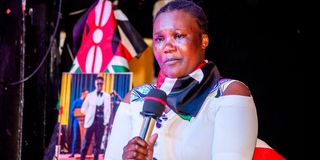
Ms Josinter Anyango told the Panel of Experts on Compensation of Victims of Demonstrations, Public Protests, and Riots on its first day of official business that payment should be something “that can at least change life”.
She is a mother of five until June 27, 2024 when she lost Kennedy Onyango, her third born who was aged 12 and in Grade Eight. Kennedy was shot near their Rongai home and footage of him sprawled on the ground and being carried on a motorcycle to hospital was a sobering sight when it was posted on social media.
“It [compensation] can’t bring Kennedy back, but it should change our lives. I should be able to at least do what Kennedy should have done for me. I am now left with two children who have sickle cell,” she said.
The mother, who survives on menial jobs, said that besides the compensation, the police officers culpable for the death should be tried in court.
“That is what I see as the most important justice to me; to see a police officer arrested and punished rather than be at work while we are being paid. It will be like they are killing while we get money,” said Ms Anyango in a filmed session.
Officially sworn into office on Thursday, the members will convene at the Kenya School of Government, where they will outline the strategic direction and operational plan necessary to execute their mandate.
Prof Makau Mutua, the team’s chairperson, said on Friday that afterwards, there will be interaction with affected families.
“We will engage citizens across the country. We will meet with victims, as we did yesterday (Thursday) at KICC. The people own this process,” he said.
It was after Prof Makau and his 18-member team had been sworn in that relatives of victims like Ms Anyango – who had come to witness the start – got to speak.
At least two of the speakers said counselling should be part of the process. A woman whose husband was shot and killed said: “I have a lot of trauma, to an extent where if I see someone holding a gun, I just see death.”
“Most of us didn’t undergo counselling. We underwent a lot of emotional suffering, physical suffering. In my case, it’s the emotional suffering that refuses to go away. If I could get something like counselling, I’d be happy,” she added.
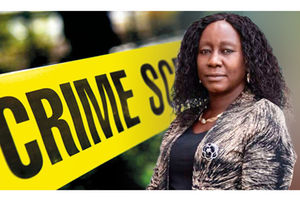
Prof Makau’s vice chairperson is Law Society of Kenya (LSK) President Faith Odhiambo, who has assured Kenyans that she won’t drop the ball.
Prof Makau Mutua.
Photo credit: File | Nation Media Group
“Should my efforts be frustrated or even be undermined in any manner whatsoever, I remain prepared to do the honourable thing in fidelity with the rule of law and the Constitution of Kenya,” she said in her speech.
The team was gazetted on August 25 following a presidential proclamation of August 6 that established a national framework for the reparation and compensation of victims of demonstrations, public protests, and riots.
As per the gazette notice, they have 120 days from August 25 to wind up their operations, which means they should execute their eight main roles by December 24.
Prof Makau said the panel will report progress periodically to President William Ruto and deliver a final report at the expiry of its term.
The team will address legal obligations and the social, economic, and cultural impacts borne by victims and their families. According to a press statement on Thursday, this is “aimed at restoring dignity, promoting reconciliation, and supporting long-term societal healing”.
It will also design and operationalise a framework to verify, categorise, and compensate eligible victims.
The press statement said that the members will also engage families of victims and key institutions, including State agencies mandated with addressing human rights issues, civil society organisations, and religious institutions ”to ensure inclusivity and fairness”.
The panel will also access and authenticate information from State organs and public offices including from Independent Policing Oversight Authority (Ipoa), Kenya National Commission on Human Rights (KNCHR), National Police Service, the Ministry of Health, and the civil society.
Judiciary Chief Registrar Winfridah Mokaya, who swore in the team, said that the compensation process will serve as one of the clearest reassurances to citizens that the rights guaranteed under the constitution are not abstract promises but binding obligations that must be respected, protected, and fulfilled.
She said that while no amount of compensation can erase the grief of families who lost loved ones, the process “affirms accountability as the bedrock of justice, ensuring that such losses will not be forgotten”.
Ms Mokaya further underscored the need to anchor the compensation framework in legislation to guarantee consistency, transparency, and enforceability, while encouraging the team to propose reforms “that address the root causes of protests and prevent a recurrence of violence”.
On Friday, some legal minds questioned why the team was constituted yet the Kenya National Commission on Human Rights (KNCHR) exists.
Among them is lawyer Levi Munyeri, who issued a letter saying he would seek the removal of Ms Odhiambo from the LSK leadership as she had agreed to be a president’s appointee while leading the lawyers’ body.
“The mandate to compensate victims of State-sponsored violence rests with the KNCHR,” he wrote. “The performance of your statutory duties as the President of LSK and the vice chair of the unconstitutional panel of experts will trigger a conflict between your mandate as the LSK president and your service to President Ruto.”
Dr Martin Oloo, a law lecturer, told the Nation that the panel does not have authority to pursue reparations for police brutality victims, agreeing that it duplicates KNCHR’s role.
“What authority do they have to enforce that compensation?” he questioned on Friday. “What if that process has no legal clothing and cannot withstand any test of time?”
Besides Prof Makau and Ms Odhiambo, other members are former solicitor-general Kennedy Ogeto, Amnesty International executive director Houghton Irungu, Dr John Olukuru and Fr Kennedy Barasa Simiyu.
The 18-member panel aside, a 12-member technical team of experts was also sworn in on Thursday. Members of the experts’ team include Jonah Wala and Peter Wachira (Treasury), Clinton Mwita (Attorney-General’s office); Geoffrey Obiri (ODPP) and Ms Veronica Mwangi (KNHCR). Others are Ms Sonia Rasugu (private sector), Daniel Bundi, Paul Achar and Suba Churchill from the civil society.