Hello

Your subscription is almost coming to an end. Don’t miss out on the great content on Nation.Africa

Ready to continue your informative journey with us?

Hello

Your premium access has ended, but the best of Nation.Africa is still within reach. Renew now to unlock exclusive stories and in-depth features.

Reclaim your full access. Click below to renew.

Omboko Milemba
Caption for the landscape image:

Sacked public servants to get pension under proposed law

Scroll down to read the article

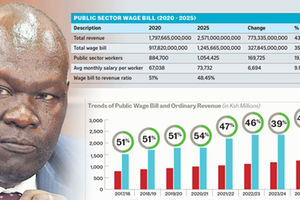
Emuhaya MP Omboko Milemba.

Photo credit: File | Nation

Public servants who are dismissed from service will be eligible for pension and compensation if MPs approve a proposed Bill into law.

The Pensions (Amendment) Bill, 2024 seeks to amend the Pensions Act, Cap 189 to make the right to pension an absolute right to every officer.
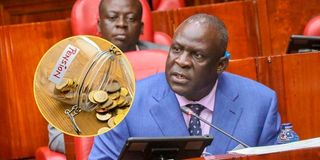
The Bill, sponsored by Emuhaya MP Omboko Milemba, seeks to amend section 5 (2) of the Pensions Act to remove the right of the government to dismiss any officer at any time and without compensation.

Omboko Milemba

Emuhaya MP Omboko Milemba.

Photo credit: File | Nation

The Bill also amends section 68(4) of the Public Service Commission Act, Cap 185 by deleting the penalty imposed on a public officer as a result of disciplinary proceedings.

Currently, section 68(4) of the Public Service Commission Act stipulates that a public officer who is dismissed shall forfeit all rights or claims to a pension, gratuity, annual allowance or other retiring award, and any rights or claims that the public officer enjoys in regard to leave or passages at the public expense.

“The Pensions Act is amended in section 5 by deleting subsection 2,” states the draft Bill, currently before the National Assembly’s Social Protection committee. “The Public Service Act is amended in section 68 by deleting subsection 4.”

Mr Milemba, who is also the chairperson of the Kenya Union of Post Primary Education Teachers (Kuppet), failed to appear before the committee to defend his draft Bill.

The committee, chaired by Thika MP Alice Ng’ang’a, is undertaking the pre-publication scrutiny before clearing the legislative proposal for publishing and formal introduction in the House.

“The principal object of this Bill is to amend the Pensions Act, Cap 189, to make the right of pension an absolute right for every officer,” Mr Milemba said in the proposed Bill’s memorandum of objects and reasons.

“This will ensure that dismissed public officers are eligible for pension, thereby promoting fair labour envisioned under Article 41(1) of the Constitution.”

Parliament

An MP has proposed an amendment to the Pensions Act, Cap 189 to make the right to pension an absolute right to every public officer.

Photo credit: File | Nation Media Group

Article 41(1) of the Constitution states that every person has the right to fair labour practices.

While section 5(1) of the Pensions Act stipulates that every officer shall have an absolute right to pension and gratuity, section (2) indicates the said right shall not apply in respect of compensation for past services, nor shall anything in the Act affect the right of the government to dismiss any officer at any time and without compensation.

Section 5 (3) of the Act states that where an officer has completed 10 years of pensionable service, the benefits accruing to the officer under the Act shall vest in that officer and shall become payable in such manner and at such times as may be determined under the Act.

The Pensions Act establishes six different types of penalties, which may be imposed on any public officer as a result of disciplinary proceedings.

They include the recovery of the cost or part of the cost for any loss or breakage caused by default or negligence, reprimand, deferment of increment in salary, deferment of promotion for a period not exceeding 12 months, dismissal, and reduction in rank or seniority.

“Subject to any law or such agreement as may be in force, a public officer who is dismissed shall forfeit all rights or claims to pension, gratuity, annual allowance or other retiring award, and any rights or claims that the public officer enjoys in regard to leave or passages at the public expense,” the Act states.

“Nothing in this section (section 68(1) shall limit the powers conferred on the commission or any other lawful authority discharging a disciplinary function to, instead of imposing a penalty, require a public officer to retire from public service on any of the grounds prescribe under this Act.”