Senators want the Office of the Director of Public Prosecutions (ODPP) stripped of absolute prosecution powers to tighten existing loopholes in the fight against graft amid a wave of controversial withdrawals of graft cases.
Falling short of calling for the dissolution of the office, the legislators said they will move to amend Article 157 of the Constitution to limit powers of the DPP on matters prosecution.
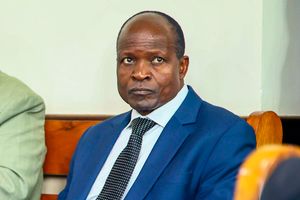
Renson Mulele Ingonga, the Director of Public Prosecutions.
Photo credit: File | Nation Media Group
Describing it as the weakest link in the fight against corruption, the senators said the Ethics and Anti-Corruption Commission (EACC) must have prosecutorial powers for the war against corruption to succeed.
Article 157 of the Constitution grants the DPP the power to institute and undertake criminal proceedings, direct investigations, and discontinue any criminal proceedings at any stage before judgment.
The development comes after the EACC narrated how the office of the DPP has frustrated efforts to tackle graft in the country through arbitrary withdrawal of major cases in court.
Appearing before the Senate Public Accounts Committee on Wednesday, EACC Chief Executive Officer Abdi Mohamud told senators how the DPP has been withdrawing graft cases without consulting the anti-graft agency, frustrating the graft war.
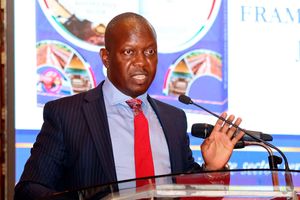
Ethics and Anti-Corruption Commission CEO Abdi Mohamud.
Photo credit: Wilfred Nyangaresi | Nation Media Group
He said that between 2016 and 2025, the DPP has withdrawn a total of 18 cases concerning counties with a majority of the withdrawals, 14, happening between 2023 to date.
Mr Mohamud decried that even though they are the investigators with evidence and witnesses in the cases, in many instances they are not given a chance to present the same before court or witnesses to testify, only for the case to be withdrawn.
He said that even in some instances, the EACC is not even given a chance to present their evidence and witnesses as the investigators before a case is terminated despite the DPP having given consent for prosecution to commence.
The EACC boss cited a 2021 case of an inflated tender for an incinerator involving Tharaka Nithi Governor Muthomi Njuki, which dragged for three years before being controversially withdrawn by the DPP even before the commission could present their evidence and witnesses in court.
The governor and other county officials were accused of awarding a Sh45 million tender for the purchase of an incinerator valued at Sh28 million, resulting in overpricing.
"Prosecutor does not prosecute"
“When we forward the files to the ODPP, there is sufficient evidence to sustain a case and the DPP concurs. But as the case continues, he has the power to proceed with it or not. If the prosecutor does not prosecute, what can the court do?” posed Mr Mohamud.
“Our hands are tied because the ODPP has the power to do whatever it wants with a case. Basically, there is nothing we can do, even though we always oppose the withdrawals, with former Migori Governor Okoth Obado’s case as an example,” he added.
He added that even though the Commission resorts to civil recovery of embezzled public funds, the same does not exonerate the suspects from criminal proceedings.
EACC chairperson David Oginde said their investigation process is rigorous but argued that Kenya’s prosecution legal framework as is currently, limits what EACC can do.
“Parliament needs to rectify this situation for the war against graft to bear fruits. It will be good if we can take the cases to court and prosecute them because the passion to see a case succeed is with the investigator,” said Bishop Oginde.
“We should do away with the separation of investigation and prosecution roles like it is in other countries like Zambia to ensure EACC can investigate and prosecute. Failure to do so will see millions wasted in investigations that don’t bear results,” he added.
Kitui Senator Enock Wambua said it appears EACC is entirely at the mercy of accused persons and the DPP, where the commission investigates and then waits for miracles to happen.
“The power to prosecute 100 percent lies with the ODPP and if they choose to withdraw a case, there is nothing we can do but just pray to the court and the Heavens to hear us,” said Mr Oginde.
“In many cases we have objected to the applications to withdraw the cases because they are not in public interest but we are powerless and so such cases stand withdrawn,” he added.
Nyamira Senator Okong’o Omogeni laid the blame squarely at the doors of the ODPP, wondering why the DPP withdraws cases even after commencing prosecution in light of the concurrence with the EACC that there is sufficient evidence to prosecute the case.
“How can we succeed in the war against graft if cases are withdrawn so casually? If we need to amend the Constitution for the EACC to carry out prosecution, so be it,” said Mr Omogeni.
Nandi Senator Samson Cherargei concurred with Mr Omogeni’s sentiments, saying EACC should be given prosecutorial powers for Kenya to succeed in the war against corruption.
“Tell us if the ODPP is the weakest link in this fight against corruption because if you are not being consulted before the withdrawals then there is a big problem that we must fix,” said Mr Cherargei.
Isiolo Senator Fatuma Dullo said the Constitution has rendered EACC toothless, and that for the war against graft to succeed, either the EACC or ODPP should be dissolved and one body given both investigative and prosecutorial powers.
“There is a big problem here and something must be done or else we will see EACC keep using public funds to investigate only for the cases to be withdrawn, resulting in wastage,” said Ms Dullo.