Online harassment, trolling armies, unlawful surveillance, internet shutdowns, mobile phone tracking and coordinated smear campaigns were part of state-sanctioned strategies used to weaponise Kenya’s digital infrastructure during the 2024 and 2025 Gen-Z protests, a new report says.
This, is according to the report by Amnesty International, is a disturbing ecosystem in which government agencies and allied networks used social media, SIM card data, AI-generated content and mobile networks to intimidate, monitor, silence and ultimately hunt down demonstrators.
What began as digital harassment escalated into physical danger, feeding into a seamless pipeline of abductions, torture, disappearances and killings, marking an unprecedented fusion of technology and repression in Kenya’s modern political history.
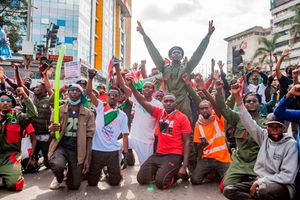
Protesters picket along Kenyatta Avenue in Nairobi on June 25, 2025 during the commemoration of the 2024 Gen-Z protests.
Photo credit: Billy Ogada | Nation Media Group
When Gen-Z burst onto the national limelight in June 2024, armed with smartphones, TikTok livestreams and a determination to challenge the punitive Finance Bill, few anticipated the ferocity of the state’s response.
What started as a digital movement – young people analysing tax clauses on TikTok, hosting Twitter Spaces, using AI chatbots to explain the Bill and crowd-funding legal support – became the largest civic mobilisation Kenya had ever seen since the return of pluralism.
Leaderless but digitally coordinated, the movement caught political elites off-guard.
But the same digital tools that empowered the movement also exposed it, spreading fear among the leading critics of the government.
That fear, the report says, quickly morphed into a government strategy to dismantle the uprising through the very platforms that gave birth to it.
The most immediate tactic was the deployment of massive online harassment and state-aligned troll networks. For years, Kenya’s political landscape has been marred by paid disinformation campaigns. These networks intensified dramatically during the Gen Z protests.
The report identifies groups such as the “Sh527 bloggers” that launched relentless waves of digital violence – mass posting identical messages to hijack X’s algorithm, burying protest hashtags, targeting influencers with smear campaigns and framing youth organisers as traitors, foreign agents or mercenaries.
In some cases, operatives were paid Sh25,000 to Sh50,000 a day to dominate trending topics. During major protest days, they created counter-hashtags in real time to drown out #RejectFinanceBill and other civic messages.
The report by Amnesty describes this as a “state-enabled ecosystem designed to suffocate legitimate dissent”.
Women activists suffered the harshest abuse, the survey says.
“Young women were deluged with misogynistic insults, sexualised threats, body-shaming messages, doxing and AI-generated pornographic images manufactured to silence them,” Mr Victor Ndede, Amnesty International’s lead researcher on the report, said.
Muslim women were targeted with a toxic mix of misogyny and Islamophobia, accused of immorality or betraying their religion.
“The government of Kenya deployed technology-facilitated violence to suppress Gen Z protests. Our analysis showed widespread, coordinated tactics, threats, intimidation, smears and disinformation, used to dismantle youth organising online and offline,” Mr Ndede said.
“Everyone is feeling this fear. The government and its allies are weaponising digital platforms to shut down digitally organised dissent.”
On June 25, 2024, shortly after protesters breached Parliament, Kenyans noticed their internet collapsing. Access Now later reported a nearly 40 per cent nationwide drop in connectivity across more than 20 networks.
Authorities denied involvement but the timing was unmistakable. It struck at the height of police violence, limiting the ability of protesters to livestream abuses, share alerts or contact legal aid teams. Amnesty describes it as a “digital chokehold” deployed to obscure state violence.
Beneath the visible digital harassment, the report uncovers a deeper layer of unlawful surveillance. Many activists noticed that police seemed to know their locations within minutes of posting online. Some received calls from unknown numbers quoting private details. Others were arrested hours after tweeting.
Protesters picketing on Kenyatta Avenue in Nairobi during the commemoration of the Gen-Z protests on June 25, 2025. Some of the women who participated in the protests were sexually abused.
Photo credit: Billy Ogada | Nation Media Group
Amnesty’s investigation suggests that SIM card registration data, cell tower triangulation and metadata were routinely accessed by security agencies.
This was confirmed in 2025 when a police officer attached to one of the telecommunications companies admitted in court that he had used call triangulation and phone tracking without a court order to locate a university student accused of posting “false information” about the president. He told the court he did not know such access required judicial approval. The telecommunications firm has denied wrongdoing, but the testimony reinforced long-standing fears that security agencies enjoyed wide, informal access to mobile network data.
“The excessive use of force by security agencies during the June 2024 and July 2025 protests resulted in 128 deaths, 3,000 arrests and more than 83 enforced disappearances. Much of the online abuse was amplified through public posts and comments crafted to cause harm. X — formerly Twitter — became a hub for pro-government networks that circulated smear campaigns, often using mass duplicate posts to hijack the platform’s algorithm and maximise visibility for state-aligned narratives,” Mr Ndede said.
For many families, digital threats quickly escalated into real-world terror.
One Mombasa-based activist recalled how anonymous users began sending her her child’s name, school details and even the school bus number plate.
“They told me, ‘If you continue what you’re doing, we will take care of this child for you.”
Online activist Rose Njeri in court on June 3, 2025.
Photo credit: Billy Ogada | Nation Media Group
Another Gen Z influencer said he received a chilling TikTok message from someone claiming to be a police officer:
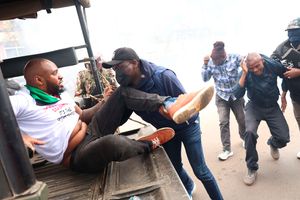
“They’ll come for you.” Days later, he was abducted.
Amnesty reports that kidnapping squads included officers from the Directorate of Criminal Investigations, military intelligence, the Anti-Terrorism Police Unit, the National Intelligence Service and covert police teams.
The survey also noted that vague offences in the Computer Misuse and Cybercrimes Act, such as publishing “false information” were used to arrest and intimidate students, tech workers, bloggers and organisers.
Teacher Albert Ojwang who mysteriously died in a police cell.
Photo credit: Pool | Nation
The second wave of Gen Z protests in June 2025, sparked partly by the death in custody of digital creator Albert Ojwang , deepened state repression. Masked men armed with whips, machetes and clubs infiltrated protests, attacking demonstrators while police looked on. In some instances, police escorted the attackers.
The Interior Cabinet Secretary’s declaration that officers should shoot anyone approaching stations with “criminal intent” was widely understood as a shoot-to-kill directive.
More than 500 people were injured and dozens killed during these protests, most of them young. Hundreds faced serious charges, including terrorism, robbery with violence and unlawful assembly.
Irungu Houghton, Amnesty International’s Executive Director, said the state’s denials of involvement do not absolve it of responsibility.
“Deniability fails the test of accountability every time. Whenever a state says ‘we are not responsible,’ it is not a legitimate response. States have a legal obligation not only to act lawfully but to prevent wrongdoing before it happens,” he said.
He also warned that as Kenya approaches the 2027 General Election, the implications are stark.
“Our constitutional freedoms must be protected. This report has implications beyond Kenya’s borders,” he said.
The report also called on the government to stop technology-enabled violence, dismantle troll networks, halt smear campaigns portraying critics as foreign agents, investigate enforced disappearances and unlawful killings, and compensate victims.
It also called for meaningful accountability for the National Intelligence Service, military intelligence, the interior ministry, IPOA and the Office of the Data Protection Commissioner.