“They will pick up snakes with their hands; and when they drink deadly poison, it will not hurt them at all; they will place their hands on sick people, and they will get well,” the gospel of Mark, in the 18th verse of the 16th chapter, says of those who believe in and follow Jesus Christ.
That verse is relevant to the story of a church that has come into focus in the recent past. In the hinterlands of Kitui County, its members prefer their church be called “Kanisa la Wokovu” (Church of Salvation).
But for over seven decades, the religious group has been known as Kabonokia, Kavonokya or Kahonokia, depending on which part of the country the specific members are in.
In the hinterlands of Mwingi, Kitui County, it is better known as Kavonokya.
Its members, who denounce the Kavonokya name and say that reference is demeaning, prefer to absorb Mark 16:18 more literally than figuratively.
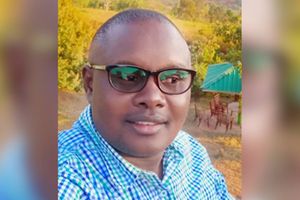
When a red spitting cobra bit former journalist Kitavi Mutua’s hand, he also invoked the Kavonokya beliefs. He is now dead.
Former Nation Media Group journalist Kitavi Mutua.
Photo credit: File | Nation Media Group
A week after the snake bite, Mr Kitavi drove around Daniel Munyali, a close family friend who runs a cereals business at Kavisuni market.
“We could see the bite on his hand had begun to heal, with only a small swelling remaining. But after he drove back home, his hand worsened,” says Munyali, who identifies as Kavonokya adherent.
“He was bitten while on his bed. I went to see him and he said because he believes in God, he would not go to the hospital. After three days, his hand had swollen since he had diabetes. When you mix that and the snake bite, it becomes a problem,” says Mr Munyali.
Mr Kitavi died on October 29 while undergoing treatment at Kenyatta University Teaching and Referral Hospital, with medics linking the snakebite to his death.
On November 7, 2026, villagers from Kisayani, Mutomo in Kitui County, gathered to bury him. However, they were forced to sit through the service with his coffin locked inside the hearse.
Family and friends said that religious directives barred open body viewing, sparking debate over whether certain beliefs from the Kavonokya sect had something to do with his untimely death.
Questions have arisen over whether the Kavonokya sect, to which he was believed to belong, prevented the journalist, who had extensively covered snakebites in the county, from seeking medical attention.
While driving Mr Munyali, several kilometres away, he had the opportunity to visit a hospital but instead returned home without doing so.
The Nation understands that for some days, Mr Kitavi was locked inside to be prayed for by the sect’s adherents. Only when his condition deteriorated, a source said, did the believers panic and call a local medic who set up the chain of events that saw him taken to the hospital.
A hearse carrying the body of veteran journalist Kitavi Mutua at the venue of the funeral service at Kisayani Primary School in Kitui County on November 7, 2026. He died after a snakebite.
Photo credit: Pius Maundu | Nation
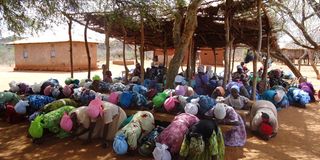
Seeking to understand the sect and what it entails, we crossed hills and dusty roads from Kitui South to Kitui North in Mwingi, where we met with other congregants of the religious sect.
Mr Mulyungi Ndithya, a preacher from the sect and a former mathematics teacher in Kalisasi, Kitui North, says that the denomination is very dear to him and that the name Kavonokya was meant to demean the faith.
He, however, sets it straight that he got into the sect in 1960 and has been in it together with his family, explaining the different types of medicine available to humans and what he subscribes to.
“There is modern medicine, the herbal one, and many others. But for me, my mode of medicine is praying. It’s almost 60 years in the sect. I am healthy because God is in me, my wife and my children with the last born currently in Kenyatta University and she wears a headband,” said Mr Ndithya, a father of 10.
Kavonokya adherent Daniel Munyali during an interview with Nation at Kavisuni Township in Kitui County on November 4, 2026.
Photo credit: Pius Maundu | Nation
“People are bitten and we pray for them and they get healed. My wife has been bitten twice and I just pray for her and she gets well. We just remove the teeth,” Mr Ndithya said.
He explains that the denomination has very strict rules on members seeking medical assistance in hospitals, as it can be used to excommunicate members.
“I do not have an issue with anyone who takes medicine. But for that period we would ask them not to be part of the congregation. And when they come back, they should seek forgiveness from the church leadership, which will decide if they are welcomed back or not,” noted Mr Ndithya.
He added that even when a member from his church is taken to the hospital without their own knowledge, they are required to ask the doctors to release them so that they can go home for the prayer dose.
“A church member here had an accident a while back and I prayed for them and now they are healed. I will never be injected, but I can take the injection of faith and prayer,” said Mr Ndithya.
Among their beliefs is not taking part in any election, choosing instead to pray for God to reveal the incoming leader.
“When we pray, we know the leader we will have. We do not do it as the rest of Kenya does; we just pray and fast and we get the leader,” he added.
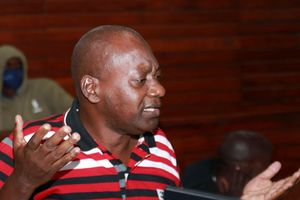
Kavonokya preacher Mulyungi Ndithya during an interview with Nation at Mutanda Village in Kitui County on November 5, 2026.
Photo credit: Pius Maundu | Nation
The religious sect, according to Kitui County Commissioner Erastus Mbui, had not been registered by the government as a church.
“The church has a lot of secrecy and there is no open confession of one being part of the church. They appear to be practising what is in the Bible, but their interpretation has led them to have trouble with the law,” said the county commissioner.
“There is nowhere in the Bible where it is written that medication is sinful. I would consider this a social evil that we need to crack on and dissuade our people from joining,” said Mr Mbui.
Mr Makau Mang’ara, a 79-year-old whose father brought the religion to the area in Mwingi North, insists that there is no Kavonokya and that the church is called “Kanisa la Wokovu”.
“When they call us Kavonokya, it is because this is a church of the saved. But because we were with people from Kikuyu land, when one is saved they say it’s ‘kuhonokia’, hence the name,” says Mr Mang’ara.
The sect is believed to have emanated from Central Kenya, with roots tied to the Mau Mau freedom movement.
“The men came here and my father asked them, ‘Here we are reading that we will pray for people and they shall be saved and the sick will be healed.’ He had not seen that and he asked, ‘Did it mean they were not saved if they could not do that?’” says Mang’ara.
According to the members of the religious sect, the basis of not going to the hospital is rooted in Mark 16:18, where Jesus told his disciples that they would handle snakes, and if they drank any deadly thing it would not hurt.
Kavonokya preacher Ngie Muthoka during an interview with Nation at Kavisuni Township in Kitui County on November 4, 2026. The sect abhors medication.
Photo credit: Pius Maundu | Nation
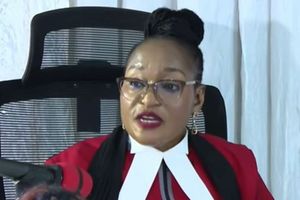
Ms Ruth Koki Mwanzia, Kitui County’s health executive committee member, explained that the county had equipped every health centre with anti-venom because of the many incidents of snake bites.
“We have ensured that we have anti-venom and therefore anyone who is bitten by a snake, they ought to get help since we have some. It is sad that we have lost Kitavi to such,” said Ms Mwanzia at the burial.
Mr Mbui, the county commissioner, said Kitui County has been working on an action plan to combat violent extremism, as some of the decisions mostly affected people who could not make decisions for themselves such as the elderly or children.
“We are coming up with a plan and I can say that the threats we are seeing and the groups in the extremists’ category of are the Kavonokya sect. When someone says they can die for something they believe in, and that is injurious to themselves. That is a form of violence,” said Mr Mbui.
He added that they have been finding it difficult to roll out immunisation for several diseases, since families in the sect decide not to allow their children to get immunised.
“We cannot be disease-free if these children are not immunised. But most of the time, we use force when going into these homes. It’s because it’s okay for an adult, but the child, legally, has to get the immunisation for measles, polio, or any mass immunisation [dose]. Let the locals shun this sect. You cannot even show what the sect has done for the community,” said Mr Mbui.
Mr Kitavi’s death and his connection to the sect has raised critical questions on balance between religion, decisions that determine life and death and teachings that go against basic human rights.
There is no religious teaching that goes against basic human rights including access to healthcare, education and the right to vote, according to Supreme Council of Kenya Muslims (Supkem) national chairperson Hassan ole Naado.
“There is no religious teaching that goes against that,” Ole Naado said, arguing that religious groups that disregard such fundamental rights are not practising religion but promoting extremism.
“The law should be applied immediately to save the lives of the people and also to guide those who have been radicalised. When you are being radicalised, you are just like someone who has been infected with a disease; a disease for which you may not know the cause,” the Supkem leader explained.
Prelate Joseph Obanyi, the archbishop-elect of the Archdiocese of Eldoret, shares that view, describing the distortion of religious teachings for such purposes as “religious fanaticism”.
He terms it “religious extremism and has nothing to do with the Bible or proper religious teaching and traditions”.
To illustrate his point, Bishop Obanyi cited the example of Jesus, who, even after healing people, would refer some for “specialised” attention. This, he argued, demonstrates that Jesus did not advocate for the destruction of medical facilities or other interventions that help alleviate human suffering.
“That is a distortion of religion,” Bishop Obanyi said of denominations that eschew medical care. “That is not true religion. And that is not to be encouraged by any government or any institution that really is supposed to handle human health. As a church, we condemn that.”
Echoing Archbishop Obanyi’s views, Rev Kepha Nyandega who doubles as the General Secretary of the Evangelical Alliance of Kenya (EAK) said discouraging congregants from seeking education and medical attention is a departure from the teachings of Christianity and Jesus.
In all religions, Reverend Nyandega says, “there are some religious groups that lean towards what we will consider extreme” and will come in different forms.
He pointed to Jesus’s own acknowledgement of the importance of medical intervention, recalling his teaching that the sick need a doctor.
“You remember he (Jesus) said that it is the sick who need the doctor… Jesus acknowledges that doctors have a place to play,” Rev Nyandega said.
He also cited Jesus’s own learning and preparation of his disciples as evidence that religious teaching does not happen in isolation or without guidance.
“Jesus himself went to be trained under the leaders,” the EAK General Secretary added. “He also took time to teach his disciples before sending them out. And that is what we call the apprenticeship model of teaching.”
While Dr Ezekiel Muendo the CEO of the Association of Religion Practitioners Professionals (AREPP) advocates for self-regulation of religious practice, he said the problem is not in the religion, but in the people that lead religion.
The religious space, he argues, can only be purged if there is regulation, and that is where AREPP comes in.
“The problem is in the people that lead religion because if they say we are not going to do this, then their followers, irrespective of their education, will follow them,” Mr Muendo explained.
While bidding goodbye to Mr Kitavi in a ceremony murmured in tension, one question remained: how far should religious beliefs go when it comes to decisions of life and death?