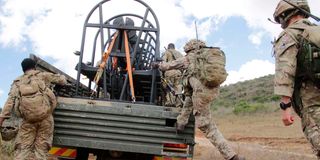
The training of British soldiers in Samburu and Laikipia under the Kenya-UK Defence Cooperation Agreement (DCA) has led to environmental degradation, killing locals and costing them their livelihoods.
An inquiry by the National Assembly's Defence, Intelligence and Foreign Relations Committee into the conduct of the British Army Training Unit Kenya (Batuk) revealed that many residents have suffered respiratory complications and eye irritation due to toxic fumes, while several women have also suffered miscarriages.
Communities living around Batuk training sites also reported soil and water contamination, with residents in Laikipia reporting unusual spikes in livestock illnesses and even cases of cancer among villagers. They suspect these are linked to long-term exposure to military explosives and chemicals.
The most devastating incident highlighted in the report was the Lolldaiga fire in March 2021, where community members submitted evidence to the committee tracing the origin of the fire to Batuk's training exercises. The fire was reportedly sparked by white phosphorus munitions.
The resulting fire consumed over 12,000 acres of vegetation and blanketed neighbouring villages in toxic smoke.
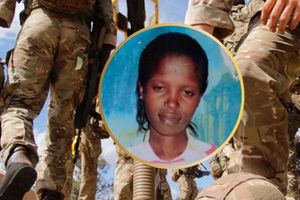
“Residents submitted that they suffered respiratory problems and eye irritation due to allegedly toxic fumes, and several women suffered miscarriages. One witness recounted that her brother died from complications linked to the smoke exposure,” reads the report.
“Livestock grazing on pastures coated in soot and chemical residue fell ill, died, and some miscarried,” adds the report.
The report notes that four years after the fire, residents have not been compensated despite the Kenya Wildlife Service (KWS) receiving payments for wildlife losses after the incident, while the local villagers' claims have not been settled.
In 2022, the High Court ordered Kenyan and UK authorities to assess the damage and undertake reparations, but progress has been very slow.
According to the report, communities living around Batuk training sites have also reported contamination of soil and water resources with residents, especially those in Laikipia, reporting unusual spikes in livestock illnesses and even cases of cancer, which they suspect are linked to long-term exposure to military explosives and chemicals.
The committee, during its public hearings, was also told that a collector dam near Lolldaiga was allegedly contaminated by runoff from Batuk activities, damaging crops and causing livestock illnesses.
The report notes that Batuk uses white phosphorus munitions, which Human Rights watch has described as notorious for the severity of the injuries it causes including deep burns that can reignite on contact with air and potential organ failure if the substance enters the bloodstream.
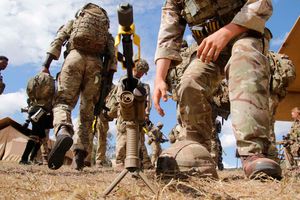
British Army soldiers training at Lolldaiga area in Laikipia County on November 14, 2022.
Photo credit: Joseph Kanyi | Nation Media Group
Witnesses who appeared before the committee also cited the Lolldaiga fire itself as an example, alleging it was ignited by white phosphorus
The Committee noted that a UK Defence Minister publicly acknowledged British troops have used white phosphorus mortar rounds during exercises in Kenya “where conditions permit," ostensibly for illumination and smoke screens.
The committee now wants the National Environmental Management Authority (Nema) to direct Batuk to undertake an Environmental Impact Assessment on its training grounds, within three months of the adoption of the Report.
Upon receiving the report, the committee has also directed Nema to conduct an environmental audit within three months pursuant to the Environmental Management and Coordination Act, Cap. 387 and report to the National Assembly within three months.
Britain’s Foreign Secretary Boris Johnson (centre) talks to soldiers at the British Training Unit Kenya, popularly known as BATUK, in Ole Naishu, Nanyuki, on March 17, 2017.
Photo credit: File | Nation Media Group
Further, the committee also directed the KWS to prepare a wildlife displacement and damage report for areas affected by Batuk training within six months of the adoption of the report by the House.
The KWS report, according to the committee, should contain policy recommendations for mitigation and restitution for the affected areas and report to the National Assembly within three months.