It is a small print many may have missed but which could lock out millions of voters from the General Election in 2027.
“If you registered as a voter between 2012 and 2026, you do not need to register again,” the electoral agency says in its posters detailing the ongoing enhanced mass registration drive.
But this 17-word disclaimer hides a monumental crisis: All Kenyans registered before November 2012 – when the roll was closed for the March 2013 General Election – need to verify their details, which some of those affected say involves going through what looks like fresh registration.
Many of them had gone to change their polling stations or check their registration status when they made the discovery.
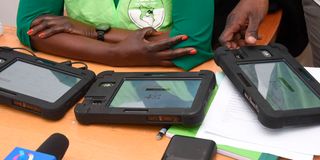
On Friday, the Independent Electoral and Boundaries Commission (IEBC) asked voters who registered before 2012 to have their biometric details captured again to ensure their names are in the system and enable them to cast their ballots next year.
“The events of 2007/08 led to reforms in many sectors, including the electoral system. Those who registered as voters before 2012 may have to register afresh to ensure their names are in the system,” IEBC chairman Erastus Ethekon said.
Independent Electoral and Boundaries Commission (IEBC) Chairperson Erastus Edung Ethekon speaks during the launch of the “Mimi ni Mkenya” initiative at Serena Hotel in Nairobi on March 26, 2026. The initiative aims to promote national unity, shared identity, and civic responsibility among Kenyans.
Photo credit: Bonface Bogita | Nation Media Group
“If you registered as a voter between 2012 and 2026, you do not need to register again.”
According to Mr Ethekon, the register the commission is building on was created after the 2012 boundaries delimitation.
“The pre-2012 data was legally disposed of. In the 2012 registration drive, the commission registered about 14.5 million voters. The number increased to 19.6 million in 2017,” he said.
“In 2022, the register had 22.1 million registered voters. We now aspire to increase the number to about 28.8million through the ongoing drive.”
In a detailed statement after answering the Nation queries, Mr Ethekon dropped the bombshell: All those who enlisted before 2012 must register afresh.
“The current biometric Register of Voters came into operation in 2012 upon the promulgation of the Constitution of Kenya, 2010; the enactment of the Elections Act, which introduced biometric voter registration as a key electoral reform measure and boundaries delimitation of 2012. Consequently, individuals who had previously enrolled as voters before 2012 are not part of the current biometric register unless they subsequently presented themselves for fresh registration. Such persons are, therefore, required to register afresh in order to be included in the current biometric register,” Mr Ethekon said.
IEBC officers in Kapsoya Estate, Eldoret City of Uasin Gishu Country on the first day of the commission’s continuous voters registration on September 29, 2025.
Photo credit: Jared Nyataya | Nation
The statement, however, still leaves a key question unanswered.
What happens to Kenyans who were registered before 2012 and have voted in all subsequent elections without any encumbrances, having not registered afresh. At what point did their details become unavailable in the register if they have voted all along?
An IEBC official, who did not want to be identified, said the move would ensure Kenyans are not shocked when they find their names missing in the register during the General Election.
“There have been cases in the past of Kenyans complaining that their names were not in the voters register. To address such, they need to visit IEBC centres and find out if their names are still in the roll. For those who registered from 2012, their details are properly captured,” the official said.
The commission added that individuals who wish to update their details should visit the IEBC constituency offices in person.
The commission launched the first phase of the Enhanced Continuous Voter Registration (ECVR) on March 30, targeting at least 2.5 million new voters.
The 30-day exercise at 30,619 gazetted registration stations – including 57 Huduma centres – targets new voters and those wishing to transfer or correct their details.
The IEBC will have another drive targeting 3.8 million more voters, to add to the 2027 register 6.3 million voters.
According to the commission, the exercise is part of ongoing efforts to increase the number of voters and make registration more accessible to all citizens.
IEBC officials register a youth at the Nakuru Town-East Constituency offices on September 29, 2025, during the start of the continuous voter registration.
Photo credit: Boniface Mwangi | Nation
Kenyans can register as voters in wards on a rotational basis, depending on the movement of kits, universities and colleges, Huduma centres, IEBC constituency offices and the IEBC Customer Experience Centre at Anniversary Towers, Nairobi.
“The exercise targets to increase coverage by expanding enrolment, particularly for first-time voters, especially in under-registered or remote areas. The commission has availed registration kits in universities and other institutions of higher learning to cater for students studying away from their homes,” IEBC Commissioner Alutalala Mukhwana said.
“The IEBC is working with the National Registration Bureau and other agencies to speed up the issuing of national identity cards, which are a prerequisite for voter registration.”
The IEBC appeals to young adults and eligible citizens who are yet to register as voters to take advantage of the mass exercise.
Independent Electoral and Boundaries Commission clerks register voters at Shimoni Fish Port in Kwale County on March 30, 2026.
Photo credit: Kevin Odit | Nation Media Group
However, the commission clarified that the registration would not take place in areas by-elections are to take place – Porro ward in Samburu County, Endo ward in Elgeyo Marakwet County, Emurua Dikirr constituency in Narok and Ol Kalou constituency in Nyandarua County.
It also said the exercise would not be conducted in Malava constituency in Kakamega and Mbeere North constituency in Embu County due to ongoing election petitions.
Political observers say young adults, popularly referred to as Generation Z – Gen Zs – will have a big say in the 2027 General Election if they heed the call to register as voters.
Creatives from different parts of the country march the IEBC offices in Nakuru East to mobilise young Kenyans to register as voters on March 31, 2026.
Photo credit: Boniface Mwangi| Nation Media Group
In the last two years, Gen Zs have been on the streets protesting the high cost of living, high taxes, police brutality and demanding jobs as promised during the campaigns for the 2022 presidential election.
Their numbers are expected to shake the foundation of Kenya’s traditional electoral system should they register as voters and actually their ballots.
Before the General Election in 2022, the IEBC register had 22.1 million names. However, only 14.3 million voted.
A staggering 7.8 million voters, many of them young, did not vote.
The presidential election was decided by just 200,000 votes, with then-deputy president and Kenya Kwanza coalition leader William Ruto garnering 7,176,141votes against Azimio la Umoja alliance’s Raila Odinga who had 6,942,930.