In January 2024, hundreds of people held protests in Nairobi against rising cases of violence against women. That action sowed a seed in one young Kenyan.
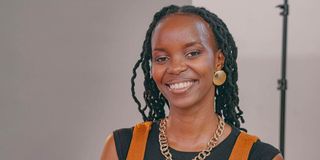
That Kenyan is Victoria Komu, a visual storyteller and documentary photographer. This was the first time she was taking part in such a cause — and she had her camera.
In June, a few months later when the country’s youthful population organised protests to oppose the Finance Bill 2024, something that had been sparked by the January street march encouraged Ms Komu to hit the streets.
“The first day - June 18 - I left the house with no idea what to expect,” she says, adding that she had never had a taste of teargas until that day.
Being a curious photographer, Ms Komu snapped many scenes from the protests. When she posted them online, many replied with: “Oh, this is how it was? I’ll come next time.”
“That was validating,” she says. “I’m not the frontline activist shouting slogans, but my photos did the talking.”
Who is Victoria and what does she do?
I am a photographer and filmmaker. In terms of photography, I categorise myself as a photojournalist and a documentary photographer. I love telling stories visually.
Tell us about the January 2024 anti-femicide protests and how they transformed you.
When I started out five years ago, I always knew I wanted to tell stories visually. But of course, being a photographer in Kenya, the first thing you think of doing is maybe going to a studio, taking portraits of people, weddings, baby showers and baby bumps. To be very honest, that’s where I started.
But then, there was a rise in the femicide cases, and I was like, “I think this is an opportunity to start telling stories.”
The anti-femicide march wasn’t the very first documentary I worked on, but was one of the most intentional ones I participated in. When women were being killed in very stupid and explainable circumstances, I felt like being part of the march was a way to participate in the conversation.
There are people who are really good with using their mouths. I honestly don’t believe I can do that. But what I know I can do best is through the camera — telling stories through photography. That is the tool and the weapon I took to the streets, with no idea what was to happen.
I didn’t even think through it much. I knew there might be chaos, but I was like, “I’m doing this for me, for my gender, for all women in Kenya and even across the borders.”
Your photography is raw and powerful. Your images gain traction online. How does that make you feel?
As any other creative, the minute your work gains the right kind of traction, that’s validation. It makes you grow. Before that, I used to feel good when 20 people liked my work. Now, 1,000-plus people acknowledge and relate to it.
It affirms what I have been doing and the cause I stand for. Even more than that, it makes me feel like I’m on the right path and I’m doing the right thing. It can only get better.
At what point did you feel compelled to join the Gen Z protests and start documenting them?
Going back to the femicide demonstration, I didn’t really regard that as a protest. It was my first march. I took my camera and went to the streets in January 2024. That was the first time I left the house to document a nationwide issue.
What got you interested in the Gen Z protests?
The conversations online sparked my interest. Mostly, X is where the hype was. That’s where I learnt everything about what was going on — where people would meet and all that.
We don’t really watch the news as much in our generation. We learn from Twitter Spaces and social media. The first day, I left the house with no idea what to expect.
When I posted that day’s footage, the next protest had way more people. That showed that my photos were communicating something powerful.
How did the protests unfold for you?
There was a lot of running from street to street. The risk was just as high for my gear as for me. One thing I appreciate the photography community for is that we shielded and helped one another. My friend, Immaculate, would keep tabs: “Where are you? Where are you?”
Many people were injured, arrested, or worse — and I count myself lucky. My knowledge of the City Centre really helped at one point. Someone would ask: “Where is Kaunda Street?” And I knew. It was protest war, honestly.
Walk us through June 25, 2024. What happened?
It was probably the sixth day of protests. The streets were packed. Even matatus weren’t working. People walked in masses from Ngara to town. I usually don’t dress like I’m going to shoot, just to blend in. But it didn’t matter that day. There were too many people.
I met up Immaculate and other friends. We tried to reach action points like Nation Centre and Koinange Street but chaos kept pushing us back. Police officers stopped me, and I showed my camera to show them I was a journalist.
Still, something must have happened because later, my thighs were hurting. I was literally limping. I only took 60 photos that day. Usually, I take at least 300. There was too much heat, too many stones flying, teargas and water cannons.
We got first aid at Jamia Medical Centre. Then we heard people had breached Parliament. Everyone started calling me. Even my shosh (grandmother) was like: “Ati uko wapi? Toka tafadhali (where are you? Leave please)”.
Seeing injured people at the medical tent was the final push. I ended up taking a nduthi (motorbike) from the City Centre to Ruiru. I had never done that before.
How did you go about facing harassment from authorities? How were your photos of police brutality taken?
Police officers became hostile towards journalists from day three or four. We’d be told: “Toka hapa, acha kutupiga picha“ (Go away and stop photographing us!)” Normally, I stay behind the police line, but they didn’t even want us there.
What helped was walking with other journalists. A strong community saved us more than once. I once told a police officer: “You have your gun; I have my lens.”
At what point did you realise the power of social media through your photos?
When I saw my photos re-shared not just in Kenya but the world over, that was something. People from outside Kenya were like: “Victoria, what’s happening?” Social media gave us that reach. Older generations started saying: “We see what you’re doing, and we’re proud of it.” That was because we had footage, still and the courage to post them.
Tell us about being on the frontline without protective gear.
It was scary. I had just my press coat. No bulletproof vest, no helmet. I saw fellow journalists in full gear. I thought: “If I had proper protection, maybe I’d be treated with more respect.” But still, I did what I had to do.
How do you balance being a documentarian and an activist?
I honestly don’t think of myself as an activist — not fully. But when you look at my body of work, it shouts activism. I’m still trying to find that balance. At the end of the day, I consider myself a storyteller.
What do you think was the biggest achievement from the protests?
Even our grandparents saw who politicians are. A 90-year-old at a funeral clapped and said: “We’re proud of you, Gen Z.
Looking back, would you do it again?
Yes. Again and again. If I didn’t do it, who would have?