Prof Paul Wainaina had done the unthinkable for a Kenyan public official – he had stood up to President Uhuru Kenyatta and refused to hand over the title deed for Kenyatta University’s prime land and was suspended as Vice Chancellor, but survived long enough to usher in the new administration of President William Ruto that promptly reinstated him. But as he soon discovered, the more things change, the more they remain the same. In this last installment of our exclusive three-part serialisation of Firm and Forthright , Prof Wainaina’s autobiography published by Big Books Ltd, he reveals how the new powerful players applied the old tactics to get what they wanted and faced the same resistance.
As my problems continued, it became clear that my dismissal had been politically motivated, and required a political solution. Therefore, I reached out to a number of politicians, notably Kiharu MP Ndindi Nyoro, who was our former student at KU, where he attained a Bachelor’s degree in Economics. He was an influential figure in the new government (of President William Ruto), and did his best to push for my reinstatement (following my suspension as Vice Chancellor)
Meanwhile, as I waited to see how events would unfold, I heard in the news that I had been appointed as a member of the Presidential Working Party on Education Reforms purposely to look into the concerns that had been expressed regarding the new system of education, then known as the Competence-Based Curriculum (CBC), now the Competence-Based Education (CBE).
By virtue of being appointed to this committee, I was convinced that the President was not looking at me through the eyes of his predecessor. I felt that I stood a chance of being listened to by the new administration.
I met Machogu days later in his office to follow up on my reinstatement case. As I chatted with him regarding many issues on higher education, he asked me if I still wanted to go back to KU. “Prof you will be turning 75 in July 2025, the retiring age for teaching staff members at Kenyatta University. If you are reinstated you can only work for the next three years from now.”
Before I responded, he took time to demonstrate that at my age I could take the option of retiring early with all my benefits. However, I told him that I was dismissed from my job for doing what was right hence I was not ready to leave until justice was done.
“I want to go back and clear my name before I exit honourably,” I told Machogu. He promised to fast-track the matter. Days later, he called me to his office and informed me that I had been formally reinstated. It was a huge relief. I then asked him to extend my term. He offered me a three-year contract. I did not complain.
Then I placed another demand on him. “I cannot go back to work with this Council that threw me out. They are biased. They took me to court. Our relationship is strained. I need my old Council back,” I requested the Cabinet Secretary. He promised to consult and get back to me.
Then Kenyatta University Vice Chancellor Prof Paul Wainaina (in a tie) is welcomed by students at the institution on April 30, 2025 after the High Court reinstated him.
Photo credit: Evans Habil | Nation Media Group
Again, things moved quite fast. The Attorney-General was also involved. The court cases against me were withdrawn. The Cabinet Secretary called the Kiamba-led Council to his office and instructed them to resign. He then immediately restored the old Council led by Prof Migot-Adholla, and whose membership included Eric Sila and Mary Mugo.
I returned to KU in October 2022 a relieved man. Once again, the students and staff who believed in me were at the gate to receive me triumphantly. I now looked forward to a period of less disruptions and more focus on service delivery and pursuit of academic development at KU.
During the December graduation, we invited President William Ruto to be the chief guest. This was largely to appreciate what he had done for me; reinstating me as VC. Due to his busy schedule, he instead sent his then deputy, Rigathi Gachagua, to represent him. The DP revisited the matter of my earlier sacking. He offered a public apology on behalf of the government for what had happened to me under the Uhuru administration.
“Never again will a professor be humiliated by the government as his students watch,” Gachagua said. “Had William Ruto lost the presidential contest (in the 2022 general election), your university land would have been grabbed by now. We have instructed the Ministry of Lands to cancel all those (illegal) allocations and revert the land ownership back to KU,” he said amid ululations from the gathering. He promised that the government would revert KUTRRH ownership back to KU. Our medical students were very excited.
The more things change, the more they remain the same. This phrase was coined by French writer Jean-Baptiste Alphonse. It is a statement of disillusionment and implies that despite efforts to improve or reform, certain problems or patterns persist, suggesting that lasting change is oftentimes difficult to achieve. This is particularly notable in societal issues like corruption and inequality, where repeated cycles of change and failure to achieve lasting solutions are often observed.
After I returned to office in KU in October 2022, my intention was to improve the teaching and learning conditions in the university and focus my attention on compensating for the lost time. I believed that the disruptive matter around the university’s land had been resolved. If anything, I was also looking forward to the hospital reverting to the university. I was hoping for a peaceful working environment and support from all stakeholders. I was wrong.
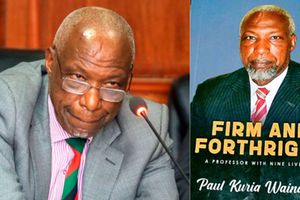
The cover page of "Firm and Forthright," an autobiography of former Vice-Chancellor of Kenyatta University Prof Paul Kuria Wainaina.
Photo credit: Nation Media Group
It dawned on me that some senior government officials in the new administration were also interested in the KU land and other resources just like their predecessors. The issues I had been battling with started to emerge again. It became clear that they were not helping me in principle. They wanted to take advantage and grab the land.
One day, I received a call from a top government official who sounded very friendly.
“When can we meet for a cup of tea and chat about a number of issues regarding education?” he asked.
After comparing our diaries, we agreed to meet in his office. He was among the people who had supported me and spoken strongly against the Uhuru government’s plans to hive off KU land. We chatted as I explained to him some of the measures that we had put in place to remain one of the leading institutions of higher learning not only in Kenya, but even compete well in the continent and globally.
He listened for a while and then said: “Please, bring to us that KU land title deed as soon as possible so that we deal with the matter of Kamae (squatters) and other groups once and for all.” It sounded like an order, request and suggestion all wrapped together.
He sounded quite firm and diplomatic, but his intentions appeared sinister. He wanted to pursue the subdivision of KU land and possibly benefit from it.
My sixth sense told me that he was taking me down the horrible road that I had travelled before. However, I kept receiving emissaries telling me to “be thankful to the new government for giving you back your VC job”. I was urged to listen to what I was being requested.
It became clear to me that some politicians and even civil servants were all the same. They use different names and parties, but they have a common behaviour, notably deceit, greed and exploitation. They are mainly interested in personal benefit and have little regard for the common good.
One day, I received a letter addressed to me from a top government official seeking the transfer from KU certain rights and obligations (funds and responsibilities) to another facility. In the letter from this official, I was being asked to append my signature to approve the transaction but the senior officer did not want his signature to appear anywhere. I also noticed that the document he gave me did not bear any letter head; thus its origin could not be traced. I refused to sign it. I told him that it was beyond my powers to transfer university rights and obligations to another institution.
By then, Prof Migot-Adholla, the rock that I always leaned on, had left the Council after his term expired and had been succeeded by Dr Ben Chumo. After what was seen as my ‘hard-headedness’ prevented and curtailed the efforts of those who wanted to benefit irregularly from the university, a scheme was hatched to remove me once again.
As that was happening, tragedy struck the university on March 18, 2024. Our bus, which was ferrying 58 students from the School of Health Sciences heading for an academic trip to Mombasa, was involved in a grisly road crash in Maungu, Voi. Eleven students died, while over 40 others were injured.
Then Kenyatta University Vice Chancellor Prof Paul Wainaina addresses students at the institution on April 30, 2025 after the High Court reinstated him.
Photo credit: Evans Habil | Nation Media Group
I was in Mombasa attending a Council retreat. In order to deal with the situation, the retreat was suspended. I went to Voi hospital to check on students who had been admitted there and handle the cases of the deceased ones. Quickly, I approved and coordinated for the victims and casualties to be flown to Nairobi through the assistance of Amref. It was disturbing to see young lives tragically ended in that manner. The university was thrown into mourning. I was very sad.
As we were reaching out to bereaved parents and consoling them for the loss, I received a letter from the Council, dated April 11, 2024, sending me on leave. The letter said I had accumulated 202 leave days and it was mandatory that I utilise them. I felt that the timing was wrong. I wrote back to the Council and asked for some time (say two weeks) to coordinate the memorials for and burials of the deceased students, and complete pending matters I was handling.
After that, I would then take my leave. I reminded the Council that we had set up a fundraising committee which I chaired and we were targeting to raise about Sh30 million to offset some financial burdens that the bereaved families were facing. I also needed time to oversee the burial of deceased students while coordinating the necessary help for the students who were still recuperating. I also reminded the council that we had organised an inter-faith memorial service for Sunday, April 14, for the students who had died and I needed to coordinate and attend the solemn event.
However, the chairman of the Council declined my request. He insisted that I take leave immediately. He made it look urgent.
Why am I supposed to be far away from the university with such urgency? Is there something I do not know? I wondered.
I thought of resisting, but a well-connected friend who was aware of some silent happenings behind the scenes advised me against it. He told me a scheme could have been hatched to ensure that I leave office by whatever means.
“There is a comprehensive plot against you. If you refuse to leave, they are going to come back with some false allegations so that they throw you out of office as a disgraced VC,” he told me and mentioned some VCs who had been thrown out in that manner. “Don’t resist, just go on leave first.” I agreed with him and proceeded on leave.
Once again, our DVC, Prof Wanjohi was appointed to take over in an acting capacity. However, when the Council presided over the handing over ceremony, they made it appear as though I was leaving permanently. I was asked to hand over everything; the university statutes, mace, seal, charter, logo, and other things. Ordinarily, this was only done when one’s tenure ended and was handing over to a substantive VC. However, I was made to hand over like a person who will never come back. I went through the whole process dumbfounded.
In his speech, the Council Chairman, who looked visibly excited to see me leave, thanked me for my services and wished me well in my future endeavours. The language he used suggested that I had left the office permanently.
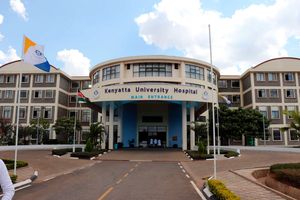
The entrance to Kenyatta University in this picture taken on April 5, 2025.
Photo credit: Wilfred Nyangaresi | Nation Media Group
Meanwhile, after handing over, I requested the Council to assign me a small office within the university where I could undertake my other duties, but my request was declined. Clearly, I was not wanted anywhere near KU. I kept my cool and left.
As the saying goes, everything that has a beginning must have an end and however long the night, dawn will eventually come. The 202 leave days, long as they looked, eventually ended on January 30, 2025. However, on December 11, 2024, I received a letter from the Council.
“I wish to inform to you that the Council revisited your leave days and noted that you did not utilise your sabbatical leave days as DVC (from 25th October 2010 to 25th January 2015). The Council therefore resolved that you continue to be on leave.”
I had been added 51 days. The letter also indicated that I prepare for my retirement date of July 15 of the same year. The Chairman concluded by wishing me well in my future endeavours.
Then Kenyatta University Vice-Chancellor Prof Paul Wainaina during an interview at North Coast Beach Hotel in Kilifi County on October 11, 2025.
Photo credit: Wachira Mwangi | Nation Media Group
Then on January 22, I saw an advert in a daily newspaper inviting suitable candidates to apply for the VC position which had been declared vacant. The advert had been put up by the Public Service Commission (PSC) upon request and advice from the KU Council. The advert was, of course, irregular. I still had about a year to go before the expiry of my term. I was still the bona fide Vice Chancellor.
Through my lawyer, I took the matter to court and PSC was enjoined in the case. After scrutiny, the PSC admitted that it was not aware that my contract was due to end in January 2026 and that they were advertising a position that was legally not vacant. They also admitted to having been misinformed that the VC had already left office. They regretted the anomaly and cancelled the advert.
In court, the Council was asked many questions; “why are you forcing the VC to proceed on a leave he has not asked for? Why are you paying someone else to serve as VC while the substantive holder of the office is still willing to undertake his duties until the expiry of his contract?”
I argued that the Council was going against KU statutes, which stipulated that all retirements, for all cadre of staff, were done once a year on June 30. Staff whose birthdays fell after June 30 were pushed to the same time the subsequent year. This showed that technically, with my birthday being July 15 (I attained 75 years on July 2025), my retirement as professor was to be on June 30, 2026.
Regarding my contract as VC, the court found out that such contracts are not pegged to age because they are not pensionable. Therefore, unless I had committed a gross and legally justifiable misconduct in the course of my duty, the Council had no reason to interfere with my tenure. Lady Justice Hellen Wasilwa, on April 30, 2025, ruled that I be allowed to return to office and complete my term as VC, which was set to officially end on January 26, 2026.
Between July 2022 and April 2025, I had been kicked out of office three times and I had managed to return on all occasions. Some people had lost count of the number of times they had heard that Prof Wainaina was no longer KU Vice-Chancellor. This, perhaps, is what drove the Daily Nation to write an article, dated May 12, 2025, titled ‘Paul Wainaina: The KU Vice-Chancellor with nine lives’. The writer equated me to the proverbial cat.
After my story hit the headlines, many people discussed it. Some of them thought I was fighting for the power and financial benefits that come with the VC position. That was not the case. If anything, I had been offered a very lucrative send-off package by the Council so that I could leave quietly and stop battling with them.
I had been enticed with huge financial benefits, including a full salary for the remaining period of my term and allowances for all the months that they wanted me to go on leave. The sweetener was amazing, but I declined the offer and insisted that they follow the right procedure in every decision they made.
Basically, I refused to be bundled out of office because I wanted to see things done in the right way as per the relevant laws and statutes. I had seen a growing trend of pushing VCs out of office prematurely and my desire was to set a precedent that would ultimately lead to minimisation and eventual elimination of that cancer of hounding out university heads for refusing to do wrong. I strongly believe that this type of impunity will be stopped if a critical mass of officers would boldly stand up against the wishes of their seniors despite the possible risks and repercussions.
I had also learned that the issue of encroaching into university land was happening in several other institutions across Kenya, especially those that had large parcels of land. But their cases were not known because some VCs chose not to stand firm. They either chickened out and allowed the politicians to have their way, or they simply chose to be part of the conspiracy. In most cases, the VCs were threatened with all manner of repercussions, including firing, if they failed to comply. Flimsy cases were usually brought against them too. But if they played ball, they also stood to benefit personally. It is a case of dangling a carrot and a stick. It also mirrors how low our society has sunk.