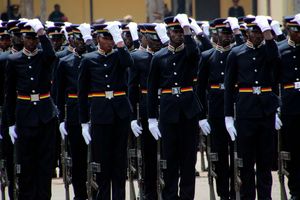
Nairobi legislators are up in arms over the Kenya Defence Forces (KDF) recruitment plan, warning that the arrangement marginalises the capital’s millions of unemployed youth.
The dispute stems from an advertisement published on September 14 outlining the recruitment schedule for General Duty Recruits and Defence Forces Constables.
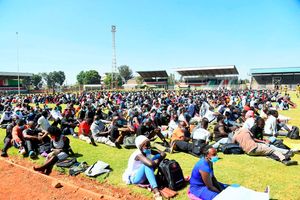
Unlike most counties where sub-counties were each allocated distinct recruitment centres, the legislators said that Nairobi—the country’s most populous county with more than 5.7 million residents—was allotted only three venues to serve all its 17 constituencies.
In a joint letter dated September 16 addressed to Defence Cabinet Secretary Soipan Tuya, all Nairobi MPs—including Senator Edwin Sifuna, constituency MPs and Woman Representative Esther Passaris—described the plan as discriminatory and unconstitutional.
Nairobi Senator Edwin Sifuna at Bunge Tower Nairobi on March 17, 2025.
Photo credit: Dennis Onsongo | Nation Media Group
According to the itinerary, Nyayo Stadium will cater for applicants from Embakasi Central, Embakasi East, Embakasi South, Embakasi West, Kamukunji, Makadara and Starehe.
The schedule for Kasarani, Ruaraka, Mathare and Roysambu constituencies directs their constituents to the Moi International Sports Centre (MISC), Kasarani.
The recruitment for Dagoretti North, Dagoretti South, Lang’ata, Kibra and Westlands constituencies is consolidated at Jamhuri grounds.
“This consolidation of recruitment centres for over a dozen constituencies presents a logical nightmare and is a stark contrast to other counties, where recruitment centres are designated for each sub-county, reflecting a more decentralised and equitable approach,” the legislators said.
They noted that the KDF recruitment schedule as published is “manifestly skewed against the people of Nairobi.”
The legislators argue that the move creates logistical nightmares, heightens security risks, and undermines transparency.
“Concentrating vast numbers of applicants at a handful of sites will inevitably lead to chaos and disenfranchise many young people who have the right to compete fairly for the limited slots,” the letter reads.
They cited Article 27 of the Constitution, which guarantees equality before the law and prohibits discrimination, and Article 10, which enshrines equity as a national value.
Led by Mr Sifuna, who is also the Senate deputy minority whip and his National Assembly counterpart Mark Mwenje, they insisted that Nairobi deserves fairer treatment given its unique demographics: a youthful, urban population that makes up 9.5 per cent of the national headcount.
Embakasi West MP Mark Mwenje
Photo credit: File I Nation Media Group
At the heart of the outcry is the question of jobs. Nairobi has the highest concentration of unemployed young people in Kenya. According to the Kenya National Bureau of Statistics (KNBS), urban youth unemployment stands at nearly 32 per cent, with Nairobi bearing the biggest share. Many graduates and school leavers view KDF and other disciplined forces as a lifeline to secure salaried employment and career stability.
The MPs argue that if counties with populations as low as 500,000 are allocated multiple venues, Nairobi—with nearly 10 times that figure—deserves at least one recruitment centre per constituency.
This is not the first time the KDF recruitment has faced criticism. Past exercises have been marred by allegations of corruption, nepotism, and lack of transparency.
In 2014, the military had to cancel an entire recruitment drive after revelations of irregularities, including bribery and favouritism.
Civil society organisations have repeatedly questioned whether the process is genuinely merit-based or whether it favours politically connected families. The Ministry of Defence has often defended itself, citing strict vetting procedures and oversight mechanisms.
By bringing the current dispute to Parliament, Nairobi MPs are reviving an old debate about inclusivity in national institutions.
They now want the Ministry to introduce policies that take into account urban disadvantages, such as overcrowding and limited job opportunities, as opposed to only focusing on rural marginalisation.
The Nairobi legislators have demanded two immediate corrective measures, including a review of recruitment centres and affirmative action.
In their petition, they gave Defence CS Soipan Tuya seven days to respond, warning that failure to act will be seen as “a deliberate act of discrimination against Nairobi residents.”
As of Friday, the Ministry of Defence had not publicly addressed the lawmakers’ concerns.
In past instances, the military has argued that centralising recruitment helps with efficiency, oversight, and resource management.
If the Ministry concedes to the demands, it could set a precedent for future hiring in security agencies, forcing a rethink of recruitment models. If it resists, it risks a drawn-out political battle with lawmakers who control the city’s political narrative.