The High Court has rejected an application by Nicco Movers Limited — a matatu sacco suspended from operating its fleet of 159 vehicles following the death of a passenger — to overturn a decision suspending its public service vehicle (PSV) operator's licence, ruling that the company failed to demonstrate the financial losses it claimed to be suffering.
Justice Janet Mulwa, in a ruling on October 21, 2026, said Nicco Movers had made general claims about its financial difficulties without providing evidence of the extent of the losses or of why the suspension should be stopped before its appeal was heard.
The company had asked the court to set aside a decision delivered by the Transport Licensing Appeals Board on August 31, 2026, pending the determination of an appeal it had filed. The tribunal suspended its PSV operator's licence with immediate effect and directed it to address concerns raised by the National Transport and Safety Authority (NTSA).
Nicco Movers argued that the suspension was paralysing its business operations, threatening its continued existence and causing daily financial losses. Its chief executive officer, Phenius Gitau Mugo, told the court that the continued suspension was threatening the viability and continuity of the business. He also argued that NTSA would not suffer harm that could not be addressed through continued regulation and oversight.
But Justice Mulwa found that the company had not supplied enough information to justify temporarily setting aside the tribunal's decision.
"The nature of the substantial loss was not explained to the Court, nor was the projected financial loss," the judge said.
She added that she was not persuaded that the company had shown its appeal would be rendered ineffective if the suspension remained in force.
"Without such evidence, it is difficult to see why the decision of the Transport Licensing Appeals Board ought to be stayed," she ruled.
The case pitted Nicco Movers against NTSA, with Jacinta Nzilani Mutuku listed as an interested party. According to the ruling, Ms Mutuku's son died in a fatal incident on the Thika Superhighway on June 5, 2026.
NTSA opposed the application, arguing that the company had not met the requirements for suspending the tribunal's decision pending the appeal. The authority maintained that the company had demonstrated ordinary commercial inconvenience arising from regulatory enforcement rather than the substantial loss required to justify the court's intervention.
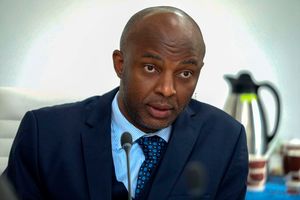
NTSA's Director of Road Safety, Dr Andrew Langat, said the balance of convenience and the public interest in road safety favoured retaining the suspension. The authority also pointed to compliance reports and two fatal incidents along the Thika Superhighway, including the death of Ms Mutuku's son.
The court considered the arguments alongside the tribunal's decision, which had not permanently revoked Nicco Movers' licence but suspended it while giving the company an opportunity to address the regulator's concerns.
Under the August 31 decision, Nicco Movers was required to address 10 concerns and proposed corrective measures contained in the minutes of a meeting with NTSA held on June 12, 2026. The company was given seven days from the date of the decision to do so. The tribunal further directed that, if the company failed to comply within 14 days, NTSA could issue a further notice requiring it to explain why its operator's licence should not be revoked.
Justice Mulwa noted that the tribunal had therefore given the company an opportunity to take corrective action and potentially have the suspension lifted by complying with its directions. She observed that there was no evidence before her showing that Nicco Movers had attempted to comply.
The company obtained an interim order on September 2, 2026, staying implementation of the tribunal's decision pending the determination of its application.
Justice Mulwa said Nicco Movers had not met the key requirement of demonstrating substantial loss. Its broad claims of financial hardship were not backed by details of the projected losses, while the tribunal had already provided a route through which the company could address the safety concerns and seek to avert revocation.