Former Nairobi governor Mike Sonko has been shut out of the murder case facing a Kenya Defence Forces captain after the High Court ruled that his good intentions towards the victim’s child did not give him a legal right to take part in the trial.
At the same time, the court rejected a separate attempt by the deceased woman’s sister to have the accused undergo a fresh mental assessment by private psychiatrists, saying victims cannot use the court process to conduct parallel investigations against an accused person.
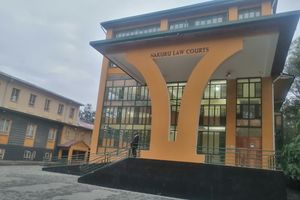
The two decisions, delivered by Justice Joseph Sergon in Nakuru on Tuesday, September 1, have narrowed the role of those seeking to participate in the case against Captain Edwin Muthomi Kaunga, who is accused of killing his wife, Ann Mugweru.
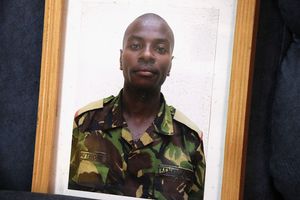
Edwin Muthomi, suspect in the murder of Annitah Mugweru
Photo credit: Pool
Mr Kaunga, a KDF captain, is accused of killing Mugweru on April 14, 2026, at St Mary’s Estate in Nakuru East.
The murder case has not proceeded to plea after prosecutors informed the court that a mental assessment had found him unfit to plead.
Sonko had sought to remain involved in the proceedings, saying he had supported the deceased’s minor child and had developed a close bond with the child following her mother’s death.
But Justice Sergon ruled that compassion and philanthropy were not enough to give him a place in a criminal trial.
“The Interested Party(Sonko) has demonstrated compassion and philanthropy,” the judge said.
He added: "This court cannot broaden or expand the definition of a ‘victim’ beyond what is given under the Victim Protection Act. To do that would open floodgates of unimaginable proportion that would clog the criminal justice system.”
Sonko told the court that after Mugweru’s death, he and Florics of Hope Africa, together with the deceased’s maternal family, had provided school fees, basic needs and other support to the child and the bereaved family.
Annitah Mugweru who was stabbed to death by her husband on Tuesday April 10, at their home in the upper hill area.
Photo credit: Pool
He said his involvement was also informed by his previous participation in criminal cases as an ambassador of social justice.
Sonko argued that the law defines a victim broadly enough to include a dependant of a deceased victim and that his continued participation was necessary because of welfare issues affecting the minor.
Justice Sergon disagreed, stating that the law provides specific categories of people who can participate in proceedings on behalf of a deceased victim. They include relatives, personal representatives, executors or administrators of an estate and court-appointed guardians.
Sonko, the judge found, did not fall within those categories.
“Legal standing can only arise from the Constitution and statute,” Justice Sergon said.
He added that the proceedings before him were about a murder charge and not the child’s guardianship, maintenance, parental responsibility, custody or welfare.
“In the end I find that the Interested Party has not demonstrated the legal basis to participate in these proceedings,” the judge said.
“Hon Mike Mbuvi Sonko shall not participate in these proceedings since he has failed to demonstrate that he is a victim or a lawful victim representative under the Victim Protection Act,” Justice Sergon ruled.
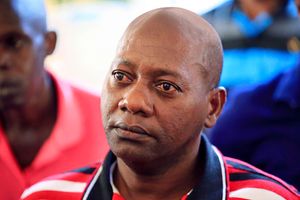
Former Nairobi Governor Mike Mbuvi Sonko testifies during the hearing of a graft case against him at the Milimani Law Courts in Nairobi on February 5, 2026.
Photo credit: Billy Ogada | Nation Media Group
The judge’s decision came after Mr Kaunga asked the court to exclude Sonko from the case and regulate his public comments about the proceedings.
Mr Kaunga complained that Sonko had made statements on social media and other platforms that could portray him as guilty before he had been tried.
Justice Sergon stopped short of imposing a blanket ban on public discussion, saying the case had attracted legitimate public interest.
“It is clear that the Interested Party does not deny making public commentary touching on the case before this court,” Justice Sergon said.
Former Nairobi governor Mike Sonko has been shut out of the murder case facing a Kenya Defence Forces captain who is accused of killing his wife, Ann Mugweru.
Photo credit: NMG
He also ordered that there should be no public discussion of the merits of the murder charge in a way that portrays the accused as guilty, no sensational reporting that could prejudice the proceedings and no commentary or publication that interferes with the fair administration of justice.
The directions came as the court also dealt with a challenge to the psychiatric assessment of Mr Kaunga.
Ms Sarah Nyokabi Mugweru, the sister of the deceased, had asked the court to order a new assessment of the accused by a private psychiatrist and psychologist of her choice.
She challenged a psychiatric report dated April 23, 2026, which found Mr Kaunga unfit to plead and stand trial.
She argued that the report was questionable because the psychiatrist had relied on information provided by the accused’s father about his mental condition instead of conducting what she considered a sufficient examination.
She also said the report appeared contradictory because the psychiatrist found that Mr Kaunga understood the seriousness and consequences of the proceedings while at the same time declaring him unfit to stand trial.
The family, she said, had known the accused for more than six years and had never witnessed the behaviour described in the report.
Edwin Muthomi, suspect in the murder of Ann Mugweru in court on April 28, 2026 where he was declared unfit to take plea.
Photo credit: PURITY KINUTHIA/ MTAA WANGU
A consultant psychiatrist from Nakuru County Referral Hospital, diagnosed him with Bipolar Mood Disorder I and Post-Traumatic Disorder with poorly treated psychosis.
The prosecution then asked that he be taken to Mathare Mental Hospital for treatment until he became fit to plead. The court allowed the request.
The State opposed her application, arguing that the original assessment had been carried out by a qualified consultant psychiatrist and that the victim’s family could not take over functions reserved for investigators and prosecutors.
Mr Kaunga also opposed the application, saying Ms Mugweru had not produced another psychiatric or psychological report challenging the findings of the consultant psychiatrist.
Justice Sergon said the deceased’s sister had a legitimate right to participate in the case and raise concerns affecting the victim.
But that right, he said, did not allow her to appoint experts to investigate the accused independently.
“The applicant therefore is not entitled to nominate psychiatrists or psychologists to undertake further investigations against an accused person,” the judge said.
He added: “The existing legal framework governing victim participation does not extend to authorizing victims to conduct parallel investigations or to procure independent forensic examinations of an accused person.”
The judge, however, acknowledged that the family had raised a genuine concern about the psychiatric report.
Rather than allow the family to appoint private experts, he said the concerns could be tested through the court process.
“The applicant’s question is a genuine concern which can be addressed through the court to facilitate the interrogation of the report by way of cross-examination of the psychiatrist,” Justice Sergon said.
If the court later finds that the report contains contradictions, it can order another assessment, he said.
“If the court is convinced that the mental assessment report is contradictory, the court has the discretion to direct that the accused be subjected to a further Mental Assessment and or examination by a government psychiatrist and not by a private psychiatrist appointed by a party such as the victim,” the judge said.