President William Ruto’s administration is increasingly being haunted by a disturbing wave of alleged extra-judicial killings, enforced disappearances, and other gross human rights violations—undermining his promise to uphold the rule of law and end such abuses.
Despite bold commitments to reform, the police continue to be implicated in these atrocities.
The Independent Policing Oversight Authority (Ipoa)—the agency mandated to check police impunity and restore public trust—has struggled to hold rogue officers accountable.
According to Ipoa Chairman Isaack Hassan, the authority has received and processed 33,791 complaints and concluded 6,082 investigations since its inception.
Disturbingly, he says, in just the past year alone, 136 deaths have been linked to police officers, with an additional 59 people reported to have died in police custody.
These chilling figures paint a grim picture of a nation still grappling with a deeply entrenched culture of impunity within its security forces—casting a dark shadow over the administration’s human rights record.
A protestor is carried away by anti-riot police officers during the Anti-Finance Bill demonstrations in Nairobi June 25 2024.
Photo credit: Francis Nderitu | Nation Media Group
What is Ipoa doing to prevent impunity and enhance professionalism in the National Police Service (NPS)?
Ipoa plays a very critical role in enhancing professionalism in the police service. This forms the basis for the formation of Ipoa, and is anchored in Article 244 of the Constitution. Ipoa, which is established under Chapter 86 of the Laws of Kenya strives to prevent impunity among police officers, by monitoring their operations that affect members of the public, investigating complaints against police officers and recommending action against officers found culpable of violating the law, including high ranking officers. Upon concurrence by the Director of Public Prosecutions (DPP), Ipoa supports the prosecution of the subsequent cases in court. Ipoa also supports victims who have filed cases in court seeking compensation by providing information and evidence to support their claims in court where Ipoa has conducted investigations. Since its inception to March 2025, Ipoa has received and processed 33,791 complaints, completed 6,082 investigations, conducted inspections in 5,289 detention facilities and police premises and monitored 751 police operations to ensure that police operations are carried out professionally and within the confines of the law. The findings from these inspections of police premises and monitoring of police operations informed recommendations which were made towards improvement of the NPS. From its investigations, Ipoa has 268 cases before court.
How many cases of alleged abductions or extrajudicial killings by police officers has Ipoa received in the last 12 months?
In the calendar year 2024, Ipoa received 4,179 general complaints and conducted 889 investigations. Specifically, the Authority registered 49 cases of alleged enforced disappearances, 136 deaths involving police officers and 59 deaths occurring in police custody.
Out of the 60 death cases registered with Ipoa as a result of the protests, the Authority has completed 22 investigations, is actively pursuing 36, and has two cases currently before the courts. Of the completed investigations, eight are under final internal review, four are in the final stages of report writing before submission to the Office of the Director of Public Prosecution (ODPP) for independent review, two were closed, four have been forwarded to the ODPP for review, and three were closed following ODPP directives. The Authority also recorded 233 injury cases during the demonstrations, with 191 currently under active investigations. Of the remaining cases, 42 were closed while 2 were forwarded to the ODPP.
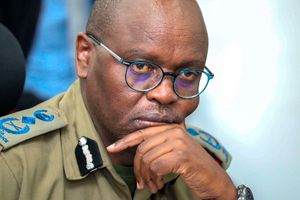
Inspector General of Police Douglas Kanja addresses journalists on June 9, 2025 at Central Police Station over the death of Albert Ojwang (inset) in police custody.
Photo credit: Billy Ogada | Nation Media Group
How many officers have been prosecuted or disciplined as a result of Ipoa investigations in the past year?
Eleven officers were convicted in 2024. Another 268 cases are pending before various courts, 82 of which are from investigations conducted in 2024 while 10 are from 2025.
Yes. Ipoa is an independent institution and discharges its mandate independently. Ipoa enjoys legal and institutional autonomy from the NPS and other state organs. It operates independently, free from external direction or influence, and is guided by a board to ensure impartial oversight. Ipoa employs professionally trained civilian investigators with expertise in law, criminology, and forensics, who handle all cases, including those involving high-ranking officers. Specialised teams may be formed for sensitive cases, with a strong emphasis on confidentiality and evidence-based findings, supported by forensic tools and independent experts.
What challenges does Ipoa face in ensuring accountability for rogue officers implicated in human rights abuses?
(i) Resource limitations, including a shortage of investigators and operational tools, contribute to case backlogs. The shortage of investigators is illustrated by Ipoa currently having only 77 investigators against a requirement of 404 investigators.
(ii) Budget constraints impact Ipoa’s ability to respond swiftly and maintain regional presence, affecting the timeliness and reach of its investigations. Of the Authority’s budget requirement for the financial year 2025/2026 of Sh2.2 billion, only Sh1.3 billion has been allocated, highlighting the constrained circumstances that Ipoa will have to operate within in the coming operation circle.
(iii) Non-cooperation from some police officers hinders investigations, where they delay or refuse to provide evidence or appear for questioning or submit firearms for ballistic analysis.
(iv) The above issue of non-cooperation is compounded by the "blue code of silence" culture. Where police officers, including those in superior positions, cover up for each other, thus complicating our efforts to unearth the truth through investigations.
(v) Additionally, crime scenes are sometimes tampered with before Ipoa arrives, and the absence of reliable surveillance infrastructure impedes verification.
(vi) There is currently no independent national forensic laboratory. Ipoa therefore still has to rely on the police for purposes of forensic analysis of evidence collected thus delaying investigations and at times compromising the evidence.
(vii) Many complaints are reported long after incidents occur, making evidence collection difficult.
(viii) Another issue is witness intimidation, particularly in areas with a strong police presence, where victims and witnesses often fear harassment, arrest, or violence from the very officers they report.
(ix) Moreover, conducting investigations in remote or conflict-prone regions presents logistical and safety challenges.
(x) There are legal challenges, for instance, Ipoa is not legally empowered to arrest rogue officers. The Authority also does not have powers to prosecute and therefore upon completion of investigations has to wait for DPP to review the investigation findings to make a decision on whether to charge or not. At the moment, there are currently 174 cases pending review at the ODPP.
(xi) Lastly, Ipoa cases also take long in court before they are finalised, thus delaying access to justice for victims and/or their families.
Activists, led by Florence Kanyua, protest outside the office of the Inspector General of Police, Douglas Kanja, in Nairobi on June 10,2025 after the release of the autopsy report of Albert Ojwang who died at Central Police Station.
Photo credit: Evans Habil | Nation Media Group
As an institution, we handle all cases impartially. Political sensitivity is not a consideration to us. The Authority’s investigations and recommendations are purely evidence based.
We have measures to ensure that matters reported to us or those we take up on our own motion are not interfered with, at whatever level, right from the complaints management. Pursuant to those legal provisions during investigations, all documents related to the investigation are confidential and are not subject to public disclosure. This is to maintain the integrity of investigations and to ensure the safety and security of witnesses and complainants. Exhibits and evidence collected from scenes of incidents are stored and secured in our forensic laboratory. Similarly, Ipoa files are secured with modern equipment coupled with a robust document movement register for accountability and to prevent non-interference.
Does Ipoa have sufficient resources—financial, personnel, and technical—to carry out thorough investigations nationwide?
One of the biggest challenges that Ipoa has faced over the years is underfunding. Of the Authority’s budget requirement for the financial year 2025/2026 of Sh2.2 billion, only Sh1.3 billion has been allocated, highlighting the constrained circumstances that Ipoa will have to operate within in the coming operation cycle. The situation affects our key mandate areas. We have appealed to the National Assembly for more resource allocation to ensure that we effectively deliver on our mandate.
How often does Ipoa conduct audits or reviews of police operations during protests or security crackdowns?
Section 6(c) of the Ipoa Act mandates the Authority to monitor and investigate policing operations affecting members of the public. So far, we have monitored 661 police operations from inception during police operations, and as a result, made our recommendations to relevant authorities, including the police service.
How does Ipoa protect victims and witnesses who report police abuses, especially in politically charged environments?
Ipoa works closely with the Witness Protection Agency (WPA) with whom we have a Memorandum of Understanding, to help guarantee safety to witnesses perceived to be under threat. To protect witnesses and victims from intimidation and harm, Ipoa maintains strict confidentiality by anonymising all individuals involved in investigations. This helps shield their identities throughout the process. Ipoa also always urges complainants to report any incidents of intimidation. Police officers who threaten, intimidate, or interfere with witnesses or investigations also face disciplinary or legal action to ensure accountability. In some cases, Ipoa recommends criminal charges against the officers who attempt to interfere with investigations or proceedings.
What kind of support is provided to families of victims of enforced disappearances or extrajudicial killings?
Ipoa provides emotional and psychological support through its Psychosocial Support Division. Ipoa encourages timely reporting of threats and maintains regular contact with witnesses and victims to monitor their well-being, ensuring they feel supported during and after investigations. Ipoa also supports victims or families of victims who have filed cases in court seeking compensation by providing information and evidence to support their claims where the Authority has conducted investigations.
A protestor confronts a police officer outside the office of the Inspector General of Police, Douglas Kanja, in Nairobi on June 10,2025 after the release of the autopsy report of the Albert Ojwang who died at Central Police Station.
Photo credit: Evans Habil | Nation Media Group
Ipoa conducts public engagement forums and leverages social media platforms to engage the public and collect feedback. We also have a robust website and blog that relay our periodic reports and investigation updates. Ipoa policy on disclosure of investigation findings and reports is guided by Sections 6 (j) and 24 (15) of the Ipoa Act and Regulation 139 of the Ipoa (General) Regulations 2024. Upon the conclusion of each investigation, findings are communicated to the complainant and brief summaries of key findings are disclosed in its performance reports to promote transparency. Ipoa also gathers feedback that informs its investigative processes, helps identify potential witnesses and perpetrators of misconduct, and enhances service delivery. The Authority also conducts an annual customer satisfaction survey, which serves as a key tool for internal evaluation and continuous improvement. These are used as a resource for developing evidence-based policy recommendations to the National Police Service and other relevant agencies.
In tandem with your question above, Ipoa monitors the conduct of the police during demonstrations to ensure that they act within the precinct of the law. We monitor the use of force, deployment and overall activities of the police during the demonstrations. From the monitoring, we generate policy recommendations for improvement of policing during demonstrations and also take up investigations in observed misconduct incidents.
Is Ipoa advocating for any legislative or policy reforms to better address human rights violations by the police?
The Authority has made many legislative reform proposals, which, if adopted, will provide a robust legal framework to address violations by the police. To highlight just a few, the Authority has proposed legislative amendments to the National Police Service Act to entrench command responsibility, which, if adopted, will ensure police superiors who know that their subordinates are engaged in human rights violations but fail to prevent, repress or report it are also held criminally liable. The Authority has also made proposals for the amendment of the Public Order Act to ensure police accountability during public order management. This includes proposals requiring police officers to be identifiable and not conceal themselves or their vehicles, and introducing penal consequences for police who conceal their identities. The Authority has also advocated for the enactment of domestic legislation criminalising enforced disappearance. The Authority has also advocated for the operationalisation of the National Coroners Service Act, 2017, by establishing a National Coroners Service. This will go a long way in ensuring accountability in cases of extrajudicial killings since forensic investigations in such cases will be carried out by a professional National Coroners service.
What is Ipoa’s view on the continued existence of elite police units often linked to rights violations?
Generally, Ipoa supports lawfulness within all the operations and formations that exist in the NPS. It is when such units or individual members of the NPS misconduct themselves, including abusing the rights of Kenyans, that Ipoa becomes involved and pursues justice for victims. The mandate to exercise effective command over the police service rests with the Inspector-General of Police (IG), including the establishment of police units. All police officers are required to conduct themselves within the strictures of the law and are within the oversight mandate of the Authority. Where they misconduct themselves, the IG is required to cooperate with the Authority in ensuring they are held accountable.
How does Ipoa collaborate with other institutions such as the Kenya National Commission on Human Rights or the Office of the Director of Public Prosecutions (ODPP)?
Depending on the mandate area, Ipoa works closely with these institutions and other state and non-state actors. Ipoa collaborates with the Kenya National Commission on Human Rights, to ensure that the police operations are conducted in accordance with international human rights standards. The Authority supports the ODPP in prosecution of police cases investigated by the Authority by providing witnesses and evidence, and in select cases also having its lawyers attend court to support the prosecutor.
Has Ipoa made any formal recommendations to the Interior Ministry or National Police Service in response to the recent protest-related abuses?
Ipoa has made submissions and held several meetings with the Ministry, Parliament and Senate on its observations during and after the demonstrations in 2024. The Authority has also operationally engaged with the National Police Service and the ODPP over the same (4 cases have been forwarded to the ODPP for review, and 3 were closed following ODPP directives). As foretasted, the Authority has also made proposals to the Ministry of Interior on amendments to the Public Order Act, the National Police Service Act, and the Ipoa Act, amongst others, to strengthen the legal framework on police accountability following police excesses during the protests.
Judging from the milestones achieved since its inception, which include completing 5,947 investigations, Ipoa is effective in its civilian oversight role. Currently, 4,768 cases are under active Ipoa investigations. Ipoa is currently working on increasing its investigative capacity by hiring additional investigators to expedite the cases to conclusion. We have also established a prioritisation formula to expedite high priority cases, including those involving the Gen Z investigations. Ipoa also plans to open more regional offices to enhance its operational effectiveness and accessibility.
What challenges do you face while dealing with reports against police officers yet you also need the police for protection?
Ipoa and the police operate under uniquely separate mandate areas. Some of the challenges our officers have faced have already been mentioned above. However, non-cooperation by police officers remains significant.
What steps is Ipoa taking to rebuild public trust in the oversight process and in policing institutions?
To rebuild public trust in civilian oversight, Ipoa is dedicated to conducting its work impartially and independently, ensuring officers are held accountable for their actions. The Authority also contributes to policy development and legislative reform, playing a significant role in the implementation of the Maraga Taskforce recommendations and participating in other national reform committees. Ipoa has also constantly advocated for improved welfare for officers, recommending better working conditions, mental health support, and policies to enhance professionalism. By engaging the public in awareness campaigns, Ipoa educates them on police misconduct reporting. Ipoa is committed to this investigation reassures all of its dedication to conducting investigations with impartiality, as it delivers its mandate.