Hello

Your subscription is almost coming to an end. Don’t miss out on the great content on Nation.Africa

Ready to continue your informative journey with us?

Hello

Your premium access has ended, but the best of Nation.Africa is still within reach. Renew now to unlock exclusive stories and in-depth features.

Reclaim your full access. Click below to renew.

Kenya Exports
Caption for the landscape image:

Why you are paying more for avocados

Scroll down to read the article

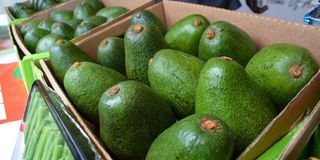
The Agriculture and Food Authority says that the temporary freeze will help to safeguard Kenya’s avocado export standards.

Photo credit: File | Nation Media Group

Hellen Okoth describes herself as a lover of avocado fruits.

Every Sunday, which is a market day at Kibuye in Kisumu County, she heads out to buy enough avocados to last her a week.

Apart from making avocado juice, Hellen incorporates the fruit into nearly every meal.

From breakfast to supper, you will always find a slice of avocado on her plate.

“I love avocados so much. I eat them with githeri, rice, and vegetables,” she says.

However, for the past two weeks, the prices have become unbearable. Both on the streets and in the market, a single avocado now sells for Sh80.

Previously, traders sold each fruit for between Sh10 and Sh20.

For avocado lovers like Hellen, buying as many as one can afford now requires digging much deeper into the pocket.

Traders are well aware that demand is high, and many have taken advantage by hiking prices.

Shelton Omollo, a Kisumu resident, says traders hardly allow room for bargaining.

Avocado

The government plans to close the export window for sea shipments of avocado on October 20, 2025 in an attempt to stop the export of unripe fruit and protect the country's reputation in foreign markets.

Photo credit: File

“The traders are complaining that there’s a shortage of fruits. Even the ones available must be bought unripe, meaning they are selling immature fruits,” Mr. Omollo says.

At Kibuye Market, trader Anne Kemunto noticed the avocado shortage when only a few sacks began arriving.

“We are now selling avocados for between Sh50 and Sh70 each. Initially, it was Sh20 to Sh30,” she says.

Kemunto relies on middlemen who source avocados from the western region.

She notes that most of what arrives is unripe and of poor quality, which affects her business.

“Some go bad before they even ripen. Customers are unhappy with the prices, and it’s harder to find good avocados than it used to be,” she adds.

Hesitant buyers

A similar situation is unfolding at Jubilee Municipal Market, where trader Racheal Moraa is struggling with rising prices and hesitant buyers.

“Currently, I am selling a piece between Sh50 and Sh70. They used to sell at Sh20,” she says.

Moraa explains that the price surge has changed buying patterns, with customers purchasing fewer avocados or none at all.

She sources most of her supplies from Nyahera and neighbouring Vihiga County.

“Getting big avocados depends on luck. We mostly get small and immature ones that take a long time to ripen,” she adds.

Trader Felix Ouru also notes that scarcity has affected all market stalls.

“Surprisingly, the local varieties, which are the ones available, have become more costly than foreign varieties like Hass and Fuerte,” he says.

However, Kisii farmer Boniface Nyagaka explains that avocados are currently off-season, leading to the market shortage.

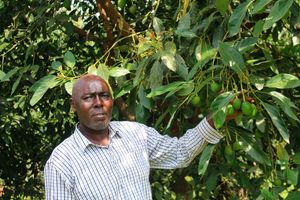
“I have close to 100 trees on my farm. Most of the fruits are immature and will probably be ready by February next year,” Nyagaka says.

Muhoroni Avocado Farmers’ Co-operative Society Vice Chairman Noah Okoth notes that the shortage is not only national but global.

“That’s why the Agriculture and Food Authority (AFA) conducted a survey across the country and found that there are not enough volumes for the export market,” Okoth explains. 

As a result, the few fruits available are fetching high prices locally.

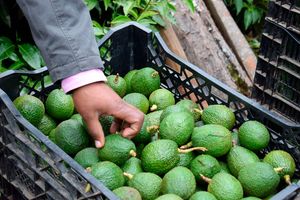
The regulator’s move seeks to curb the harvesting of immature crops following rampant cases of traders picking young avocados to capitalise on high international prices.

In global horticulture, fruit maturity is crucial for quality. Exporting immature avocados leads to poor shelf life, dissatisfied international buyers and loss of market trust.

“The ban was meant to protect the Kenyan market from unscrupulous traders exporting immature fruits. This helps minimize crop cycle interruptions caused by premature harvesting, which reduces projected yields in subsequent seasons,” he says.

According to AFA, exports of Hass, Fuerte, Pinkerton, and Jumbo varieties will continue only by air shipment.

Avocado remains a key contributor to Kenya’s horticulture earnings, accounting for nearly half of total fruit revenue.

Kenya is currently the top avocado exporter in Africa, competing mainly with Mexico and Peru, whose peak export season falls in June.

According to the Horticulture Crops Directorate, Kenya led Africa’s avocado exports last year and ranked among the world’s top 10 producers, with Murang’a County contributing 31 percent of total national output.

Yet, the country exported only 10 percent of its avocado production—showing that market potential is far from fully exploited.

The value of Kenya’s avocado exports in 2024 is estimated to have risen by 11 percent to reach $159 million, driven by increased global demand and improved competitiveness.

Domestic consumption accounts for 47 percent of national production, with 2025 projections estimated at 280,000 metric tons.

AFA says it will continue monitoring avocado maturity trends and will review the situation in the second week of January.

Follow our WhatsApp channel for breaking news updates and more stories like this.