Foreign Affairs Principal Secretary Korir Sing’oei may have meant to echo his President’s comments on the Gulf crisis. But he became the first Kenyan official targeted by Iran in a public lecture on the UN Charter and sovereignty.
On Tuesday, the Iranian Embassy in Nairobi accused him, and by extension Kenya, of ignoring the broader context of the conflict between the US and Israel versus Iran, urging the country to “stand on the right side of history”.
Last week, Sing’oei, said he held a phone call with Abdulla Balalaa, UAE Assistant Minister of Foreign Affairs for Energy and Sustainability, during which he was briefed on the impact of the incidents across Gulf Cooperation Council (GCC) countries.
“I conveyed to him Kenya’s solidarity, in line with President Ruto’s position, and assured him of our readiness to work with the UAE to respond through diplomatic means to this escalating situation,” Sing’Oei wrote on X.
In response, the Iranian Embassy in Kenya defended Tehran’s actions, attributing the recent hostilities to the United States and Israel. The embassy cited United Nations General Assembly Resolution 3314, which defines acts of aggression, and accused Washington and Tel Aviv of violating Article 2(4) of the UN Charter, which prohibits the use of force against the territorial integrity of other states.
Tehran said its military operations were conducted in self-defence, targeting only military installations and following international law principles of necessity and proportionality.
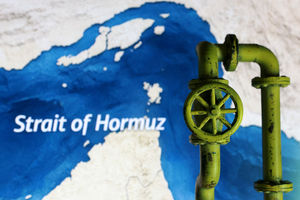
The embassy also addressed concerns over the strategic Strait of Hormuz, where tensions have disrupted maritime traffic. “As the coastal state, Iran has introduced necessary restrictions to ensure safe passage. Vessels belonging to non-belligerent countries may conduct innocent passage in coordination with Iran,” the embassy said. It added that vessels from belligerent nations, including the US and Israel, would not be permitted to use the waterway.
Iran called on the international community to condemn what it described as aggression and to support its right to defend sovereignty and national security.
The diplomatic exchanges come amid rising threats, with US President Donald Trump recently warning that failure to reopen the Strait of Hormuz could provoke devastating consequences.
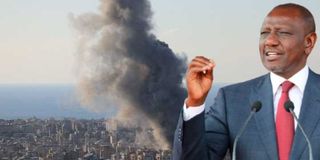
Foreign Affairs PS Korir Sing'oei.
The Nation reached out to Sing’oei for a comment but he had not responded by the time we went to press.
The latest developments underscore growing tensions in the Gulf, with no immediate signs of diplomatic resolution.
Kenya’s stance emphasises restraint and diplomacy amid a conflict involving the United States, Israel, and Iran, with far-reaching implications for global security. Authorities have also warned Kenyans in the Middle East to exercise caution as tensions rise.
The Iranian Embassy in Kenya defended Tehran’s military actions as lawful self-defence and blaming regional aggression on the United States and Israel.
Tehran has since been calling on other nations to condemn “unlawful military interventions” and “stand on the right side of history,” asserting that disruptions to strategic maritime routes result from external powers, not Iranian policy.