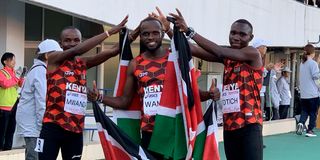
Ian Wambui’s remarkable performance at the recently concluded 2025 Deaflympics in Tokyo has again highlighted the exceptional talent among Kenyan athletes living with disability.
After winning gold medal in the men’s 10,000 metres at the Games held from November 15 to 26, Wambui, 24, won another gold medal, and also broke the world and Deaflympics record in the men’s 5,000m, running a blistering time of 13 minutes and 52.83 seconds.
He broke the previous world, and Deaflympics record of 14:02.90 set by Kenya’s Symon Kibai in 2013 Deaflympics in Sofia, Bulgaria.
Despite their success globally, Kenyan athletes with disabilities still lag behind in receiving fair treatment compared to their able-bodied counterparts. On Wednesday as the world marked International Day of Persons with Disabilities, sports administrators and coaches handling players with disability spoke of how the athletes are still discriminated against in sports.
For instance, visually-impaired athletes in Kenyan national teams still lack suitable competition equipment and competition venues, suitable access areas in stadiums, and corporates are hesitant to sponsor teams of people living with disability “because their games are less exciting.”
Athletes living with disability are also forced to compete in leagues for able-bodied people because they lack own leagues. Alfred Simiyu, the president of the Kenya Wheelchair Basketball Federation says that although there has been improvement by the national government in catering to the needs of athletes with disabilities, many of their needs still remain unmet.
He cited the continued neglect in providing conducive training and playing venues, equipment, proper preparation of teams ahead of competitions and lack of support from both corporates, and county governments.
“Only Nyayo National Stadium, and Kasarani Stadium are friendly to disabled athletes, but whenever the facilities are engaged, we are normally locked out. That leaves us with no room for training,” said Simiyu, who is also the vice president of the Ability Sports Kenya Federation.
He noted that most of the local sports facilities are not conducive for disabled athletes. Although the government has waived training fees for disability teams at its facilities, they still have to pay to host competitions at the venues.
Speaking after winning an unprecedented third straight gold medal in the men’s 3,000 metres steeplechase at the Deaflympics, Kenya’s Lucas Wandia expressed his frustration over lack of support for deaf athletes.
So dire is the situation Simiyu says the Kenya Wheelchair Basketball team has not trained for a month now due to lack of a suitable venue. He said efforts to get support from local companies, and county governments have proven futile, forcing the disability teams to withdraw from several tournaments.
As of Thursday, the Nairobi Para-Volleyball team was yet to get sponsorship from Nairobi County government to participate in a local tournament in Makueni County, which also serves as the national selection event for next year’s World Para-Volleyball Championship in China.
“Many (corporate organisations) don’t come on board so we suffer silently. The county governments don’t give even a coin to the disability teams from their counties,” said Simiyu.
After the government dropped seven teams from participating in the Tokyo Deaflympics due to budget constraints, some unsuccessfully sought corporate sponsors. Women’s football, bowling, badminton, tennis, table tennis, cycling, and women’s volleyball teams were dropped.
Simiyu said teams are forced to compete using worn-out wheelchairs purchased more than a decade ago. During the Kenyan trials for 2025 Deaflympics held in September at Ulinzi Sports Complex, there were no starting lights for races.
Instead, officials used flags. Because they can’t be guided by sound due to hearing impairment, communication is done using visual signals such as flashing lights for starting races.
“Without the right equipment, when we go to international competitions, our athletes lag behind. Some get false starts and risk being disqualified. For example if you are used to starting lights, your reaction improves and that is very critical in a race,” said Kenya Deaf athletics coach Samuel Kibet.
Unlike the able-bodied teams, Simiyu said that disability teams don’t hold residential training camps before competitions except for major ones like Paralympics and Deaflympics.
Due to lack of local leagues and competition for disabled athletes, some have joined teams for able-bodied athletes. Point guard Winnie Adhiambo who was one of the outstanding players in Tokyo features for the Footprints in the Women’s Division One side.
The Kenya men’s deaf handball team which competed in Deaflympic Games competes against the hearing sides in the Kenya Handball Federation Men’s National League.