The standoff between President William Ruto and Trans Nzoia Governor George Natembeya over the alleged “hijacking” of county development projects has exposed a wider national contest over who controls development initiatives and takes political credit for them.
Governors and the national government have increasingly clashed over the funding, implementation and ownership of projects in counties, with experts warning that the turf wars risk undermining devolution and delaying service delivery.
Last week, Mr Natembeya accused President Ruto of taking credit for county-funded projects, including a market and hospital during his visit to the region.
The governor said the county government, working with the World Bank, had spent more than Sh800 million on the construction of Masinde Muliro Market in Kitale, while the national government contributed Sh56 million towards completing the remaining works.
Mr Natembeya accused the President of claiming credit for a project largely funded by the county government.
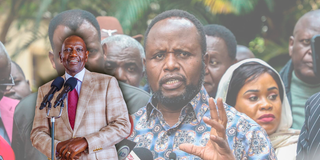
President William Ruto (left), and Trans Nzoia County Governor George Natembeya addressing members of the public at Kitale Bus Park after inspecting Masinde Muliro Ultra-modern Market in Kitale on January 17, 2024.
Photo credit: Jared Nyataya | Nation Media Group
The planned construction of a Sh1 billion Level Five hospital in Trans Nzoia has also become a source of friction, with Mr Natembeya protesting that he was not consulted before the project was initiated.
President Ruto, while launching construction of the 300-bed facility, accused the governor of obstructing the development of critical health infrastructure in the county.
Although the dispute is partly linked to political alignments ahead of next year’s General Election, with Mr Natembeya against those opposing President Ruto’s re-election in 2027, a Nation review established that similar battles for control are playing out across the country. Underlying this is protecting devolved functions and taking political credit, especially with an election approaching.
The standoffs have raised questions about the constitutional boundaries between the two levels of government, particularly where projects involve shared funding, implementation responsibilities or functions assigned to counties.
The Fourth Schedule of the 2010 Constitution outlines the respective responsibilities of the national and county governments. However, disputes over funding, implementation and ownership of projects have increasingly strained relations between the two levels of government.
Experts now warn that such turf wars risk eroding the gains of devolution. Dr Ekuru Aukot, who was also involved in drafting the 2010 Constitution, says the law explains the relationship between the two levels of government.
"The relationship between governors and the national government is governed by the Constitution. Article 6(2) of the 2010 Constitution provides that the national and county governments are distinct and interdependent and requires them to conduct their mutual relations through consultation and cooperation," says the Constitutional lawyer and founder of Third Way Alliance Kenya.
According to Governance expert Dr Peter Mbae, the wars over devolved development threaten devolution and good governance.
"The turf wars over who owns development projects in counties, who takes credit and about their implementation and funding risks undermining devolution. The projects serve citizens rather than political leaders," he told the Nation.
He noted that the Trans Nzoia feud is just part of a broader struggle over the constitutional relationship between the national government and county administrations.
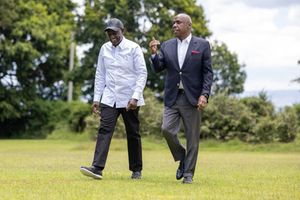
Masinde Muliro Bus Park in Kitale, Trans Nzoia County which was commissioned by President William Ruto on October 16, 2026.
Photo credit: Jared Nyataya | Nation Media Group
Lawyer Steve Kabita said the Trans Nzoia dispute reflected a broader struggle over the constitutional relationship between the national government and county administrations. He said both levels of government “need to conduct their mutual relations through consultation and cooperation”.
“None of the governments should claim credit or ownership of projects implemented by the other,” he said.
On September 19, 2026, Defence Cabinet Secretary Soipan Tuya warned that poor cooperation between the two levels of government risked frustrating development projects in counties.
Speaking in Maralal during the launch of a stadium project, CS Tuya said disagreements had left some communities waiting for facilities meant to serve them.
She claimed some national government projects had stalled in counties where governors were unwilling to cooperate, contrasting the situation with Samburu, where Governor Lati Lelelit had provided land for the construction of the new Maralal Stadium.
She added that national government projects often required support from county administrations to succeed.
“National Government cannot work alone. Cooperation between the two levels of government is necessary because national projects often require support from county administrations,” she said.
The dispute between governors and MPs over the Roads Maintenance Levy Fund (RMLF), a multi-billion-shilling pool collected through fuel levies, is another example of the contest over functions and resources between the two levels of government.
The Council of Governors (CoG) is demanding that up to 42 per cent of the fund, or at least 15 per cent, be allocated directly to county governments.
Senators have backed the governors, arguing that counties manage a substantial share of the country's rural and local road networks and should therefore control a larger portion of the fund.
However, the National Assembly's Committee on Transport and Infrastructure backed the Kenya Roads (Amendment) Bill, which proposed allocating only five per cent of the RMLF proceeds to counties.
Governors have renewed their demand for 42 per cent of the fund, arguing that they manage more than three-quarters of Kenya's road network.
Construction works by Kenya Rural Roads Authority.
Photo credit: File | Nation Media Group
They are also pushing for the transfer of road functions managed by the Kenya Rural Roads Authority (KeRRA) and the Kenya Urban Roads Authority (KURA), insisting that counties need the corresponding resources to maintain and expand the networks under their control.
The Nation established that disagreements over the allocation of responsibilities and resources have contributed to frustrations over road development, with residents in several counties continuing to contend with dilapidated roads.
Governors have also clashed with President Ruto's administration over the funding and implementation of the County Aggregation and Industrial Parks programme, a flagship initiative intended to boost local manufacturing.
Under the programme, each county government was expected to contribute Sh250 million, with the national government matching the amount to finance the projects.
However, some governors have questioned the manner in which the programme was rolled out, arguing that the national government pushed ahead without adequate consultation and before land ownership documents, including title deeds and lease certificates, had been secured.
They have also raised concerns about escalating costs, saying the programme, initially estimated at Sh23.5 billion, could exceed its budget because of design changes, land-related challenges and delays.
Nyeri Governor Mutahi Kahiga.
Photo credit: Joseph Kanyi I Nation Media Group
Nyeri Governor Mutahi Kahiga criticised the rushed implementation, saying counties had different needs that had not been adequately considered.
“Everything was done in a hurry and the figure then became a decree, but it would cost even more because every county has its own intent,” he said.
Senators have also warned that the multi-billion-shilling investments could become white elephants if the disputes and implementation challenges are not addressed, resulting in poor value for public money.
Investigations by the Nation have established that some governors have resisted President Ruto's directive to deploy the military to help counties complete stalled projects.
The reluctance stems partly from fears that the President and the national government could take political credit for projects initiated by county administrations once completed, despite having made little or no contribution to their original development.
The projects include health facilities, markets and stadiums.
A governor who spoke to the Nation on condition of anonymity said he was apprehensive about handing over a stalled health facility because the national government could claim credit once it was completed.
“I can't allow the Kenya Defence Forces to complete the project, because the President will claim ownership and credit after it is complete. I better struggle with it until it is complete,” the governor said.
The military has been deployed to oversee the implementation of various infrastructure projects across the country, including at least 70 health facilities and several stadiums.
Although health services and county markets are devolved functions, the administration has defended its involvement, saying the interventions are intended to bring services closer to the people and complete projects that have stalled.
While proponents argue that the military's involvement can cut through bureaucratic delays and accelerate delivery, critics have questioned whether the national government's intervention amounts to an encroachment on county responsibilities.
Another Governance expert, James Mungai, said the national government's involvement in health infrastructure raised constitutional concerns.
“Health is a devolved function. The national government's aggressive push to fund, build and upgrade health facilities violates the Fourth Schedule of the Constitution, which explicitly designates county health services as a devolved function,” he said.
Several projects illustrate the growing involvement of the national government in infrastructure initially undertaken by county administrations.
Kakamega County Teaching and Referral Hospital.
Photo credit: Isaac Wale | Nation Media Group
In Kakamega, the Kenya Defence Forces is constructing the Sh6.2 billion Kakamega County Teaching and Referral Hospital, a 750-bed facility initiated by former governor Wycliffe Oparanya.
The national government has injected Sh500 million, while the county has allocated Sh300 million towards completing and equipping Phase One of the hospital.
Once operational, the facility is expected to expand access to specialised healthcare and serve Kakamega and the wider Western region.
In Narok, the national government is constructing Sogoo Level Four Hospital.
In Nakuru, the military has taken over construction of Olenguruone Stadium in Kuresoi South, 13 years after the project stalled.
Construction began in 2012 after a contractor was awarded Sh73 million out of the total contract sum of Sh290,643,600.
The Sh650 million renovation of the 60-year-old facility to international standards began two years ago and is now about 98 per cent complete.
The military has also completed construction of a trauma centre at Nakuru County Teaching and Referral Hospital. The project was conceived in 2012 but stalled after Sh70 million had been spent on it.
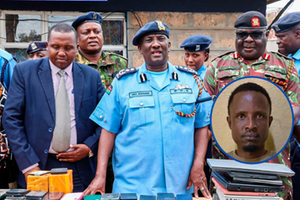
Nakuru Governor Susan Kihika during celebrations to mark International Day for Disaster Risk Reduction at Nyayo Gardens in Nakuru Town on October 13, 2026.
Photo credit: Boniface Mwangi | Nation Media Group
Governor Susan Kihika has praised President Ruto's intervention through the military, saying the projects would benefit local communities, particularly young people.
“The completion of the projects would inspire hope and ignite passion among the surrounding communities, especially the youth eager to engage in sports and talent development. The stadium, located in Amalo Ward, Kuresoi South constituency, has been officially handed over to the military for redesign and completion following my appeal to the President,” she said recently.
“We as government have a responsibility to create every opportunity for youth to nurture and exploit their full potential,” she added.
In Nyandarua, Nyeri and Laikipia, the KDF has taken charge of several projects that had remained incomplete for years.
They include Ol Kalou Stadium in Nyandarua, Ruringu Stadium in Nyeri and the Sh1.5 billion Ol Kalou Mashujaa Hospital Complex.
Defence Principal Secretary Dr Patrick Mariru said the hospital's expansion would improve access to specialised treatment.
“Healthcare is also one of the Kenya Kwanza administration's top priorities. The expansion of the Ol Kalou Mashujaa Hospital Complex will enhance access to specialised medical care and broaden treatment options for Nyandarua residents,” he said.
In Nandi, the KDF is overseeing the construction of Kipchoge Keino Sports Stadium in Kapsabet. The facility, named in honour of the Olympic legend, is intended to promote sports development and nurture talent.
In neighbouring Uasin Gishu, the military is overseeing the construction of Kipchoge Keino Stadium in Eldoret, with plans to upgrade it to a 15,000-seat facility.
Last year, President Ruto commissioned the upgraded Keroka Level Four Hospital, which was refurbished and equipped by the KDF in collaboration with the Ministry of Health.
Last week, Mwea MP Mary Maingi and Kirinyaga Governor Anne Waiguru clashed over who should take credit for a series of local projects, including a hospital.
Ms Maingi claimed ownership of the projects in her constituency, while Ms Waiguru said the initiatives, including the hospital, were projects she had lobbied the President to secure for the area.
The dispute illustrates how competition for political credit has spread to different levels of leadership, potentially overshadowing the public interest the projects are supposed to serve.
Nominated MP Sabina Chege.
Photo credit: Francis Nderitu | Nation Media Group
Nominated MP Sabina Chege cautioned the national government against taking over functions constitutionally assigned to counties, while urging both levels of government to cooperate.
“The Constitution clearly defines the functions of the two levels of government, including healthcare, agriculture and water. The national government should not forcefully take over responsibilities of county governments; it should support [them]. At the same time, counties cannot force the national government into an agreement that maybe they are not comfortable with,” she said.
“Development should also not become a political contest between counties and the national government. We all serve the same people. The two levels of government should instead partner on development projects through agreements,” she added.
DAP-K party leader Eugene Wamalwa, a former Devolution Cabinet Secretary, also called for closer cooperation between the two levels of government.
“Public facilities should serve citizens, regardless of whether they were established or managed by the national or county government. The Constitution of Kenya mandates the two levels of government to work together. There are no people belonging to the national government and others to the county government,” he said.
Mr Wamalwa said closer collaboration would ensure residents received quality healthcare and other essential services.
Governors have repeatedly raised concerns over what they describe as the continued centralisation of devolved functions by the national government, arguing that the practice undermines service delivery, resource utilisation and the spirit of devolution.
During the 12th ordinary session of the National and County Governments Coordinating Summit in December last year, President Ruto's administration moved to resolve the longstanding impasse over the control and transfer of devolved functions worth billions of shillings.
In its communiqué, the summit directed the Intergovernmental Relations Technical Committee (IGRTC) to accelerate the unbundling and delineation of contested functions earmarked for transfer to counties.
It also tasked the Commission on Revenue Allocation and the National Treasury with verifying the financial resources tied to those functions, with the findings expected to guide allocations under the Division of Revenue Act for the 2026/27 financial year.
The standoff had persisted for years, with county governments accusing the national government of retaining functions that should constitutionally be performed by devolved administrations.
An initial valuation by the IGRTC put the value of functions still being performed by national government entities, despite falling under county jurisdiction, at Sh272.2 billion.
In November 2023, the committee gazetted elements of 65 functions for transfer following extensive consultations with stakeholders.
They included forestry, mining, cinemas and video shows, betting and gambling oversight, water and sanitation services, street lighting, county abattoirs and fisheries extension services.
Other functions earmarked for transfer included plant disease control, animal husbandry, solid-waste management, veterinary services, excluding professional regulation, and ambulance services.
Governors have also continued to press for the transfer of road functions managed by KeRRA and KURA, arguing that counties should receive the resources necessary to maintain and expand the roads under their jurisdiction.