For the first time since Egypt navigated a solitary path to the 1934 finals in Italy, Africa has arrived at the 2026 Fifa World Cup not as an underrepresented continent fighting for scraps, but as a commanding 10-team powerhouse. Of course, it was not the perfect start for Bafana Bafana as they went down 2-0 at the Estadio Azteca.
But the expansion to a 48-team tournament has unlocked the continent's true depth. It comes exactly four years after Morocco’s magical run to the semi-finals in Qatar permanently rewrote the global perception of African football. Now, scattered across the vast infrastructure of Canada, Mexico, and the United States, 10 African nations have established their official Team Base Camps (TBCs)—their critical "homes away from home" where tactical plans will be hatched, injuries treated, and history pursued.
The Mexican contingent: Roots in the high altitude
Of the record 10 African participants, three have chosen to anchor themselves in Mexico's distinct climate and high altitude. Chief among them is South Africa, whose return to the tournament for the first time since hosting in 2010 feels deeply poetic.
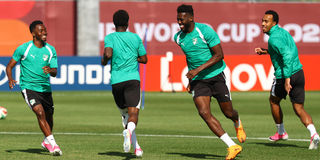
Hugo Broos’ Bafana Bafana squad have set up camp at the Universidad del Fútbol, the elite training complex of Liga MX giants CF Pachuca. Situated nearly 2,400 metres above sea level, Pachuca provided the perfect physiological preparation for Bafana's seismic Group A curtain-raiser against co-hosts Mexico.
South Africa players during training at Estadio Hidalgo in Pachuca, Mexico on June 3, 2026.
Photo credit: Reuters
“Once FIFA had done the group draw, I knew that the game against Mexico should be a special game for us. Not because it's Mexico, but because we had to play that game at high altitude,” the Belgian said.
“In 1986, I was here with the Belgian national team as a player (at the World Cup). So I knew that we needed a high-altitude camp before we played Mexico.
“So I met the people from Pachuca already in Washington. They proposed the location here, and I said to them, ‘Okay, we will see in the next few weeks what we are going to do and what the best options are, and we will let you know’.
“There were a few other options, but one thing was very important for me, the fact that we should be already in Mexico and start the high-altitude camp and not have to do a trip again from, I don't know where, to come here in Mexico a few days before the game.
"I'm very pleased with the facilities, with the two nice pitches where we can train, the fitness room, the hospital, everything that we need to have a very good preparation.”
Joining them in Mexico are the Carthage Eagles of Tunisia. Sabri Lamouchi's men have settled into Monterrey, using the world-class Rayados Training Centre as their base. Placed in a heavy-hitting group stage alignment alongside Sweden, Japan, and the formidable Netherlands, Tunisia will look to winger Elias Achouri to inspire a breakthrough past the first round, a feat that has eluded them across six previous tournament appearances.
The East Coast hubs: Giants in the American spotlight
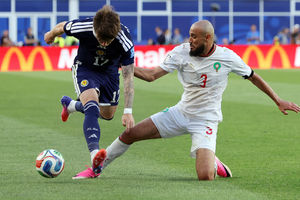
For Africa’s heavyweight contenders, the sprawling football infrastructure of the United States East Coast offers familiar, top-tier comfort. Morocco, currently carrying Africa's highest FIFA ranking at number 8, has bypassed the host cities to put down roots at The Pingry School in the New York-New Jersey metro area. Under coach Mohamed Ouahbi, the Atlas Lions faced an explosive Group Stage opener against Brazil on June 13, before navigating fixtures against Scotland and Haiti. With world-class defender Achraf Hakimi leading the lines, expectations are sky-high.
Morocco’s ambassador to the United States, Youssef Amrani, visited the base camp following the kingdom’s official decision to select the Pingry School in Basking Ridge as the national team’s training site during the tournament.
“My deepest gratitude goes to the State of New Jersey and The Pingry School for their exceptional hospitality. Football possesses a unique power to unite nations, and we look forward to fostering enduring bonds throughout this journey,” said Ambassador Amrani.
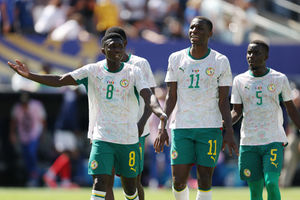
Sharing the New York-New Jersey soccer ecosystem are the Teranga Lions of Senegal. Pape Thiaw’s squad is using Rutgers University as its training hub. Senegal, whose talisman Sadio Mané remains the heartbeat of the side, finds itself in a fascinating group that includes a blockbuster June 16 clash against France, followed by Norway and Iraq.
Ivory Coast players during training at Centennial Park in Toronto, Canada on June 19, 2026.
Photo credit: Reuters
Meanwhile, reigning African champions Côte d’Ivoire have brought the star power of forward Yan Diomande to Pennsylvania, basing themselves at the Philadelphia Union's professional facilities. The Elephants are housed in a tricky group alongside Ecuador, Germany, and Curaçao, where Emerse Faé will demand a display worthy of their continental crown.
The Midwest and Southern frontiers
Further inland and down south, other African nations have sought isolated, elite collegiate environments to find their tournament rhythm. Egypt, guided by local legend Hossam Hassan and powered by the global icon Mohamed Salah, have set up their camp in the Pacific Northwest at Gonzaga University in Spokane. The Pharaohs face a diverse footballing test against Belgium, New Zealand, and Iran.
In America's heartland, the Desert Foxes of Algeria have taken over Kansas City, training at the University of Kansas. Vladimir Petković’s side, still relying on the creative wizardry of Riyad Mahrez, had to navigate a mouth-watering encounter with Argentina on June 16 before facing Jordan and Austria.
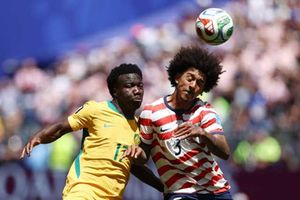
Ghana players during training at Centennial Park in Toronto, Canada on June 16, 2026.
Photo credit: Reuters
Further east, Ghana’s Black Stars have pitched their tent at Bryant University near Boston. Now under the guidance of the vastly experienced Portuguese tactician Carlos Queiroz, the West African giants are on an explicit mission of redemption after missing the 2025 AFCON. Driven by the form of forward Antoine Semenyo, Ghana opened their account against Panama in Toronto before high-profile matches against England and Croatia.
Perhaps the most romantic storylines of this expanded tournament belong to Cape Verde and the Democratic Republic of Congo.
Cape Verde, the tiny island nation making its historic World Cup debut, flew south to Florida, making the Waters Sportsplex in Tampa their primary tactical base. Under Bubista's guidance, the Blue Sharks will look to defender Logan Costa to help them withstand an incredibly daunting group that features Spain, Uruguay, and Saudi Arabia.
Equally compelling is the return of DR Congo, making their first appearance on the global stage since competing as Zaire in 1974. Head coach Sébastien Desabre has brought his Leopards to the Houston Training Centre in Texas. Marshalled by the rock-solid veteran defender Chancel Mbemba, the Congolese face an arduous path through Portugal, Colombia, and Uzbekistan.
With the expansion to 48 teams, the route to the knockout stages has widened. Beyond the top two finishers in each group, the eight best third-place teams will also advance to the newly introduced Round of 32, giving Africa's 10 representatives an unprecedented statistical chance to shatter the continent's historic performance records.