“It’s the taxes…” That is the government’s explanation for the Sh10.85 billion increase in the cost of the Talanta Sports City project, a massive escalation that was flagged by Auditor-General Nancy Gathungu in her audit of the project.
The National Treasury had initially approved Sh35 billion for the development of Talanta Sports City, which includes the construction of the 60,000-seater Talanta Stadium, now named the Raila Odinga Stadium, at Jamhuri Sports Complex in Nairobi.
But in audit reports released in February 2026, Ms Gathungu revealed that the project’s cost had risen to Sh45.85 billion, representing an increase of Sh10.85 billion over the approved budget.
The Auditor-General questioned the unexplained variation in construction costs and raised concerns over how the tender was awarded. She said the procurement process had violated the Public Procurement and Asset Disposal Act, adding that her office had not been consulted for clearance before the contract was awarded to Linzi Finco LLP.
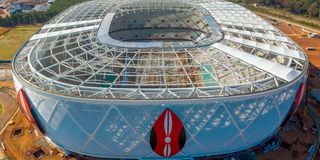
An exterior view of the under-construction 60,000-seater Raila Odinga Talanta Stadium in Nairobi.
Photo credit: File | Nation Media Group
However, the government says that the additional billions do not represent unexplained inflation, but taxes and other costs that were missing from the original estimate.
“The designs of this Raila Odinga Stadium were done by UNES, that is, the University of Nairobi Enterprise Services. It was just a concept, and from the concept, the initial concept which they designed was costing around that figure of Sh35 billion,” Sports Principal Secretary Elijah Mwangi said in an interview on Citizen TV on Monday, August 17, 2026.
Sports PS Elijah Mwangi
Photo credit: File | Nation Media Group
“But then, for you to do the actual construction, there were other factors that were not considered, mostly the taxes. So a contractor will have to pay taxes, the VAT, the withholding tax, and of course, when you are importing, you'll have to pay the freight charges and clearance charges,” he said. “If you look at that Sh10.85 billion difference, it’s a matter of the taxes that had not been incorporated in the estimates that had been designed by UNES.”
By comparison, the Sh10.85 billion ‘tax’ difference is what it will cost neighbouring Uganda to complete the redevelopment of Mandela National Stadium, Namboole, the country’s flagship venue for the 2027 Africa Cup of Nations (Afcon).
The Ugandan government has committed the equivalent of Sh11 billion for redevelopment of the facility that is expected to increase its seating capacity from about 38,000 to 45,000.
Zanzibar’s project named Sports City, another stadium-city project earmarked for hosting 2027 Afcon matches, an almost similar project to Talanta, the government announced it is investing $150 billion (equivalent of Sh19 billion) to construct the project which will feature a 36,500-seater stadium, training grounds, sports hospitals, and a luxury hotel.
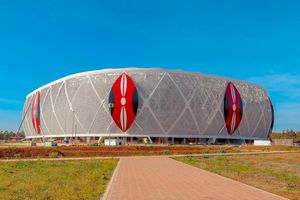
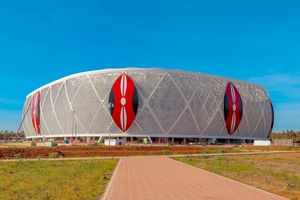
An artistic impression of the Talanta Hela Stadium whose construction started on March 1, 2024 at Jamhuri ground along Ngong Road, in Nairobi.
Photo credit: Pool
According to Suba South MP Caroli Omondi, Kenya had initially budgeted nearly the same amount of money for Talanta Sports City project.
“Talanta Stadium, the original (proposed) cost was Sh18 billion; it was then adjusted to Sh32 billion; finally, it was signed off at $345 million (Sh42 billion) with no tender or third-party review,” Mr Omondi said.
It begs the question: why was the Sh10.85 billion tax cost missing from the original estimates of Talanta Sports City? In PS Mwangi’s words, the initial Sh35 billion figure represented the minimum cost of constructing the stadium based on the consultant’s design.
Once the government opted to have the project built by a contractor, additional tax obligations came into play. “When you ask a consultant to design a project for you, they will give you the minimal cost.
It doesn’t owe them how you are going to do it,” he explained on Monday. “You may decide to construct the project yourself. When you construct it yourself, you may likely not have to pay taxes because there is no value addition. But if you contract, you will have to pay taxes to the contractor.
Therefore, when UNES did the design, they gave the government the minimal cost that will take to build the stadium, but because the government decided to give the project to a contractor, the contractor will have to pay the taxes, which they will pass on to the government.
“From the Sh35 billion, we had to consider the taxes because it was not attached as a cost, and it’s not a tax-exempt venture, and that’s how the difference came (about).” There is, however, another potentially costly detail buried in the Auditor-General’s findings.
Ms Gathungu warned that delayed payments to the local firm Linzi Finco LLP would attract interest of three percentage points above the Kenya Central Bank’s average lending rate, which is, on average, 14.3 percent.
That means any late-payment interest could effectively rise to about 17 percent, potentially adding another sizeable bill to a project already under scrutiny over its escalating cost.
With the contract awarded to an LLP firm, it is protected from business debts and other partners’ personal negligence, and profits pass directly to partners for individual taxation.
For taxpayers, the distinction between inflation and taxes may offer little comfort. Either way, the additional Sh10.5
billion represents money that must ultimately be accounted for in a public project being financed by a government whose tax burden has already become a contentious issue among Kenyans.
The controversial awarding of the tender, which continues to raise questions, fell to Linzi Finco LLP, one of the 10 firms that captured more than half of the Sh217.5 billion reported public tenders in the year ended June 2025, deepening the concentration of lucrative government business among a handful of suppliers.
Public Procurement Regulatory Authority (PPRA) records show that Linzi Finco LLP was among the 10 suppliers awarded contracts worth Sh131.67 billion, with the largest award of the tenders going to Linzi Finco LLP.
Some of the local firms that won these massive tenders were backed by powerful individuals, highlighting crony capitalism, where business success relies on a close relationship between the entrepreneurs and government officials.
From the PPRA records, the local firm Linzi Finco LLP was the biggest beneficiary, winning the Sh42.52 billion contract for the Talanta City Project. Linzi Finco LLP's single award accounted for nearly a third of the value captured by the 10 leading tendering firms.
Thomas Kimeu Mulwa, who is the Managing Director/Chief Executive of Liason Group, is the beneficial owner of Linzi Finco LLP, according to the records. Former President Daniel Moi's aide, Joshua Kulei, holds a 33 percent indirect stake in Liaison Group through his investment vehicle, Sovereign Group, making him the firm's second-largest shareholder.
Liaison Group is one of the two partners of Linzi Finco LLP. Mulwa, the long-serving Chief Executive of Liaison Group, holds a 20 percent stake in the company. For now, the construction of Talanta Sports City, located at the Jamhuri Sports Complex in Nairobi, continues.
PS Mwangi said that the stadium itself is about 95 percent complete. However, associated infrastructure, including a railway station and connecting roads, is still under construction.