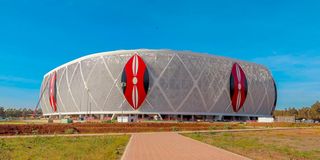
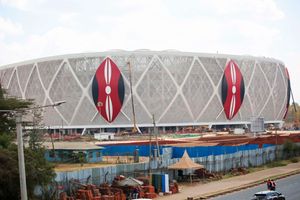
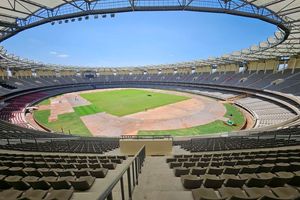
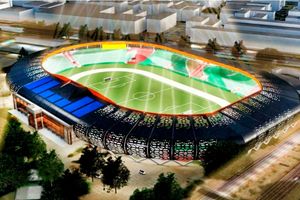
The government is this month expected to pay Sh6.97 billion towards the construction of Talanta Sports City Stadium, which is expected to host the opening and final matches of the 2027 Africa Cup of Nations (Afcon).
The payment, flagged by Controller of Budget Margaret Nyakang’o, will raise total disbursements to the contractor, China Road and Bridge Corporation (CRBC), to Sh28.97 billion since construction began on March 1, 2024.
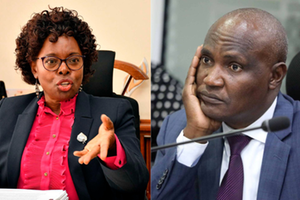
Dr Nyakang'o disclosed the figures in her monitoring and evaluation report on budget implementation for Sports Kenya, even as Auditor-General Nancy Gathungu questioned whether the project represents value for money after identifying procurement and financing irregularities.
Ms Gathungu's audit of the Ministry of Defence accounts for the 2024/25 financial year found that the project cost had increased by Sh10.85 billion, from the Treasury-approved Sh35 billion and also raising questions over the legality of the procurement process.
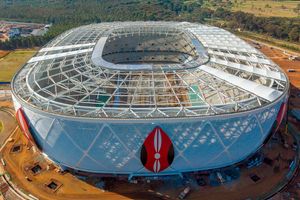
Located at Jamhuri Grounds along Ngong Road in Nairobi's Kibra Constituency, the 60,000-seat Talanta Sports City will be Kenya’s largest football stadium.
The project is being implemented through the Sports, Arts and Social Development Fund with the Ministry of Defence serving as the contracting authority on behalf of the Ministry of Sports.
Dr Nyakang’o noted that the project timeline has already been revised three times since construction began. Completion was initially scheduled for December 2025 before being pushed to March 2026 and later to July 2026.
Despite the delays, she reported that construction had reached 90.44 per cent completion. She urged the Ministry of Defence to tighten project oversight and ensure the revised implementation schedule is adhered to.
“The ministry should address emerging bottlenecks promptly and ensure completion, commissioning, CAF compliance inspections and test events are undertaken within the available timeframe in readiness for Afcon 2027,” she said.
A view of the under construction Talanta Sports City Stadium in Nairobi on May 15, 2026.
Photo credit: Chris Omollo | Nation Media Group
The audit findings pile pressure on Defence Principal Secretary Patrick Mariru over possible weaknesses in financial management and project oversight.
Ms Gathungu warned that delayed payments to the contractor could further inflate the project’s cost because the contract provides for interest at three percentage points above the Central Bank of Kenya’s prevailing base lending rate on overdue payments.
Beyond the cost escalation, the Auditor-General also questioned whether the Attorney-General’s mandatory legal clearance was obtained before the contract was awarded. The audit further cast doubt on the transparency of the project’s financing, noting that key details of the funding model were not availed for audit. Ms Gathungu said only a special audit would determine whether taxpayers are receiving value for money.
According to the audit, the National Treasury approved funding of Sh35 billion for the project through the fund over a six-year repayment period.
“This is against a contract amount of Sh45.85 billion, resulting in an unsupported price variation of Sh10.85 billion,” the audit report states.
To put the increase into perspective, the additional Sh10.85 billion is equivalent to the cost of constructing about 9.5 kilometres of the Rironi-Mau Summit dual carriageway, based on the project’s estimated cost of Sh1.14 billion per kilometre.
The CoB’s report shows that Talanta Stadium is being financed through Kenya’s first Infrastructure Asset-Backed Security, which was listed on the Nairobi Securities Exchange in July 2025.
The Linzi FinCo 003 Trust raised Sh44.49 billion through a fully subscribed 15-year note maturing in 2040 and carrying a fixed annual coupon of 15.04 per cent..
Repayments will be serviced through future allocations from the fund, whose primary revenue source is taxes collected from betting and gambling activities.
The financing structure also includes a three-month Debt Service Reserve Account and a standby letter of credit from KCB Bank.
An aerial view of the under-construction 60,000-seater Talanta Stadium in Nairobi on January 23, 2026.
Photo credit: Sila Kiplagat | Nation Media Group
Although there is no explicit sovereign guarantee, the government effectively backs repayments through its commitment to channel the fund’s revenues to service the debt.
The Ministry of Sports transferred procurement responsibilities, together with Sh2.01 billion, to the Ministry of Defence to oversee implementation. However, the Auditor-General found the procurement process unsatisfactory.
“The contract was awarded through direct procurement, which did not meet the requirements for either competitive tendering or direct procurement under the Public Procurement and Asset Disposal Act, 2015,” the audit report states.
Section 103(2) of the Act only permits direct procurement under limited circumstances. The Auditor-General found no evidence that the circumstances surrounding the Talanta Stadium contract met the legal threshold for bypassing competitive procurement.