Musa Mudde, Dodo Kayombo, Edgar 'Fighter' Ochieng, Bob Mugalia, Titus Mulama, Wilson Oburu, Abdulatif Omar, Benjamin Situma, Allan Wanga and Patrick Agogo.
To a generation of Kenyan football fans, these were more than just names; they were a rhythm and a roll call of brilliance that lit up stadiums whenever Sofapaka — fondly known as 'Batoto ba Mungu' — took to the pitch. It was an era of the club's footballing dominance.
Today, however, that melody has faded into a sombre note.
On Saturday, Sofapaka's long association with top-flight football came to a painful end with a 1–1 draw against Mathare United at the Moi International Sports Centre Annex in Kasarani, Nairobi. This result condemned Sofapaka to relegation from the Football Kenya Federation Premier League after 17 years in the top flight.
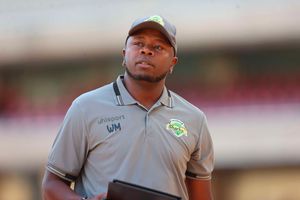
Sofapaka FC coaches Abdalla Juma (left) and Ezekiel Akwana react on the bench during their FKF Premier League match against Gor Mahia Nyayo National Stadium on January 31, 2026.
Photo credit: Chris Omollo | Nation Media Group
Rooted at the bottom of the table with just 18 points, Sofapaka’s fate was sealed three matches before the end of the season.
Even if they win all their remaining matches, they cannot mathematically gather enough points to climb out of the danger area.
For a club that once dominated Kenyan football and was considered the next big community club after Gor Mahia, AFC Leopards and Shabana, this is a bitter pill to swallow.
Founded by the charismatic Elly Kalekwa, whose deep Christian faith inspired the nickname 'Batoto ba Mungu', Sofapaka burst onto the Premier League scene in 2009 like a hurricane.
With a formidable blend of local stars and foreign imports, many of whom were from the Democratic Republic of Congo, the newcomers didn’t just compete; they conquered.
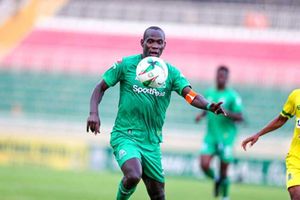
Sofapaka FC forward Shaibu Idorisu in action against Gor Mahia during FKF Premier League match at Nyayo Stadium on January 31,2026
Photo credit: Chris Omollo | Nation Media Group
In their debut season, they won the league title with 59 points, losing only three matches and finishing six points ahead of second-placed Mathare United. With their free-flowing football, they made winning look effortless.
At their peak, Sofapaka played with a freedom that turned matches into theatre. Giants such as Gor Mahia and AFC Leopards were sometimes reduced to mere spectators in a league they had once dominated.
“Sofapaka was home. We were family,” recalls former captain John Baraza, his voice tinged with nostalgia.
“Money was flowing and Prezda (Kalekwa) was generous. We played for the fans. Even in defeat, we walked away knowing we had given everything.”
Baraza, who retired in 2020 at the age of 38, still feels the pain of the club’s decline. Yet, like many others who wore the jersey with pride, he clings to hope.
“The relegation has hit me hard, but I believe Sofapaka will rise again. This club has always had a way of bouncing back.”
Even when they weren't winning trophies, Sofapaka were knocking on the door: they finished runners-up in the league, competed on the continental stage and collected silverware along the way.
They won the 2017 Mashujaa Cup and the 2018 Jamhuri Cup, came second in the league in 2018, and were runners-up in the Kenya Super Cup twice, in 2010 and 2011.
On the continental stage, they made bold statements. In 2011, they made history by becoming the first Kenyan team to eliminate Egyptian opponents when they thrashed Ismaily 4–2 on aggregate in the second round of the Confederation Cup.
Sofapaka FC goalkeeper Brian Opiyo Olang'o (centre) and his teammates during their league match against Gor Mahia at Nyayo National Stadium on January 31, 2026.
Photo credit: Chris Omollo | Nation Media Group
They went on to defeat St Eloi Lupopo of Congo in the next round, reaching the quarter-finals for the first time.
Beyond the trophies, Sofapaka built a reputation as a club of abundance and ambition. Backed by sponsors such as Blue Triangle, the players enjoyed stability that is rare in local football: they received their salaries on time, as well as generous incentives, and they were able to work in a professional environment that attracted talent from across the region.
“Every player wanted to join Sofapaka. We lacked nothing,” said Baraza.
However, the club began to struggle towards the end of the last decade as sponsorship dried up.
In 2022, there was a mass exodus of players, including stars such as club captain Michael Kibwage, Jacob Onyango and Darius Msagha, because salaries were not being paid on time — sometimes for months at a time.
In fact, Sofapaka experienced several strikes and slowdowns over unpaid salaries. Coaches kept coming and going — three this season alone.
Unable to attract or retain the best players in the league, Sofapaka's decline was inevitable.