Morocco’s organisers have pulled out all the stops in laying out an impressive Africa Cup of Nations (Afcon) finals tournament for the first time since 1988, with nine stadiums being used for Africa’s flagship football tournament that enters the knockout stage this week.
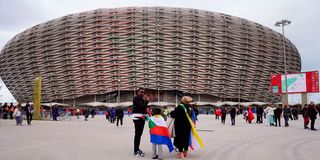
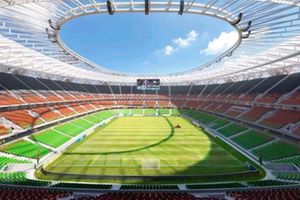
The newly constructed Prince Moulay Abdellah Sports Complex in Rabat is the flagship venue, the 69,500-seater stadium having hosted the tournament’s opening match between Morocco and the Comoros and will also stage the final on January 18.
The eight other Afcon 2025 venues in Rabat are the Stade Olympic (capacity: 21,000), Prince Moulay Abdellah Sports Complex (69,500), Prince Heritier Moulay El Hassan (22,000) and Stade El Barid (18,000).
A general view inside the Prince Moulay Abdellah Stadium in Rabat before the opening match of the 2025 Africa Cup of Nations between Morocco and Comoros on December 21, 2025.
Photo credit: Reuters
Other venues across the country are the Grad Stade D’Agadir (Agadir, 45,480), Grand Stade de Marrakech (Marrakech, 45,200), Ibn Batouta Stadium (Tangier, 75,600), Stade Mohammed V (Casablanca, 67,000) and Complex Sportif de Fes (Fes, 45,000).
Morocco’s Afcon 2025 legacy programme is well thought-out with the country planning to utilise the Prince Moulay Abdellah, Ibn Batouta Stadium, Marrakech and Fes venues for the 2030 Fifa World Cup finals which the country will co-host with Spain and Portugal, with a new, 115,000 King Hassan II Stadium currently under construction and to be completed in 2028 as the 2030 World Cup’s centre-piece.
The Afcon 2025 and World Cup 2030 projects are part of Morocco’s grand programme – under the Morocco 2030 Foundation which was set up in August this year by royal decree – that seeks to use sport to spur the nation’s socio-economic growth and job creation with over 100,000 new jobs expected to open up, especially in construction, hospitality and transport in the period leading up to 2030, besides boosting tourism in-flows.
The Morocco 2030 Foundation’s leadership is an interesting blend of sports managers and government officials, with the Royal Moroccan Football Federation President Fouzi Lekjaa picked by King Mohammed VI as the head working alongside a “Strategic Orientation Council” handling policy matters and an “Executive Council” featuring officials from the Interior, Foreign Affairs, Budget, Education and Sports dockets.
The Moroccan Minister of Interior co-ordinates the Foundation’s countrywide activities, heading a “Territorial Management Committee.”
The Foundation’s mandate is also to oversee the construction of the new stadium in Casablanca and supervise the expansion of the country’s high-speed railway and construction of new airports.
Morocco is following in the footsteps of France who have ridden on the success of the Paris 2024 Olympic and Paralympic Games to catalyse socio-economic progress.
The Eiffel Tower, an iconic structure built between 1887 and 1889 by French civil engineer Gustave Eiffel and his company, stands at 330 metres tall and is Paris’ biggest tourist attraction with approximately seven million tourists visiting the tower annually, or about 20,000 on average daily.
The latest additions to the Eiffel Tower’s offerings at its Champs de Mars address, between the first and second levels, are the five gigantic Olympic rings -- measuring 29 metres wide, 15 metres high and weighing 30 tonnes – that were initially installed in June 2024, just before the Olympic Games.
The iconic five rings have since been relocated to the Pont d'Iena bridge right in front of the Eiffel Tower after protests from Eiffel's descendants and cultural conservatives opposed a permanent installation on the tower, arguing that the move reeked of commercialisation and was “a disruption of the monument's historic integrity.”
One year and three months since the closing ceremony of the Paris Paralympic Games that followed the Olympics, new tenants have, meanwhile, started moving into what was the Olympic Village, that is being transformed into 2,800 affordable apartments to offer permanent housing to over 6,000 people.
A general view of the Prince Moulay Abdellah Stadium in Rabat, Morocco on December 21, 2025.
Photo credit: Reuters
The over 400,000 pieces of furniture used by the athletes during the games have either been sold to companies or donated to charities with schools, offices and shopping areas incorporated into the Olympic Village that was constructed at a once run-down industrial area.
President Emmanuel Macron will be in Kenya in May, 2026, for a high-level France-Africa summit that will see Africa’s Heads of State engage with the French leader and his delegation on critical topics such as infrastructure development partnership and climate change mitigation.
Recently, Kenya’s President William Ruto disclosed that the reconstructed Bomas of Kenya will host the France-Africa gathering at which sport is also on the agenda, with Macron and his delegation keen on riding on the success of last year’s Paris Olympic and Paralympic Games to cement a strong legacy that will also benefit Africa.
With a theme on Sports and Culture lined up at the summit, the French side wants sport to be connected to the business summit with discussions including Senegal’s hosting of next year’s Youth Olympics, the 2027 “Pamoja” Africa Cup of Nations (Afcon) in Kenya, Uganda and Tanzania alongside Morocco’s 2030 Fifa World Cup programme.
Kenya certainly has many lessons to learn from Paris and Morocco as it continues to struggle with creating viable legacy programmes around sport amid infrastructure development and maintenance challenges that have seen venues upgraded for this year’s African Nations Championship (Chan) and the 2027 Afcon tournaments, for instance, vandalised and seeking fresh budgets for renovations.
Recently, Sports Kenya Director General Gabriel Komora disclosed that Sh18 million is needed to reinstate the Moi International Sports Centre that fell victim to post-Chan vandalism and hooliganism but remains confident Kenya’s stature as a sports destination is still growing.
Kenya Harambee Stars fans rally behind the team against DR Congo during the 2024 Africa Nations Championship Group 'A' against Morocco at Moi International Sports Centre, Kasarani in Nairobi on August 3, 2025.
Photo credit: Chris Omollo | Nation Media Group
“We are gaining in terms of international reputation with foreign teams coming for competition. The upgrade and investment put in to comply with CAF (Confederation of African Football) standards was massive and not possible under the usual budgeting process. Chan and Afcon are providing the latest technology and installations together with specialised pitch maintenance equipment,” Komora assured as Kenya prepares to be the next Afcon hosts after the current edition in Morocco which has raised the bar.
There is no doubt that the Paris Olympics helped enhance Kenya’s profile in France and Europe generally with the “Kenya House” set up in Paris during the Games showcasing Kenya’s rich culture, vibrant trade and bucket list touristic destinations a major hit during the Olympics.
“Kenya’s profile has been enhanced from excellent performances at the Paris Olympics,” Kenya’s Ambassador to France Betty Cherwon confirms.
“In the long term, Kenya’s training locations have been well marketed, co-operation with various institutions initiated alongside various alliances like the twinning of cities with Miramas (Southern France) and Iten (Elgeyo-Marakwet County) examples,” Cherwon, whose jurisdiction also includes the Holy See, Monaco, Portugal and Serbia, explains.
The Miramas-Iten partnership is perhaps the single most illustrious example of the success of the Olympic legacy programmes with training of coaches under the “House of Coaches” Programme and other sports partnerships already initiated.
Kenya’s team to the Paris Olympics used Miramas as its pre-Olympics training camp especially benefitting sprinters, field events athletes and swimmers alongside the sevens rugby team “Shujaa” and women’s volleyball outfit “Malkia Strikers.”
A general view inside the Prince Moulay Abdellah Stadium in Rabat before the opening match of the 2025 Africa Cup of Nations between Morocco and Comoros on December 21, 2025.
Photo credit: Reuters
“The Paris 2024 Olympic Games have created a lasting legacy that goes far beyond the competition itself,” Miramas Mayor Frederic Vigouroux explains exclusively to Nation Sport.
“By welcoming the Kenyan Olympic team to their training base in Miramas, we turned sports brotherhood rooted in athletics into a transformative international co-operation project funded by the French Ministry of Foreign Affairs,” the Mayor adds.
“Today, this Olympic spirit lives on in Iten, where the City of Miramas, the Elgeyo-Marakwet County and 10 other French and Kenyan partners have fully trained 12 sports coaches - including eight women and six teachers - in several disciplines.
“These teachers, in turn, have already trained hundreds of their fellow teachers to the basics of sports training, facilitating the identification of young talents within the school system. This high-impact partnership strengthens not only the bonds between Kenya and Miramas, but also demonstrates how the Olympic values can build bridges between communities and create tangible, lasting change for future generations."
Talanta Sports City Stadium under construction in Nairobi on November 14, 2025.
Photo credit: Pool
Elgeyo Marakwet Governor Wisley Rotich, has previously visited Miramas to spearhead the “House of Coaches” training programme and last October hosted Miramas Mayor Vigouroux and his delegation, alongside French Ambassador to Kenya Arnaud Suquet, to officially sign the sports exchange partnership deal.
“The partnership will also consolidate an official training ecosystem and co-design training courses with partners and create career opportunities to Kenyan athletes or coaches who have demonstrated aptitude for coaching. Successful coaches have an opportunity to continue their training or professional career in Kenya,” Governor Rotich explained.
The partnership will also create cross mobility in the sports, educational, and cultural sectors between the City of Miramas and Elgeyo Marakwet with the selection process currently going on with those selected travelling to Miramas for further training in the early part of 2026.