Raila Odinga International Stadium at Talanta Sports City in Nairobi on October 28, 2026.

There is something uncomfortable about attaching Raila Odinga’s name to the multibillion-shilling Talanta Stadium while questions about its cost and financing remain unsettled.
A name associated with questioning power should invite scrutiny of how that power has spent public money.
We cannot know whether Raila would have welcomed the association.
But those seeking to honour him owe Kenyans an explanation of what the stadium is meant to commemorate.
Is it his contribution to Kenya’s democratic struggle? His affection for football? Or might the honour conveniently lend his prestige to a project whose financing deserves closer examination?
Naming a public building does more than identify it. It ties a person’s reputation to an institution’s conduct. Those invoking Raila’s memory must accept the scrutiny that comes with it. You cannot honour a man for asking uncomfortable questions and then become uncomfortable when the taxpayer asks to see the bill.
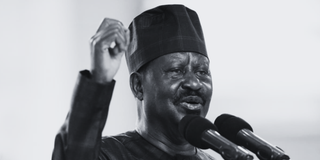
Kenya's former Prime Minister Raila Odinga.
We all agree that Kenyans deserve a modern stadium.
They also deserve transparent procurement, competent budgeting and an honest account of the obligations assumed in their name. A magnificent roof does not absolve the government of that duty.
Africa has enough magnificent structures to remind us that grandeur is an unreliable measure of public achievement.
Too often, we have mistaken a government’s capacity to astonish for its ability to serve its people. Consider Yamoussoukro, where Côte d’Ivoire’s Félix Houphouët-Boigny built the Basilica of Our Lady of Peace.
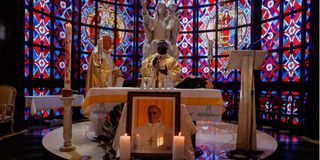
A photo of Pope Francis is seen during a Mass officiated by Geoffroy Kouadio Kouakou, priest and rector of the Basilica of Our Lady of Peace, following the death of Pope Francis, in Yamoussoukro, Ivory Coast, April 22, 2025.
Completed in 1989, it is listed by Guinness World Records as the world’s largest church by area, covering 30,000 square metres and seating 7,000. Though never full, its magnificence is beyond dispute. Its usefulness as a measure of national progress is another matter.
The basilica’s construction cost drives the narratives around it. Was it worth it? The extraordinary undertaking reveals something about the president’s priorities.
While the president’s faith may explain a church, it does not settle questions about the resources devoted to it. And on priorities, the hospital linked to the basilica project opened in January 2015, after more than two decades.
Further east, Mobutu Sese Seko transformed Gbadolite, his ancestral home, into a presidential enclave with palaces and an airport capable of receiving Concorde. After his fall in 1997, the palaces were looted and abandoned. Decades later, reporters found ruined walls disappearing beneath tall grass. Gbadolite’s grandeur proved more durable as an image than as a functioning inheritance.
Talanta Stadium invites us to question our priorities. The University of Nairobi, its vice-chancellor told Parliament recently, is struggling with debts of about Sh20 billion.
That is less than half Talanta’s reported construction price. The comparison does not mean stadium money could be transferred to the university, but it demands scrutiny of how urgently different national needs are financed.
Kenya would hardly be the first country to seek sporting glory while ordinary needs went unattended. In 1974, Mobutu brought Muhammad Ali and George Foreman to Kinshasa for the “Rumble in the Jungle”.
While the fight secured its place in sporting history, an American diplomatic assessment noted that Zaire spent heavily on prestige projects, including the contest, while doing little for the subsistence farmers who made up most of its population.
What connects these projects is the illusion of progress they create, and allegations of inflated costs and squandered public resources. Houphouët-Boigny once claimed he used his own money, most likely to avoid accounting.
Talanta’s reported Sh45.8 billion construction price is only the beginning of the accounting. Its financing included a Sh44.79 billion, 15-year bond yielding 15.04 per cent annually.
What will Kenyans have paid by the time the last instalment falls due? The government should publish the full repayment schedule, showing principal, interest and financing charges.
Pension funds supplied a substantial share of the money, while public revenues channelled through the Sports Fund will service the repayments.
The Controller of Budget’s reported concerns about her authority over accounts outside the Consolidated Fund raise another question: who watches the money? Kenyans deserve answers, not architectural impressions or tantalising talk of Ajax meeting Bayern Munich in the inaugural match.
In May, the Senate’s roads and housing committee questioned the Sports Ministry on the gap between an initial estimate of Sh34.6 billion and the Sh45.8 billion cost.
Senators also sought explanations on direct procurement and land ownership documentation. The ministry attributed the difference to taxes, levies and import-related charges omitted from the initial estimate.
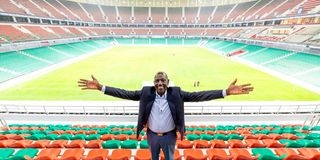
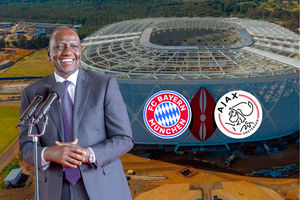
President William Ruto at the Raila Odinga International Stadium at Talanta Sports City Stadium on October 28, 2026.
Cabinet Secretary Salim Mvurya said the signed contract sum had not changed and the ministry was ready to provide documentation. That distinction between estimate and contract should be shown in records Kenyans can examine.
This brings us back to Raila. His name carries memories of detention, political mobilisation and struggles over the right to challenge the state. Those defending the naming have invoked that history. Kisumu Governor Anyang’ Nyong’o, for instance, framed the honour as recognition of Raila’s role in democratic reform and constitutional change. That argument creates an obligation.
If the stadium is to commemorate democratic accountability, its custodians should practise it. Affection for Raila cannot establish value for money. His place in history cannot explain a procurement decision, reconcile competing financial figures or show that a repayment arrangement serves the public interest.
Those responsibilities belong to the officials who made the decisions.
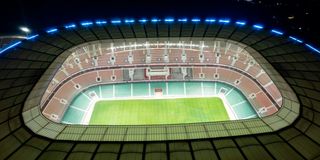
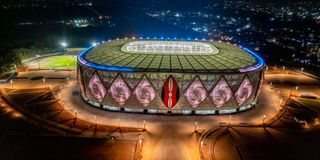
The Raila Odinga International Stadium at Talanta Sports City on October 28, 2026.
Raila’s supporters should not be conscripted into defending every aspect of the project simply because it carries his name.
They can welcome the honour and still demand to see the contracts. They can admire the impressive stadium while questioning its staggering price. Loyalty to Raila does not require unquestioning loyalty to the bill.
Scholars of onomastics, the study of names, explain how naming public places shapes collective memory: a building borrows the prestige of the person commemorated, but over time its history can attach itself to the name.
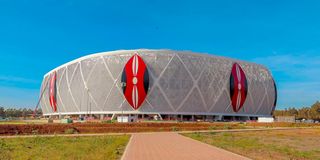
An exterior view of the under-construction 60,000-seater Raila Odinga Talanta Stadium in Nairobi.
That is why the naming deserves care. Nyayo House houses government offices, yet its name summons memories of torture and political repression. It shows how little control an official designation has over what a building comes to represent.
For those who suffered in its chambers, administrative functions cannot erase that history. Turkwel Dam has never shaken off its association with scandal. It generates electricity, but its reputation remains entangled with questions about its cost and construction.
A project can serve a useful purpose and still carry the burden of how public money was spent.
Those proposing to attach Raila’s name to Talanta Stadium must reckon with how public memory works. A name can inherit a building’s burdens, and unanswered questions about cost, procurement and financing will follow the stadium into its new identity.
If the accounts withstand scrutiny, publish them. If the procurement was proper, demonstrate it. If the financing serves the public interest, explain how. These are obligations owed to the citizens who will pay for the stadium long after the naming ceremony.
Raila’s contribution to Kenya’s democratic struggle deserves an honour that can withstand the questions he spent his political life asking. Those invoking his memory should welcome scrutiny as enthusiastically as they unveil his name.
Let me repeat: there is something uncomfortable about attaching Raila Odinga’s name to Talanta Stadium while questions about its cost and financing remain unsettled.
Until then, leave Raila’s name out of it.
Follow our WhatsApp channel for breaking news updates and more stories like this.
John Kamau is a PhD candidate in History at the University of Toronto. Email: [email protected]