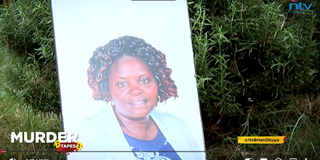
Almost five years after trader Miriam Wangari disappeared, her family still cannot bury her in full. Her head and torso have never been found, and the man who admitted to killing her has never said where they are.
A 40-year prison sentence handed down in February delivered a measure of justice. It, however, did not deliver answers, and hardly did it give the family the chance to lay their mother to rest.
The driver who joined search for his murdered boss, 40 years, and a body never found
“We are convinced he killed our mother but what we are not convinced about is how he could have executed such a heinous act alone,” her daughter, Nancy Wambui, says. “We have never understood how one person could do all that. We also want to know why the head and torso were never recovered despite him indicating he disposed of the remains along the same road.”
On December 28, 2021, Ms Wangari left home after making arrangements with her husband, Danstan Kariuki, and headed to Micah Hardware, a family business in Kangemi.
From there she boarded a lorry driven by James Muriithi Mbugua, her driver of about five months, and they transported cement to a construction site in Thamanda, Muguga.
After the cement was offloaded, Mr Muriithi left her at the site with another worker. At around 5pm, she told a worker she was leaving, got a boda boda rider to take her towards Muguga town, and then boarded a matatu heading towards Uthiru.
At about 8.30pm, she called her husband and her son, Joseph Njoroge, to say she was feeling unwell and would spend the night in Muguga. According to court records, that was the last communication her family had with her.
Dunstan Kariuki, Miriam's husband.
Photo credit: File | Nation
A worker who went for her the next morning first assumed she was still asleep. After repeated knocks went unanswered, he called her husband at around 11am. The husband, equally puzzled, believed she had overslept because she was unwell. When he checked, she was nowhere to be found. He reported her disappearance at Kabete Police Station on December 31, 2021.
For more than a week, the family searched. Then, on January 1, 2022, herders discovered dismembered human body parts in Mutarakwa Forest. Detectives who visited the scene recovered a human leg and a hand, a sack and blood-stained clothing. The hand bore a ring engraved with the name “Kariuki”.
Mr Kariuki later identified the ring, and a fingerprint sent to the National Registration Bureau matched the deceased. The pathologist could not determine the cause of death, but DNA analysis by the government chemist confirmed the remains belonged to the family matriarch. The remains stayed in the mortuary for a month before the family established their identity.
The discovery offered only partial answers. The head and torso were never recovered, leaving the family to grapple with the brutal circumstances of her death and the absence of a complete burial.
Attention turned to Mr Muriithi. Shortly after Ms Wangari went missing, he is said to have visited the family home and asked for her identification details and phone PIN, claiming he could help trace her through a contact at the DCI.
Telephone records painted a further picture. Call data obtained through court orders showed sustained communication between Ms Wangari and Mr Muriithi on December 29, with their phones converging at Muthiga shortly after her handset went off. On January 5, her phone was paired with his SIM cards.
Six days later, detectives traced and arrested him in Njabini, Nyandarua County. Ms Wangari’s mobile phone was recovered from him. He claimed it was his, but the family and telecommunication records established it belonged to the deceased. Detectives also recovered a jacket he had worn when he went to pick her up, and he acknowledged it was his and admitted disposing of the body parts.
The case dragged on from 2022, with the family attending mentions. In 2025, just as they were preparing for the first hearing, it took an unexpected turn. Mr Muriithi confessed to the killing and sought a plea bargain.
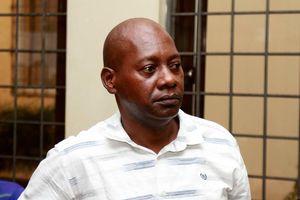
James Mbugua Muriithi, the driver who was jailed for the murder of Miriam.
Photo credit: Pool
Mr Kariuki, who had prepared to testify, was told the hearing would not proceed and was shown a written statement in which Mr Muriithi narrated his version of events. The court was satisfied that the plea process was voluntary, that his constitutional rights had not been violated and that he had not been coerced. It accepted the agreement and convicted him of manslaughter instead of murder.
For Ms Wambui, the confession answered only one question: who was responsible. It did not explain why he killed her, what triggered the alleged argument, or whether he acted alone.
In mitigation, Mr Muriithi’s lawyer said his client had accepted responsibility at the earliest opportunity, sparing judicial time and resources. He added that Mr Muriithi was a first-time offender and a family man with a wife and five children, three of them minors who depend on him. His family had tried to reach out to the deceased’s relatives to seek reconciliation, though it bore no fruit, and he had written apology letters and shown remorse in custody.
The lawyer urged the court to find no premeditation. He said the death followed an altercation while the two were privately together, that both were under the influence of alcohol, and that in anger Mr Muriithi threw a metal dumb-bell that struck her on the head, causing her to lose consciousness and die. The dismemberment and disposal, he argued, were acts of panic.
The court did not accept that. It said the mutilation of a human body was one of the gravest forms of post-homicide conduct known to law, violating not only the sanctity of life but also the dignity owed to the dead. Scattering the remains, it noted, forced the family to confront the horror of recovering isolated parts rather than the body of their loved one.
Sentencing Mr Muriithi, Justice Diana Kavedza said the dismemberment and scattering of Ms Wangari’s remains were deliberate and calculated acts meant to evade detection.
She rejected the suggestion that they could be explained as panic, noting that the process required time and effort and denied the family the dignity of burying their loved one in full. The court also faulted his handling of the deceased’s property and his sustained attempts to conceal evidence.
On February 25, 2026, she sentenced him to 40 years in prison, effective January 10, 2022, the date of his arrest.
“Were it not for the plea of guilty entered by the accused, this court would have imposed the maximum sentence permitted by law,” the judge ruled. She cited the gravity of the offence, the gruesome mutilation of the body and the need for deterrence and community protection.
For the family, the tragedy did not end with the sentence. Some of Ms Wangari’s remains have never been recovered, and what really happened to her remains a mystery.
Ms Wambui believes more could have been done to find the missing body parts and to establish whether anyone else was involved.
“We trust police and investigators to get justice for us. If they wanted to, I believe they could have found out where the other body parts were. He could have spoken and perhaps we would have understood what really happened,” she says.