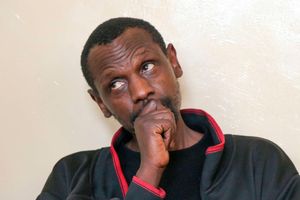
When Collins Kibet Moi walked to a courtroom in Nakuru and almost collapsed, pleading for mercy in a child-support case, Kenya saw more than just a man in distress. Here was the grandson of Daniel arap Moi – a president who once commanded the nation with an iron fist and whose fortune was the stuff of legend – begging like a pauper.
Kibet’s descent is the story of a dynasty undone. He has been arrested, jailed and shamed in courts over arrears he cannot pay. He has spoken of illness, homelessness and desperation. To many, he is the face of a family whose myth of untouchable wealth and unity has crumbled under the weight of reality.
And yet, Kibet is not merely a fallen heir. His life is a mirror reflecting the deeper truths about dynastic wealth in Kenya: its fragility, secrecy and inevitable unravelling when the patriarch is gone. It illustrates how fortunes flow unequally when power, loyalty and favouritism – rather than fairness or structure – determine who inherits and who is left to fend for themselves.
To understand how the grandson of a man once whispered to be a billionaire could end up pleading for his freedom in court, one must trace the fractures that defined his father’s life. Jonathan Moi, Kibet’s father and the eldest son of President Moi, bore the burden of expectation but chose loyalty to his mother, Lenah, after her separation from the patriarch. In a household where proximity to Moi was the currency of privilege, Jonathan’s quiet rebellion condemned him and his children to the periphery of power – where they struggled like ordinary mortals.
“Those who know the family well observe that, with the possible exception of Gideon and June, the President feels disappointed and rather let down by his children,” wrote Andrew Morton, Moi’s biographer.
“During one episode involving his son Philip, the President sent a memo to government departments saying they should not give him preferential treatment in the award of business contracts simply because of who he was.”
Jonathan’s estate was thrown into turmoil when he died in 2019. Nineteen claimants appeared in court to stake a piece of what remained. One of his widows, Milkah Faith Moi, has returned repeatedly to the Judiciary seeking funds for her children’s education and treatment. In February last year, she asked the court to order the trustees of the Moi estate to release Sh2.5 million for her son’s surgery in the US, and Sh2.7 million to cover her daughter’s schooling. These are not the demands of a family dripping in billions of shillings. They are the struggles of a disunited household, scrapping against the locked doors of an estate mired in disputes and a rocky past.
Collins Kibet, the grandson of former president Daniel Moi, at the Nakuru Law Courts on September 26, 2024.
Photo credit: Boniface Mwangi | Nation
For all the whispers about Moi’s billions, it is important to recall how much of that wealth was amassed. His 24-year rule was not just Kenya’s longest; it was also one of its most corrupt. The Moi years were defined by grand scandals – Goldenberg being the most notorious – and by a culture of kickbacks that seeped into every corner of the state. Land allocations became political currency, parastatals turned into private cash machines and loyalty to the president was rewarded with contracts, jobs and patronage.
This was the machinery that built the Moi fortune. It was vast, yes, but inherently unstable and many cases have emerged in courts. As history has shown, wealth anchored in corruption and state capture has no permanence because it lacks legitimacy and transparency. As seen in the case of former spy chief James Kanyotu, it cannot be passed down cleanly or be safeguarded by institutions. Instead, it is hidden, contested and ultimately fragmented.
Kibet’s troubles mirror the fractures in the family. In the rush to accumulate wealth and secure power, Moi neglected the structures that might have safeguarded his kin. More importantly, Kibet’s fate shatters the belief that mere proximity to a political dynasty guarantees privilege. He never tapped into the patronage networks that sustained Moi’s empire – perhaps by choice, perhaps because he decided to play clean.
Late President Daniel arap Moi.
Photo credit: File
For many Kenyans, it is unclear whether to pity or condemn him. Kibet’s arrests and jail terms have made him the emblem of a dynasty in moral decline. The illusion of an inexhaustible Moi fortune flowing evenly across generations has been exposed as exactly that – an illusion. In families built on political patronage, some heirs dine lavishly while others are left to scrape for survival.
Even Moi’s other children were not spared such contradictions. Kibet’s uncle, Philip Moi, endured a humiliating divorce battle in which he was ordered to pay Sh90 million in spousal maintenance. Philip protested he was not as wealthy as Kenyans assumed, and the Court of Appeal eventually agreed with him. That ruling tore open the illusion of dynastic abundance: the public may have believed the Moi children were awash in money, but the courts revealed otherwise.
Among Moi’s heirs, one figure has emerged as the custodian and gatekeeper of the family fortune: Gideon Moi. Favoured by his father and positioned as his political heir, Gideon sits atop the trusteeship, controlling access to the most valuable properties and businesses. Is he the glue holding the empire together, or the lock keeping siblings and grandchildren – Kibet included – at bay?
Perhaps, in a family where proximity to the patriarch once determined privilege, proximity to Gideon now dictates survival.
In June, the Moi family agreed to divide the estate according to his will, notably the land in Nakuru and Uasin Gishu. Every daughter received Sh100 million while the larger properties and business interests were allocated to his sons. Much of the expansive Kabarak estate, however, was placed under trusteeship. Yet doubts persisted. Was this the entirety of Moi’s fortune or merely a portion? Had some assets been concealed beyond reach? And crucially, who was really pulling the strings?
As that was happening, Kibet’s former wife told judges she had spent Sh2.8 million on their children since the 2022 ruling, while the children’s education was disrupted by unpaid fees. For many Kenyans, the irony was hard to miss: how could the grandson of a man said to control hundreds of thousands of acres, companies and the most prestigious schools sit in prison over unpaid school fees?
The answer lies in the very nature of dynastic wealth in Kenya. It is not built on transparency or corporate structures, and so the children are never taught how to build or sustain businesses. Instead, it is wealth rooted in access – and access is never shared equally. Jonathan’s estrangement from his father meant his children, including Kibet, inherited the name but not the privileges. For them, the Moi fortune remained out of reach – visible, yet inaccessible. Today, Kibet bears the weight of that legacy – carrying not the fortune of Moi’s name but its burden.
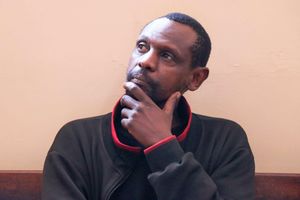
Collins Kibet, the grandson of former president Daniel Moi, at the Nakuru Law Courts on September 26, 2024.
Photo credit: Boniface Mwangi | Nation
This story holds lessons beyond the Moi family. It speaks to the fragility of dynastic wealth in Kenya more broadly. First, wealth without structure is fragile. Second, proximity is not permanence. Jonathan’s example shows how distance from the patriarch – whether by choice or circumstance – can leave entire branches of a family cut off from privilege. Third, unity sustains dynasties. Moi’s estrangement from his wife and son widened into fractures that left some branches flourishing and others abandoned. Finally, political dynasties are not economic dynasties. Political capital may create billionaires, but without structure, it does not create dynasties.
Collins Kibet Moi embodies these truths. His tragedy is not unique to him, but he has become the Moi family’s most visible symbol of failure. His pleas of homelessness, orphanage and repeated arrests are not just episodes of personal misfortune. They are the theatre in which Kenya has watched the Moi dynasty unravel. In Kibet, Kenyans see what happens when wealth is built on corruption rather than sustainability. They see the shame of Moi’s billions and his failure to nurture, not only his family, but an entire generation.
And yet, Kibet’s story is not simply one of decline. It is also a mirror held up to the Kenyan society. Many families, though not as wealthy as the Mois, face similar struggles of inheritance disputes, lack of planning and fractured unity.
The Moi name amplifies the spectacle, but the underlying lesson is universal. Wealth – big or small – requires foresight, transparency and unity to endure. Without these, it evaporates – leaving children and grandchildren to battle in courts or fall into desperation. The other lesson is what happens when the wealth is locked away by a chosen heir who decides who eats, and who starves.
John Kamau is a PhD candidate in History, University of Toronto. Email: [email protected] ; X: @johnkamau1