Premium
Captured in Ukraine frontline: Face-to-face with Kenyan prisoner of Russia war
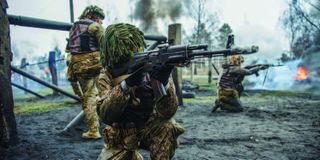
Some Kenyans have been recruited to fight for Russia in Ukraine.
He had been sick for days – feverish and coughing, barely sleeping. A doctor at the base had recommended three days of rest, but after barely 24 hours, orders had come in from his superiors for him to “suit up and move out”.
Captured in Ukraine frontline
Face-to-face with Kenyan prisoner of war.
On the morning of August 25, 2025, near the Ukrainian frontline in Vovchansk, two soldiers moved cautiously through a forest blanketed in fog. One was a Russian, whose name we could not establish. The other – a tall, lean former athlete from Kenya – was Evans Kibet.
A drone hovered overhead, driving the men to dart from one patch of cover to another to try to escape the deadly blast that was sure to follow when the unmanned aircraft eventually dropped its missile. The two relied on orders barked into the Russian’s headset by a commander watching from afar as he tried to guide them to safety.
Kibet was not doing well. He lagged behind his Russian colleague, his bulletproof vest pressing heavily against his chest, his boots sinking into the wet ground.
He had been sick for days – feverish and coughing, barely sleeping. A doctor at the base had recommended three days of rest, but after barely 24 hours, orders had come in from his superiors for him to “suit up and move out”.
“I was weak,” he narrated later to this reporter at a Prisoners of War camp in Ukraine. “Too weak, but no one cared.”
As Kibet and his companion approached the Vovcha River, which the commander had warned was dangerous to cross, they strapped on their floaters and waded through the water. Once safely on the other side, new instructions crackled through the headset: “Left!”
“There were so many bodies,” he recalled. “All I could see were black people. I have never seen anything like that in my life. Corpses, rotten, lying everywhere.”
Moments later, the whining of a Ukrainian drone growing louder as it approached rudely woke him up from the reverie he had fallen into as his eyes were fixed on the horrible scene. Explosions ripped through the trees, prompting Kibet to dive to the ground, crouching behind a log.
“At that moment,” he said. “I knew I was going to die – either in Russia or in Ukraine.”
That was when Kibet saw what he said he will never forget.
That’s when he took out his phone, snapped a picture of himself leaning against a tree, and sent it to a friend back home.
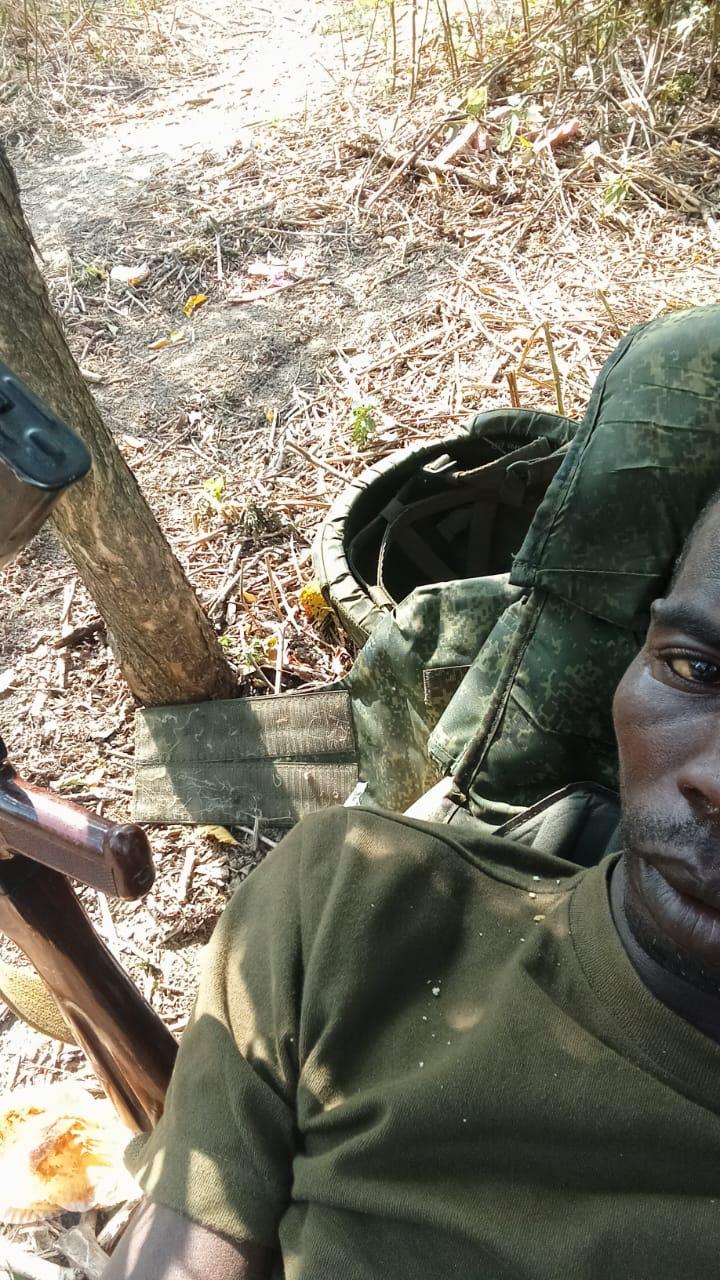
“If I die, take care of Chero,” read the message that accompanied it. Chero is his 16-year-old daughter – the apple of his eye.
When the shelling finally subsided, Kibet made his choice. He abandoned his Russian partner in the forest and quietly slipped away, moving instinctively towards the opposing side.
“I didn’t know where I was heading,” he said. “For some reason, I could hear Ukrainian soldiers shouting for me to watch out for the drones. Maybe they thought I was one of them because I had taken off the Russian uniform.”
He walked through the night, from around 11pm to dawn, until he reached a road.
Suddenly, a grenade landed at his feet. “I thought I was dead, but it didn’t explode.”
By morning, he had stumbled into an area of destroyed buildings and sat down under a tree. A pack of dogs began barking at him, drawing the attention of the soldiers, who opened fire in that direction.
After waiting for a pause in the shooting, he stepped out slowly, walking toward the sound of the gunfire with his hands up in the air in surrender. “I am Evans Kibet!” he shouted.
The Ukrainian soldiers who soon surrounded him were not in full military uniform, with many of them just in shorts. Their commander ordered them not to shoot.
“They asked me who I was,” Kibet said. “I told them I had defected from the Russian side.”
They cuffed him and later gave him some water – two litres, according to Kibet – and some food. One soldier who spoke English made a call, and after a while, a vehicle arrived to take him away.
Kibet’s surrender marked the beginning of a process that Ukraine said applies to all foreign fighters serving in Russian ranks. Under international law, he was a prisoner of war (POW), protected under the Geneva Conventions.
Ukraine’s military describes the evacuation of POWs as one of the most dangerous tasks of the war, a process that can take hours for a single captive. Russian drones circle constantly above the trenches, and any movement draws immediate artillery fire. Ukrainian soldiers capturing a foreign fighter like Kibet often have to hide with him for hours, sometimes days, in basements or dugouts until it is safe moment to move.
Kibet recalled being taken first to a makeshift shelter, where he underwent what the unit that captured him described as an initial interview, but which he remembered as an interrogation.
“I was interrogated more than 10 times,” he said. “I was honestly scared and some were threatening me.
“They asked for my social media account and emails. After that, they took me to a prison in Kyiv in a pickup. I was given medical treatment there. I was still cold and sick. They didn’t tell me what was wrong with me, even after doing all kinds of tests.”
Once a safe evacuation route opened, Kibet was handed over to Ukraine’s military police, who transported him to the nearest temporary holding site, where he remained for 10 days. There, his identity was recorded again and his health re-checked. Then his details were relayed to the International Committee of the Red Cross, part of a strict system designed to ensure that no prisoner disappears while in captivity. Only his weapons, ammunition, and communication devices were taken from him; his personal belongings, documents, and money stayed with him.
“The video the Ukrainian military released was recorded the morning after my surrender,” he said, referring to a video widely circulated on YouTube. In the video, Kibet says he was unaware he was signing up for military work.
The prisoner
On October 24, 2025, I received special permission from the Ukrainian military to visit a permanent prisoner of war camp in western Ukraine. The previous day, I was at another prison camp, hoping to interview one Kenyan prisoner, but Kibet had not yet been located. So, I spent that day with other captured African nationals – from Ghana, Sierra Leone, Egypt, and Togo. They were men who, like Kibet, had been lured into Russia’s war by promises of quick money, education, or the tantalising prospect of a Russian passport.
Six weeks after his surrender, Kibet found himself in the permanent prisoner of war camp. Once a promising athlete from a nation that produces legends like Eliud Kipchoge, Paul Tergat, and Faith Kipyegon — and once an ambassador of Kenya, proudly wearing his motherland’s colours both on and off the track — he is now a prisoner, thousands of kilometres away from home.
The morning was cold and it was drizzling – a fine mist that clung to our clothes. My cameraman, Medynskyi Yarema, and I were waiting for Petro Yatsenko, the spokesperson for the Ukraine prisoners of war coordination headquarters. For security reasons, journalists are not allowed to describe the location of the camps or photograph their perimeter fence or personnel. Only the designated spokespersons can do that.
Yatsenko arrived and we went through the security gates. He asked the officer on duty whether there were other African prisoners besides Kibet. The official nodded and began reading slowly from a printed list.
“Yemen…”
“Yemen is not in Africa,” Yatsenko cut in.
The officer looked up blankly, then continued. “Egypt, Benin, Nigeria, Egypt, Ghana, Sri Lanka…”
“Sri Lanka isn’t in Africa, either,” Yatsenko interjected again.
Unfazed, the official read the final name. “Togo.”
That was it. Barely a handful were African prisoners.
From the yard, you could see the large PW letters painted across the roof, a marker for aerial identification.
Yatsenko explained that it was not a regular prison, but a holding facility operating under the Geneva Conventions. The men, he said, were not treated as criminals, but as captured combatants awaiting the end of hostilities.
Inside, the intake and procedural area is a stark, orderly space where new arrivals are registered, searched, and issued with uniforms and toiletries.
We made our way through the long corridors and stepped into the kitchen area. Waiting on a small tray was a traditional Ukrainian welcome meal prepared by the prisoners themselves – slices of bread brushed with olive oil, with some salt on the side for sprinkling to your liking.
Prisoners are allowed to receive small care packages through their lawyers, usually from their families. In the communal fridges, jars of jam or portions of traditional food, mostly sent by Russian mothers to their sons, were neatly labelled and stored.
The living quarters had the appearance of the strict discipline of a Kenyan boarding school: metal bunk beds arranged in neat rows, each with a folded towel adorned with a name tag placed at the foot of the bed. Several books, mostly in Ukrainian, rested on small stools placed beside some of the beds. Other language books were gifts from home.
Farther down the corridor was a common area with a television. We found six prisoners there, relaxing and chatting quietly. The air smelt faintly of disinfectant. Back in the yard, we passed through the sports arena – empty, cold, no games being played – and walked past the greenhouse, its planting beds bare. An older building housed a large workroom, which looked like a small factory. Inside, a group of prisoners were assembling artificial Christmas trees in preparation for the holiday season. They worked steadily, some glancing up and meeting my eyes with brief, curious smiles.
After about an hour, Kibet was brought into an officer’s room set aside for the interview. The space was unheated, with the temperature barely reaching 12 degrees. Power supply is strictly controlled everywhere in Ukraine, rationed because of Russia’s attacks on the energy infrastructure.
As I introduced myself in Kiswahili, Kibet stared at me in disbelief, as though unsure I was real. Dressed in heavy layered blue prison uniform, black boots and a black marvin, his face softened, breaking into an easy, almost relieved smile when he realised I was Kenyan.
Under the Geneva Conventions, Kibet had to voluntarily consent to be interviewed. He agreed and, after the initial introductions and greetings in Kiswahili, we settled into a mix of English and Kiswahili for the rest of the interview.
“When I surrendered, I was scared,” he said. “I told the Ukrainians what I thought would save my life. But now I can speak freely.”
He took a deep breath. What followed would unravel the façade he had maintained since the day he was captured.
Recruitment
Kibet began his account with the same narrative I had heard in camp after camp across Ukraine. Like many of the POWs I had spoken to before, Kibet struggled to recall details of his recruitment: he claimed not to remember the full name of the recruiting agent, the office address, or the paperwork.
He said a friend – another athlete from his home area – had called to tell him about a cultural festival in Russia. The friend connected him to an “agent” in Kenya. According to him, the only thing the agent asked for was a copy of his passport.
“All I did was send him my passport,” Kibet said. “He handled everything. I don’t know where the invitation came from. I just sent documents via WhatsApp.”
There were no embassy visits, no procedures to capture his biometrics, and no visa fees to be paid.
Days later, the agent met Kibet’s group of four prospective travellers at the Kenyan government’s Labour Office at the Jomo Kenyatta International Airport in Nairobi. He described the agent as being familiar with the office holders – greeting officials, calling some by name, and speaking with the confidence of someone who belonged there.
Kibet’s passport was returned and when he opened it, he found that it now had a two-week Russian tourist visa. A Turkish Airlines ticket to St Petersburg, Russia, via Istanbul, Turkey, and an invitation letter were tucked inside. Although Kibet had earlier said his group from Nairobi consisted of four men, he later said eight men alighted in St Petersburg.
“We were eight Kenyans – two from Kakamega, three from Meru, one from Kisii, and one from Murang’a,” he said. “I only knew one guy from Kakamega; he was a basketballer.”
According to Kibet, they travelled around the city in a “big van and a small car” and were received by three Russians, one of whom spoke English and called himself “Ali”. One of the hotels they stayed, he claimed, was called Pistol, with each man assigned his own room.
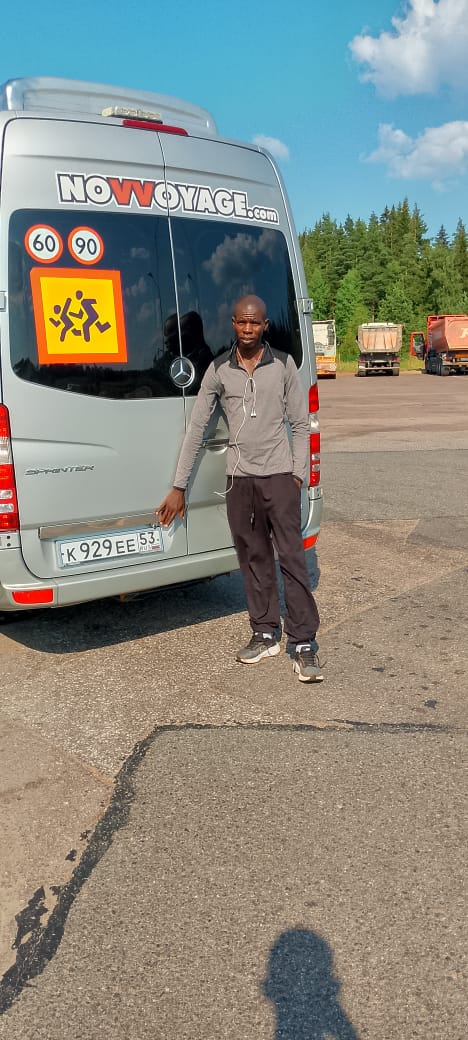
A few days later, after what Kibet described as a one-day cultural event on August 5, 2025, held in a hall in the city, the three handlers returned. He said they offered to help the men secure one-year work permits. They moved from room to room, handing out contracts written entirely in Russian and without any translations, and collecting the men’s passports.
“We signed because we thought these were work contracts, factory work. That’s what we were told,” Kibet said.
The next morning, the men boarded the same bus used during their sightseeing tour. However, this time around, it turned off the highway onto a dirt road that led them deep into the forest.
By the time the fences and camouflage netting came into view, the truth was unmistakable.
“We realised we were going to a military camp,” Kibet said. “There was no way to complain. No translator, everyone was shouting in Russian.”
Their phones were confiscated and their clothes thrown away. They were issued a Russian military uniform.
Kibet had carried his school certificates along, hoping they might help him to secure a job in Russia. He watched sadly as the documents were tossed onto a pile of rubbish.
“I had always thought Russia was a good place,” he told me. “I didn’t know I would end up in the war.”
We later learned that Kibet’s was just one of the many cover stories recruits are coached to repeat to anyone who asked. In camp after camp, from western Ukraine to the outskirts of Kyiv, I heard almost identical narratives from other African prisoners. The same tales of cultural festivals, mysterious agents, effortlessly provided visas to Russia, sightseeing days, and an overnight shift from hotel rooms to military barracks. The stories were so consistent, so rehearsed, that even after being captured or surrendering to the Ukrainians, weeks or months later, the prisoners rarely deviated from them.
But Kibet’s account of what happened showed several contradictions when examined further. Multiple independent interviews and source records showed that Kibet had joined the Russian military by July 30, 2025. Barely three days after landing in St Petersburg and six days before the date he insisted the cultural event took place.
Authoritative sources told us that Kibet spent two weeks in Nairobi in early July to pursue a visa application. If accurate, this would contradict his claim that he did not visit the embassy.
And then there was the matter of the signing of the contract. Kibet’s account broke down when examined against official procedures and testimony from other African fighters. Our review confirmed that foreigners must enlist through an in-person process at an official selection point. In St Petersburg, an online review says one can enlist in person at the military service selection point located at Podezdnoy Lane, 4. Here, recruits undergo biometric capture, medical examination, and formal photography, and sign contracts in the presence of officials. It is described as a busy hub where recruits move from one room to another. But Kibet’s version was radically different, with nothing he told us matching this process.
“They took all our passports and said they were going to open bank accounts for us,” Kibet said. “Later, they came back and handed each of us an ATM card.”
However, all the recruits we interviewed say they went in person to the recruitment centre – where, among other things, they opened a bank account.
Kibet’s description of his journey kept changing. At times, he said he left Nairobi with three fellow Kenyans, at others that the group included four Africans, and eventually it grew to eight Kenyans by the time they reached St Petersburg. But one detail never changed: he travelled with a group of men he barely knew. The contradictions in the numbers only reinforced the wider pattern – recruits moved in groups, often without truly knowing who they were travelling with or why.
For many African recruits, the story of a cultural festival, framed as harmless tourism, provides plausible deniability, especially for those who fear legal trouble at home or retaliation against their families.
There are reasons for that. Admitting that they travelled to Russia intending to join the military carries risks when he returns to Kenya. Families fear stigma and many recruits believed that acknowledging they enlisted willingly would make them appear less like victims and more like collaborators in a foreign war.
It raises a broader question: was Kibet’s trip to Russia truly about work, and was that work, from the very beginning, connected to the Russian military?
The contract
Kibet’s contention that he signed a contract he couldn’t read is not unique. He could not say what kind of agreement he had actually committed to – whether he was being enlisted as a future resident of Russia or simply as a mercenary.
Copies of two Russian military contracts reviewed by this reporter and signed by other African nationals in 2024 in Moscow contained almost identical language. They offered one year of military service and, in one version, a pathway to residency after a full year of service.
Both contracts bore the name of Major I.S. Tekuchev, head of the Moscow Contract Military Personnel Recruitment Station, listed as the official responsible on behalf of the Ministry of Defence of the Russian Federation.
The copy of the contract we obtained contained only a single bilingual page – a section outlining a pathway to Russian citizenship. Q.15 and Q.16, under “Motives for concluding a contract with the Ministry of Defence of the Russian Federation” and “Future plans after completion”, the prisoner had handwritten his answers in English: “Helping Russia” and “Bring my family and stay in Russia and become a Russian citizen.”
Kibet remembers only that he signed “where the man pointed” and that the document included a promise of residency.
After signing the contract, Kibet was promised he would receive a signing bonus of 1.9 million rubles, roughly Sh3,078,000 at today’s rate, along with a monthly salary of 210,000 rubles, about Sh340,000, paid in three instalments. He was also promised additional allowances for equipment: 100,000 rubles, around Sh160,000, split into two instalments.
“On signing the contract, the agents immediately take one million rubles, roughly Sh1,600,000, and you are left with 900,000 rubles (Sh1,460,000).”
In Kibet’s eight-man team alone, the signing bonus amounted to eight million rubles, about Sh13 million flowing directly to the intermediaries (“the agent” in Kenya and the handlers in Russia).
Kibet said that just after leaving the base for the first camp, the men were briefly given their phones back. His internet connection was weak, but it was long enough for a notification to appear on his mobile app: 300,000 rubles, about Sh486,000 had been deposited into his account. It was the first instalment of his signing bonus – and as he would later learn, the only payment he would ever see.
Access to bank accounts
Access to money quickly emerged as one of the most challenging and, for many, unexpected parts of what it means to serve in the Russian military as a foreign recruit.
Multiple sources – POWs, returnees, and men still serving in Russia – every one of them described a similar problem: sending money back home was far more complicated than they thought. International sanctions have severely restricted Russia’s financial system. Though this has been widely reported in the news, few recruits understood what that meant in reality.
While local Russian soldiers could access their pay domestically without any difficulty, foreign fighters found themselves cut off or dependent on intermediaries.
Technically, there were workarounds which many Ghanaian fighters had figured out – informal brokers, foreign students who moved money through personal networks, or middlemen who charged steep commissions, but these required time, access and mobility, which frontline recruits simply did not have.
The sources we spoke to say Russian agents – their foreign handlers on the ground – exploited this vulnerability from the outset.
The fighters narrated what alarmed them the most: “The agents who take you to Russia know you won’t come back home. When you reach Russia, they insist on opening the bank account with you and make themselves co-signatories under the pretext of “helping with the language barriers or making withdrawals easier or deducting their commissions in a timely manner.”
In reality, the arrangement gives the recruiters total control over the soldiers’ earnings.
“There is one dominant recruitment agency in St Petersburg that works closely with bank officials and is primarily bringing in Kenyan recruits. They track everything. When they see your account hasn’t been accessed for two or three months, they know you are dead.
According to our sources, the agents have trusted contacts at the frontline who monitor casualties and report back: “They ask, where is so and so? Is he still alive? They follow the deaths. The money then becomes theirs,” one POW said.
Kibet said he never managed to send a single shilling back home. The impact was immediate and personal. On his daughter’s birthday, he couldn’t send her the money he had promised.
“I tried to withdraw the money; it didn’t work. I had to ask a friend in Kenya to assist,” he said. “My own money was there, but I couldn’t touch it.”
Others, injured at the frontline and recovering, described attempting to withdraw money months after signing their contracts only to find out that their accounts had been marked “restricted”.
“When they realise that your account has not been processed after a period, they know you are dead,” one fighter said. “Your family will never see a shilling.”
Training and life at the frontline
Kibet’s first days at the frontline were a crash course in everything he had never trained for. The athlete suddenly found himself learning on the run, under fire.
He and his colleagues barely had time to understand where they were when they first arrived in St Petersburg. After spending one night in the first camp, there followed a dizzying series of successive transfers to five other stations, each more remote and more militarised than the last one.
“Training lasted around five days,” he said. “They showed us how to shoot, how to throw grenades. It was intense. Running with heavy armour was the worst part.”
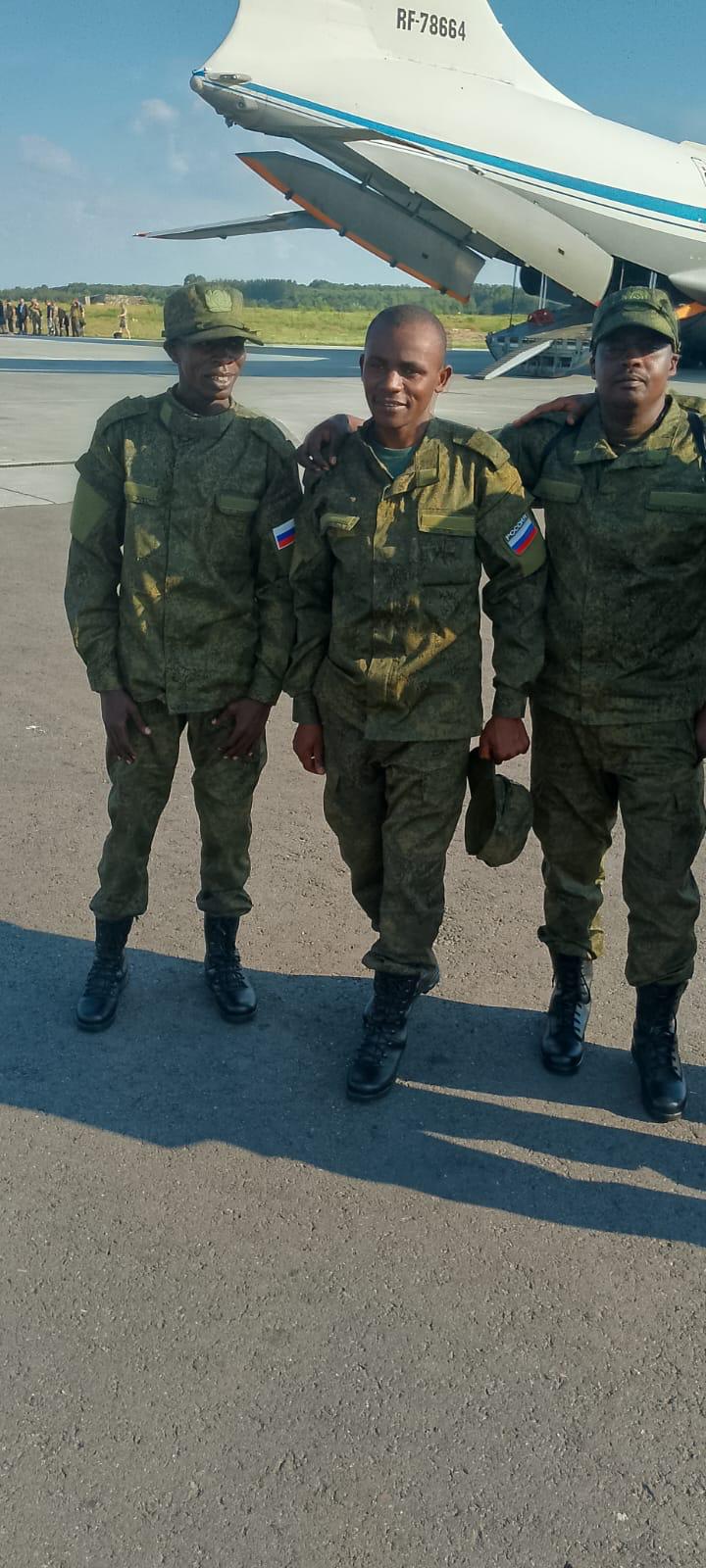
Within a week of landing in Russia, he was told he was going to the frontline. But not everyone was sent out so fast. Some foreign fighters – including his Kenyan friend who arrived after he did – said they spent months learning Russian and training before deployment. It was around this time, as he met other Africans moving in and out of the camps, that he first heard about an entirely different system – one that allowed some men to avoid the frontline, at least for a while.
A few recruits managed to avoid the frontline entirely. Digital communication we reviewed suggests that their protection hinged not on official policy, but on informal arrangements.
Digital records provided show a Russian commander maintaining regular communication with the wife of a West African fighter, updating her on her husband’s whereabouts, and reassuring her whenever she could not reach him. The family had paid for this access.
The fighter said he had paid his commander a total of 400,000 rubles, about Sh647,788, in small instalments over several months, purportedly to delay his deployment to active combat.
It worked for seven months until it couldn’t work anymore. “It became impossible to explain why he was never sent forward,” the relative told us.
The man was deployed shortly afterwards.
Kibet learned about the underground network much later, during his captivity in Ukraine, from other African fighters who had survived at the frontline longer than he had. “If you have money – or someone is willing to pay on your behalf – you can buy time.”
The athlete turned soldier
According to Andrew Kimutai, who grew up with Kibet in Chemoge village, Kaptama in Kapsokwony, the two had known each other since childhood.
“I’ve known Evans since primary school,” Kimutai said. “He was older than me and already a promising athlete. Whenever he came home, we’d train together. He was the kind of person who pushed others — a mentor.”
By the early 2000s, Kibet had joined Kenya’s 5,000m athletics team, training in Iten before moving to Ngong. “He was a strong runner,” Kimutai said. “He got noticed and got a sponsor — that’s how he joined the national team.”
But in 2003, a hip injury during training in Iten changed everything. “The pain shot down his right leg every time he ran,” Kimutai recalled. “It never really healed.”
According to him, Kibet spent several years in Ngong seeking treatment, but the injury ended his place on the team.
When he returned to Iten around 2015, he tried to rebuild his career. “He never gave up,” said Kimutai. “He bought land in Koisunguru, built a home, and kept training. His dream was to make a comeback.”
Despite his determination, the pain kept returning. “He kept seeing doctors — even spent time in hospital in Eldoret,” Kimutai said.
By late 2024, Kibet was hopeful again. “He told me the pain was gone,” said Kimutai. “He said his body was responding well to training. We thought maybe this was his comeback.”
Still, other friends say Kibet struggled. There were times he went hungry or couldn’t afford rent. He tried his hand at farming, but it brought little return.
I have been unlucky,” Kibet said. “ I trained in Iten every day. I had a Polish manager and a coach. Between 2024 and 2025, I ran one half-marathon in Kapsabet. I applied for visas six times – both in Europe and the US - and every application was rejected,” Kibet said.
***
Kibet said life inside the Ukrainian prison was “not bad”. The food was adequate, the conditions orderly. “It’s somewhat comfortable,” he told me, “as long as you follow the rules.”
He said a UN representative had visited him and explained his options: you wait for your government to claim you, you are exchanged with Russia, or you wait for the end of the war. For Kibet, none of these options offered certainty. “Russia only takes their own people,” and the end of the war is uncertain. So his only hope is to come back home. He said the Ukrainian officials had told him that if an agreement was reached with the Kenyan government, he could be repatriated.
Kibet expressed hope that the government would intervene. “I just want to go home.”
“If I am released, my only wish is to see my daughter,” he said. “I love her so much. She is the first person I would want to see. I am sorry she had to be exposed to all of this.
Prison officials allowed us to have a meal together – a bowl of raw cabbage salad, beetroot salad, a very soft ugali-like lump of porridge, an oily broth with pieces of meat and vegetables, four large slices of bread.
As we talked, I updated him on recent developments. When I informed him of Raila Odinga’s death (on October 15, 2025), he was stunned. “Baba amekufa kweli?” he asked. We had to stop talking for a moment. A few minutes later, still processing the news, we shifted to discussing other political developments in Kenya.
***
The absence of translators, the pressure to sign immediately, the confiscated phones and documents, the co-signed bank accounts, the vanishing payments – taken together, they point to one conclusion: a system built to extract value from foreign recruits, regardless of whether they survive.
On the face of it, the promises that drew them in – free travel, no embassy interviews, guaranteed work, the chance of Russian residency after a year of service – were never impossible. But they were, in fact, unrealistic for the men being targeted: unemployed or underemployed, struggling to cover basic bills, many unable to afford local transport, let alone international flights.
Kibet had dropped out of high school and lacked the qualifications that might have given him other options. Many of the African fighters we interviewed described similar trajectories: no diplomas, little savings, and long periods without stable work.
When asked what message he had for young men still considering taking the journey to Russia, Kibet did not hesitate: “Even if there are no jobs in Kenya, just stay there,” he said.
He added: “Going to Russia is okay. Going to Russia for military work isn’t okay. Your chances of coming back home are slim. This is not a job; it is a death contract.”
Powerful official
We also learned that a high-ranking Kenyan official in Moscow was involved in facilitating the travel of some of the recruits and had personally introduced them to the recruiting agents.
They described in detail his position, physical appearance, and his role in arranging for their documents, but they refused to give their own names, citing fear of retaliation.
“He is powerful,” one of them said. “If we say our names, we are finished.”
We independently verified the man’s identity through multiple sources, including hospitalised Kenyan fighters and former recruits now back in Kenya. None of them was willing to be quoted by name. They all expressed the same fear: that speaking openly about this official could endanger them or their families. According to authoritative Kenyan sources familiar with the recruitment pipeline, many of the Kenyan soldiers funnelled into St Petersburg came from the Mt Kenya region, often through the same network of agents.
Weekly Review sent questions to Prime Cabinet Secretary Musalia Mudavadi, who is also the Foreign Affairs Cabinet Secretary, Principal Secretary Dr Korir Sing’Oei as well as the ministry communications team. They had not responded by the time of publishing this.
In the questions sent to the ministry and its officials, we wanted to know whether Kenyan citizens are allowed to join armed forces of a foreign state, how many Kenyans had travelled to Russia for purposes of joining the armed offices but using tourist visas rather than formal work or training permits. Previously the ministry had indicated there 200 Kenyans fighting for Russia in Ukraine.
“It is estimated that recruitment networks are still active in Kenya and Russia. The Kenyan embassy in Moscow has reported injuries among mationals and others stranded after attempting recruitment into the war efforts,” Mr Mudavadi said in a recent press statement.
We also wanted to know the measures the government is taking to prevent or disrupt the recruitment of Kenyan citizens — whether through online agents, travel brokers, or Russian-linked intermediaries; and whether Kenya was engaging foreign partners or intelligence agencies to monitor suspected recruitment networks.
Lastly, the Weekly Review sought to know whether Kenya was willing to work with other African governments and with Ukraine or international bodies to address the exploitation of African nationals in Russia’s war and whether, in this endeavour, it will support a multilateral or African Union-led initiative to protect citizens from being misled or trafficked into combat roles.
Continues next weekend
Credits:
Photography: Medynskyi Yarema
Map: Mapbox




