On August 3, 2020, when a Norwegian paper contacted the Nairobi-based United Nations Environment Programme (UNEP) about the links between one of its directors, Lisa Svensson, and sex offender Jeffrey Epstein, the programme distanced itself from the saga by stating that the interaction between the two happened before Svensson joined UNEP in August 2016.
However, in what could turn out to be an embarrassment and a reputational risk to an organisation that expects the highest level of integrity from its staff, recently released Epstein files by the US government reveal that Svensson stayed in close contact with Epstein from the time she arrived in Nairobi to work for UNEP in August 2016 to the year the paedophile committed suicide in a US prison in 2019. She not only invited the convicted sexual offender to visit her in Kenya, but also advised him to flee the US at a time when he was facing a sexual assault case.
By then, the Gigiri-based UN programme was led by Erik Solheim, a Norwegian diplomat who had taken over as Executive Director at the level of Under-Secretary-General in June 2016. Having served as Norway’s Minister for the Environment, Solheim had the right credentials to lead UNEP.
He also possessed the political skills necessary to navigate the multilateral diplomacy of the UN system. However, less than 18 months into what would have been an eighteen-year tenure, Solheim was forced to resign following a critical internal audit of his travel expenses.
Although his departure attracted little attention in Kenya, behind the walls of the UNEP building, which has been envisioned as a model of green architecture in Africa, a crisis had been brewing. Among the accusations against Solheim were extravagance and favouritism towards two Nairobi-based senior staff members, one of them being Svensson, whose closeness to Epstein has been laid bare in the recently released files.
Svensson arrived in Nairobi in August 2016, just two months after Solheim, to serve as UNEP’s Chief of the Marine Branch at the level of Director/Coordinator (D1). According to her LinkedIn profile, her role was to manage the Marine and Coastal Ecosystem Branch, including the Regional Seas Programme. Before then, she had served as the Swedish Trade Attaché in Washington and at the Swedish Ministry of Foreign Affairs.
Her friendship with Jeffrey Epstein dated as far back as 2010. On August 15, 2012, just four years after Epstein’s conviction for procuring a minor for prostitution, Svensson, who was then serving as Swedish Ambassador for Oceans, Seas and Fresh Water, wrote to him saying, “Hi Jeff, my dream is to spend some time in the fall/winter at an inspiring university doing a post-doc (visiting fellow) or anything like that. To be able to actually read and write. To create something that is both lasting and substantive. So I need your advice and help! Would you take up the challenge?” Epstein replied, “Of course … phone, or come visit. I will send a ticket,” to which she responded, “Great, what’s your number?”
This undated trial evidence image obtained December 8, 2021, from the US District Court for the Southern District of New York shows British socialite Ghislaine Maxwell, who has been convicted of sex crimes, and US financier Jeffrey Epstein Handout US District Court for the Southern District of New York.
Photo credit: AFP
By October 2012, the conversation had shifted from official to personal. “I am free from 3:30 until 5:30 in Washington for you,” Epstein messaged her on October 24, 2012. And when Epstein sent her an adult toy, she replied on November 4, 2012, “Thanks for your gift, always wanted one. Hilarious, so kind of you.” According to the files, she visited Epstein a couple of times and, at one time, Epstein considered employing her as a member of his staff.
By the time Svensson arrived to work in Nairobi, her friendship with Epstein was at its peak. In 2020, when her name appeared in court documents during the trial of Epstein’s associate Ghislaine Maxwell, Norway Today contacted UNEP in Nairobi on August 3, 2020, to ask whether it was aware of the alleged links between one of its top directors and Epstein. UNEP, however, distanced itself from the saga, stating that Svensson’s “alleged interaction with Mr Epstein happened when she was with the Swedish Ministry of Foreign Affairs” and before she arrived in Nairobi. The programme went on to tell the paper, “For further comment on that, please reach out to the Swedish Ministry of Foreign Affairs or to their embassy in Washington.”
However, the recently released tranche of Epstein files confirms otherwise. In fact, just one month after joining UNEP, Svensson wrote to Epstein, who had already been convicted of sexual abuse, inviting him to visit her in Kenya: “Gave up on Swedish men, moved to Kenya. Wish me good luck. Come and visit,” she wrote.
In September 2016, at a time when a lawsuit was being filed against Epstein for sexually abusing a minor, Svensson wrote to him from Nairobi advising him to prepare to flee the US, stating, “If any presidential candidates win, you need to evacuate (sic).” This advice appeared to ignore the seriousness of Epstein’s crimes and the accusations that were being levelled against him. She would later travel to meet Epstein on Valentine’s Day eve, on February 13, 2017. According to an entry made in Epstein’s appointment schedule in the documents released, she was the last person the paedophile met, from 6.30 pm.
By March 30, 2017, just seven months into her job at UNEP and one month after visiting Epstein, Svensson was already thinking of relocating to France to work remotely from Paris. For this reason, she sought the assistance of her boss, Erik Solheim, the UNEP Executive Director. In an email to Epstein dated March 30, 2017, Svensson wrote, “Told my boss I will move out of Africa and relocate to Paris. Found a house on the coast. Neither is a done deal but working on it! (sic)”. Svensson would later be granted permission to work remotely from France without following due process, a situation that resulted in accusations of favouritism being levelled against him by disgruntled UNEP members of staff.
In one email published around that time by PassBlue, an award-winning independent media company that covers US-UN relationships, one disgruntled member of staff told the Executive Director, “In contrast, you, sir, have approved that your friend, a D1, Lisa Svensson, can work from Europe because, for personal reasons, she does not wish to work in Nairobi. She leads the marine team remotely, while the rest of the staff under her responsibility are in Nairobi.” The email was also copied to UN Secretary-General António Guterres.
Nevertheless, with her relocation having been approved on the grounds of “family considerations”, Svensson updated Epstein on April 29, 2017, according to the released files: “I am leaving Nairobi at the end of June. Then looking for an apartment in Paris. I will have a vacation and semi-work in July/Aug, so I thought I would use the time to get to know the city, find an apartment and refresh my French. Will also plan to go back and forth a bit to the west coast of Sweden. So I am a bit flexible. I thought I would use summer for getting organised for the fall (sic).” She also asked Epstein if he could allow her to stay in his flat in Paris.
By 2018, morale among the UNEP staff at Gigiri had plummeted, with key donors such as the Netherlands and Denmark threatening to withhold funds because of how the organisation was being run. The complaints resulted in an official investigation being launched by the UN internal audit team. According to a report compiled thereafter, Solheim spent almost $500,000 on air travel and hotels and spent only 20 per cent of his time in Nairobi. He was also accused of having “no regard for abiding by the set regulations and rules” by unofficially allowing selected staff to work from Europe instead of Nairobi. Solheim was, consequently, asked by UN Secretary-General António Guterres to resign in November 2018. What made his departure unusual was that it is very rare for an Under-Secretary-General of the United Nations to be pressured to quit.
Meanwhile, in Paris, Svensson continued to work remotely, making only occasional visits to Nairobi while also engaging with Epstein. On March 30, 2019, hoping to be based permanently in Paris without having to make trips to Nairobi, she wrote to Epstein, “Still looking for a way out of Nairobi. I have got funding from a philanthropist for 18 months to do ocean work. Yes, I would need to have an organisation that could receive private money and then employ me in Paris. Would you have any useful suggestions/contacts?” Four months later, on July 6, 2019, Epstein was arrested on charges of sex trafficking and committed suicide the following month while awaiting trial.
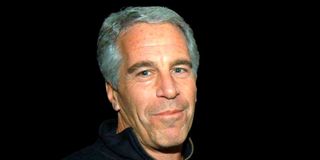
Jeffrey Epstein is seen in this image released by the Department of Justice in Washington, DC, on December 19, 2025.
Photo credit: Reuters
According to Svensson’s LinkedIn profile, she continued to work for UNEP until September 2021, when she moved to the Swedish Ministry of Foreign Affairs as Deputy Director, Global Cyber/Digital Affairs, until last year. She currently serves at the Swedish Permanent Mission to the United Nations in Geneva.
That a top director could continue engaging with a convicted sex offender when a sexual abuse case had been brought against him has turned the spotlight on UNEP in Nairobi and the entire United Nations, which early last week stated that Epstein’s abuses may constitute “crimes against humanity”.