Kwasasi was once a quiet settlement where fishermen crossed between Lamu’s islands and farmers carved out livelihoods from the thick coastal bush.
Today, the village sits at the centre of a Sh2 trillion industrial project expected to reshape Kenya’s petroleum sector. But as the Dangote refinery construction plans take shape, the prospect of economic transformation has brought a pressing uncertainty for hundreds of families who call this land home.
As you leave Hindi Town in Lamu’s mainland and turn off the main red-dirt road, travelling about 20 to 30 kilometres into Kwasasi village in Lamu, the landscape opens into a vibrant tapestry of human life and thriving nature.
The view is a blend of orderly homesteads, lush agricultural plots and dense, fertile thickets, reflecting a community that has put built a largely self-sustaining way of life. The landscape is shaped by community-led conservation and agriculture, where the coastal greenery meets the Indian Ocean’s blue horizons.
Cashew, pawpaw and mango trees, along with neem, bubblegum and casuarina trees, are preserved across the area, forming dense walls of vegetation.
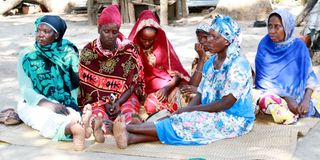
Residents of Kwasasi Village in Lamu County. The village is set to become the site of the Sh2 trillion Dangote East Africa Petroleum Refinery and Petrochemicals Special Economic Zone.
Photo credit: Kevin Odit | Nation Media Group
Kwasasi village is set to become the site of the Sh2 trillion Dangote East Africa Petroleum Refinery and Petrochemicals Special Economic Zone (SEZ), one of Kenya’s biggest industrial projects.
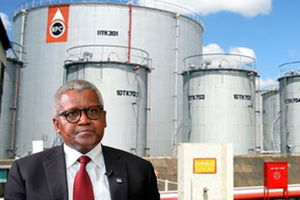
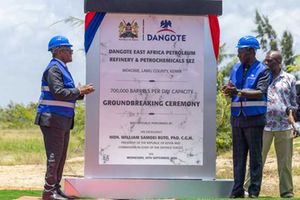
The groundbreaking ceremony for the Lamu plant took place on September 30, and was presided over by President William Ruto and Nigerian industrialist Aliko Dangote. The event, held at the Lamu Port site in Kililana, was also attended by four other heads of state.
But as the country prepares to develop the 700,000-barrel-per-day mega-refinery, the spotlight has turned to Kwasasi. The village, home to at least 700 households, has remained largely obscure for decades.
Originally known as Magogoni, it was established in the 1960s by fishermen, particularly those from the Lamu East islands, who used the area as a crossing point when taking their catch to markets in Lamu West.
The village got its name from the many logs, known as magogo in Swahili, scattered around the area.
Because there was no bridge connecting Lamu East and Lamu West, fishermen who had travelled overnight across the vast Indian Ocean improvised by using the logs to build a crossing. This enabled them to transport their fish to the other side of the county, in Lamu West, to sell their catch before returning home to Lamu East.
Aboud Athman, 76, a Bajuni elder, offers another account of the origins of Magogoni, now known as Kwasasi.
Mr Athman says their Bajuni ancestors from Lamu East islands, including Pate, Siyu, Faza, Mbwajumwali, Tchundwa, Myabogi and Mtangawanda, as well as surrounding areas, were behind the settlement.
“Kwasasi is a recent name, but the place was originally called Magogoni. Our Bajuni ancestors from the vast Pate Island used to cross over to Magogoni (Kwasasi) to carry out farming and go back to their homes in Lamu East,” said Mr Athman.
“Once they crossed to this place, the ancestors used to cut down trees to create farms. They left many logs (magogo) scattered almost everywhere here, hence the name Magogoni,” he added.
Today, the wider Magogoni area, which includes Kwasasi and Kalavuu villages, continues to grow rapidly. The area is also home to the Manda Bay Kenya Navy Base and borders other major national projects, including the Lamu Port.
With these investments, what began as a traditional, isolated Bajuni farming settlement has evolved over the decades into a thriving, diverse community.
Kenyans from many ethnic backgrounds have moved to the area for farming, livestock keeping, trade, labour and business opportunities.
Mohamed Shee, 65, an elder in the village, is optimistic that the Dangote refinery will transform the area’s remote, heavily bush-covered hinterland, where modern infrastructure remains limited.
Shee Mohamed alias 'Shee Dunga', a retired security officer, shows one of the Indicators left at his farm in Kwasasi Village, in Lamu County. The village is set to become the site of the Sh2 trillion Dangote East Africa Petroleum Refinery and Petrochemicals Special Economic Zone.
Photo credit: Kevin Odit | Nation Media Group
“We’re aware that the Dangote project is a great one. Our ancestors and even us depended on basic, rudimentary structures like the logs/magogo to cross. I believe once the project is completed it will come with lots of goodies, including our road networks and bridges improved in this place,” said Mr Shee.
He said residents were focused on educating their children and equipping them with the skills needed to secure jobs at the Lamu plant.
Mr Shee, however, urged the government to prioritise local people for some of the 60,000 jobs the project is expected to create.
“The project will be meaningful to us, the locals, only if our land is compensated fully, our children get employed and our infrastructure, especially road network is improved,” said Mr Shee.
Samuel Kinyanjui, a resident, expects the Dangote refinery to transform the area by driving economic development and opening up Lamu and the northern Kenya corridor as a global industrial hub.
“Today, many of us are farmers, livestock keepers and fishermen. I believe the project will fully change our lives for the better by providing decent employment for us and our children,” said Mr Kinyanjui.
Similar sentiments were shared by Ms Kadzo Mwaka, an entrepreneur, who said a modern oil refinery could catalyse wider economic, infrastructure and social development.
Despite expectations of rapid growth, the lack of formal title deeds remains a longstanding grievance among residents of Lamu.
In Kwasasi, Kalavuu and neighbouring villages, the refinery project requires about 7,000 acres for the core industry site. The Kenyan government is securing about 9,000 to 10,000 acres in total.
The state is also planning to acquire an additional 3,000 acres, bringing the total to roughly 12,000 acres, to accommodate a special economic zone and industrial hub.
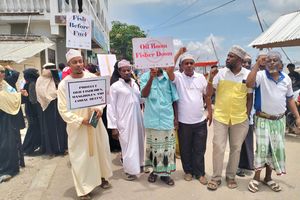
As preliminary work on the refinery moves forward, hundreds of villagers face the prospect of losing ancestral farms, homes and family graves without a clear safety net. They have appealed to the government to come out clearly on their fate and ensure there is transparency in implementing the project.
Abdalla Wakati, 70, said losing his 40-acre plot without compensation would leave him feeling abandoned.
“I’ve lived and farmed here my entire life. My parents and my grandparents died right here on this soil; they were the very initiators who cleared and brought life to this land. To cast me out now without anything is to strip away my entire history and leave me with no one and nowhere to go. I won’t leave here unless they compensate me,” said Mr Wakati.
In the Kwasasi-Mivinjeni area, the Nation also saw traditional Swahili-style homes and modest structures nestled among the greenery. Children played in open yards, clotheslines fluttered in the coastal breeze, and thin columns of cooking smoke rose into the sky.
Neatly demarcated farms lined the village pathways. Rows of green maize, sprawling cassava plants and leafy vegetables reflected generations of work by local farmers.
Mature coconut palms, mango trees and pawpaw trees stood tall, some heavy with fruit, shading the crops below. Thick coastal scrub and wild bushes bordered the cultivated farms.
Said Abdallah, 72, who owns a 20-acre farm in Kwasasi, said residents without title deeds still have cultural heritage sites that could provide important legal and historical evidence in land compensation claims.
“We view the refinery project as a game changer only if the government and investors will consider compensating us. We have ancestral mosques, old burial grounds and cemeteries among other centuries-old structures that are restituting for our ancestral lands.
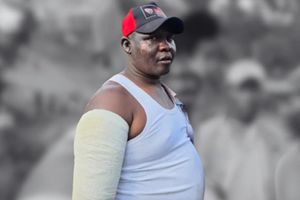
Al Habib Said Abdalla, a villager at Kwasasi Village, Magogoni, an area set aside for the construction of the Sh2 trillion Dangote East Africa Petroleum Refinery and Petrochemicals Special Economic Zone.
Photo credit: Kevin Odit | Nation Media Group
“Around the world, these physical markers have proved continuous occupation, spiritual connection, and historical ownership and support our compensation before displacing us,” said Mr Abdallah.
Milicent Adhiambo, 39, a mother of three and a Kwasasi resident, said families had occupied, cultivated and developed the project area for generations. She said she was uncertain about the future as soil testing, sampling and other site activities continued on farms without residents being notified.
She called for all land ownership disputes, acquisition plans and resettlement arrangements to be made public so residents could understand what lay ahead.
“We’ve lived in this place for long. We’ve developed our farms and no one should come just like that and tell us to vacate. Where will we go? The government and the investor, Aliko Dangote should compensate us and provide us with alternative resettlements or else, we shall not vacate this land,” said Ms Adhiambo.
Benson Wamuyu, a security analyst, said the refinery also has significant security implications for Lamu apart from uplifting the economy.
Located along Kenya’s northern coast, near the border with Somalia, the project sits in a corridor that has historically faced serious security challenges from the militant group al-Shabaab.
“At this very early stage, we’re already seeing highly coordinated protection efforts from various security units meant to secure such infrastructure, international workers and local communities,” said Mr Wamuyu.
“The Lamu plant is among large-scale investments in this country and East Africa region, meaning it will automatically attract massive high-level deployments. This will in turn, help suppress militant activity and cross-border security threats in the immediate geography,” he added.
Political leaders in Lamu have expressed their support for the project, but at the same time noted that concerns by the public should be addressed.
During the groundbreaking ceremony, Lamu Governor Issa Timamy said it was understandable for resident to raise issues such as land ownership and environmental conservation concerns. He however cautioned against incitement by non-residents who may be having ulterior motives.
On her part, Lamu Woman Representative Muthoni Monica Marubu said the county needed the Sh2 trillion refinery but urged the government to resolve land-related grievances and compensate people affected by the project.
“My plea is for the government to establish legitimate beneficiaries, resolve outstanding land claims, undertake meaningful public participation and ensure fair and dignified resettlement of families affected by the project,” said Ms Marubu.
Speaking to the media last month about the concerns of residents living within the project area, Lands, Public Works and Housing Cabinet Secretary Alice Wahome said project assessments, including the Environmental and Social Impact Assessment (ESIA), had been completed before the groundbreaking was done.
President William Ruto (right) and President of the Dangote Group Aliko Dangote during the groundbreaking ceremony for the Dangote East African Refinery in Lamu County, Kenya.
Photo credit: PCS
According to the CS, the project falls under the larger Lamu Port-South Sudan-Ethiopia Transport (Lapsset) corridor development, meaning that its plans were in place for many years.
“Of course by the time the Lamu Port itself was being done, it had a list and the refinery is one of the projects that were expected to be built. The refinery will come up with a chemical and cement factory plus many others relevant to that particular area. The land is okay, it’s good. The project area had been marked even before the project launch,” said CS Wahome.
Lands Principal Secretary Nixon Korir said the refinery’s location was largely determined by the presence of the port and that the available land belonged to the government.
“But just in case there are legitimate land owners that will be affected by the refinery, then the compensation process will take place. I don’t think the government has ever grabbed anyone’s land but also we should be very careful so that we don’t get people who can just go to court to stall projects just because they can go to court,” said PS Korir.
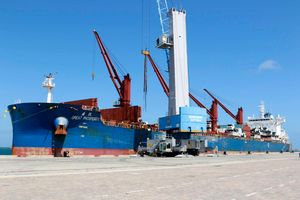
Meanwhile, work towards the refinery’s development is continuing. This week, Lamu Port received a second ship carrying cargo for construction of the plant.
The MV Great Prosperity, from China, docked at the Lamu Port site in Kililana on Monday, October 19, delivering 154 pieces of assorted construction equipment for the Dangote project.
The shipment followed the arrival of the first consignment on September 26, when the MV Da Yang Bai delivered 2,930.295 metric tonnes of construction equipment and materials for the project.