A bullet entered through Cecil Ouma's left elbow, shattered the bone, tore through his upper arm, smashed a rib, punctured his left lung and lodged near his lower spine.
The injuries, documented during his postmortem, told the story of a young man whose life ended violently inside a senior government official's vehicle.
They also exposed a little-understood world in Kenyan politics. A shadow economy where young men are recruited to fill political rallies, defend politicians, intimidate rivals, and, at times, unleash violence to protect their masters.
To outsiders, they are "goons." But to political actors, youths like Cecil Ouma are "mobilisers."
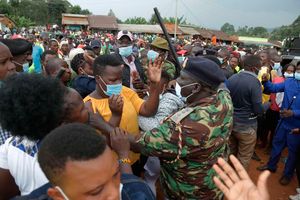
Cecil Ouma who was shot dead in Kariokor, Nairobi by the bodyguard of Youth Affairs Principal Secretary Fikirini Jacobs.
Photo credit: Pool
Beyond that label exists another kind of youth mobiliser. These are activists, artists and community organisers who use the same organisational skills to rally citizens around governance, social justice and public accountability rather than politicians.
One group mobilises for pay. The other, its members said, mobilises for purpose.
"I wear many hats," said Alans Ademba, a photographer, journalist and activist.
"To some, I am an activist, an artivist, a mobiliser, and even a youth leader. But my mobilisation is completely different from people who are paid to rally youth for politicians or disrupt public gatherings."
Ademba belongs to a loose network that includes spoken-word artist Willie Oeba, Hanifa Adan and Shakira Wafula.
They built strong relationships during the Gen Z protests before expanding into civic education and voter registration through initiatives such as the "Tuko Kadi" campaign.
"We mobilise for a cause, not for money," he said.
Unlike political mobilisation, he explained, their campaigns begin by identifying a social problem and deciding how to address it. During the campaign against the Finance Bill, they organised community meetings and coordinated online messaging through social media rather than financial incentives.
"It is thought-led. It doesn't need money. We identify people with influence, organise ourselves and push one message."
That, Ademba argued, is where the similarities with political mobilisers end.
"The other group’s strength is not in ideas. Their strength is finding people who will obey whoever is paying."
He describes them as "fillers", youth whose responsibility is ensuring politicians don’t address empty venues. Depending on the assignment, they cheer, intimidate or disrupt.
"I have many friends on that side. They are misused because they have no jobs. Their greatest resources are muscles and toughness. For us, we fight for the survival of the nation. For them, they fight for their own survival,” Ademba said.
For Willie Oeba, the greatest threat is not rival political groups but the State itself.
Willie Oeba, a spoken word artist who was vocal in the build-up to the Anti-Finance Bill protests in 2024 during the interview at Nation Centre, Nairobi on June 22, 2026.
Photo credit: Billy Ogada | Nation Media Group
"We are not goons for hire. We are more afraid of what the government might do to us because of what we do. We mobilise for social change and justice,” he said.
He believes the 2024 Gen Z-led anti-government protests transformed how many young Kenyans viewed civic participation.
"We wanted to change the narrative that youth can only be used to create chaos,” Obeba said.
Today, he said, mobilisation depends less on money than on trust.
"I only need to post something on X or perform spoken word in a matatu. When I appeal to Kenyans, they contribute. Someone sends Sh5, another Sh10,000. Some supporters even paid our transport when we opposed the Finance Bill,” Obeba said.
That community support, he argued, creates accountability because those contributing also demand transparency.
"The beauty with our mobilisation is that we control ourselves. But those who are paid must follow whoever is paying,” he said.
To Oeba, Cecil Ouma's death exposed what happens when politics becomes a commercial transaction.
"That is why the game becomes nasty. When it comes to sharing money, it leads to fall-outs, wars and even death,” he said.
Mukuru Community Justice Centre coordinator Anami Daudi Toure said he has seen another form of mobilisation built on long-term relationships rather than one-off political assignments.
"I work with the community every day. Whenever I am in the neighbourhood, I engage with everyone,” Toure said, noting that political mobilisers operate differently.
"They are called by politicians or investors. They are told to bring a certain number of young people and they are paid. The work ends there,” he said.
By contrast, Toure said that community organisers are called upon by residents to organise meetings, youth programmes and community projects. Their loyalty remains with residents, and not political patrons.
But Toure said politically connected youth groups have gradually evolved into powerful neighbourhood gatekeepers.
"They control playgrounds, garbage collection points, construction sites and access to some services. In places like Mukuru and Kibra, you cannot begin construction without involving them. It has become a system," he said.
Nevertheless, many members reject the label "goons." In Makadara, a youth leader who identified himself only as Master offered a different perspective.
"We are not goons. We are simply young people involved in our communities,” he said.
He said that every day begins with phone calls and WhatsApp messages to assemble hundreds of young people within minutes.
Their work ranges from attending political rallies and providing crowd security to distributing campaign merchandise and coordinating boda boda riders.
"We treat it as an honour when leaders call us. It shows they appreciate our role. They cannot fill rallies or know what is happening on the ground without us,” Master said.
He acknowledged receiving payment, though he declined to disclose how much. He said it depends on the politician and the task.
Master's account mirrors the findings of a 2025 report by Odipodev and Tribeless Youth, Goonland: “Looking Beyond the Money and Violence in the Political Exploitation of Young Men,” which found that Kenya's growing goon economy is fuelled by unemployed youth willing to carry out assignments for as little as Sh500. Depending on the risk involved, payments can rise to Sh5,000 for disrupting protests, intimidating rivals, guarding illegal businesses or seizing disputed land. The report states that cash is often paid at petrol stations or outside pubs to avoid traceability. It describes a hierarchy in which politicians, businesspeople and land speculators operate through handlers and recruiters, while remaining in the background.
The findings reinforce those of the National Crime Research Centre's 2025 report, “The Proliferation and Resilience of Criminal Gangs in Kenya” and the National Cohesion and Integration Commission's 2026 report, “The Evolution of Criminal Gangs in Kenya,” which both link criminal gangs to political patronage, youth unemployment and a culture of impunity.
"We are simply appreciated for the work we do," Master said.
Beyond politics, he said, such groups also maintain neighbourhood security, oversee garbage collection and negotiate with developers seeking to invest locally.
"We have ties with county officers and chiefs. Nothing happens without our approval,” Master said.
He sees himself as a manager ensuring members share available opportunities. But when politicians or their handlers underpay them, tensions quickly escalate.
"They know what happens. We disrupt the politician’s next meeting until we are sorted. The people who get injured become collateral damage,” he said.
The casual manner in which he described violence illustrates how deeply political confrontation has become normalised within some mobilisation networks.
Another member of Cecil Ouma's circle, identified only as Mathew* for security reasons, said the public misunderstands their work.
Somewhere between these worlds lies Cecil Ouma, and his violent death. His killing exposed the risks facing young men navigating the informal political economy, where unemployment, loyalty and survival often intersect.
For activists like Oeba and Ademba, Ouma’s death is a warning about the dangers of transactional politics.
“They will use you and then discard you,” Oeba said.
"The biggest misconception is that all mobilisers are goons. We are politically active youth. We love politics."
According to him, mobilisation is both dangerous and profitable.
Sometimes, he said, the amounts involved reach hundreds of thousands of shillings.
He believes disagreements over how those funds were shared ultimately contributed to Cecil's death. Members of the group admitted they had sent Cecil back to Principal Secretary Fikirini Jacobs' vehicle to demand more money.
"Maybe if we had accepted the money, he would still be alive."
To Mathew, mobilisers simply provide political services.
"If someone pays transport for us to cheer our leaders, where is the problem?"
He acknowledged that criminals sometimes infiltrate political rallies but argued they should not be confused with organised mobilisation teams.
"When our bosses are in danger, we protect them. We have been tear-gassed, pelted with stones and hung dangerously on moving vehicles. We do it because we believe."
For those working within political mobilisation structures, however, the work continues. Rallies still need crowds, campaigns still require organisers and thousands of unemployed young people continue waiting for the next phone call promising another day's pay.
Allans Ademba, 29, the man behind ‘Uko Kadi?’.
Photo credit: Bonface Bogita | Nation Media Group
As Kenya edges closer to another election cycle, the two worlds of mobilisation are likely to collide again. Ademba says his team remains wary, recalling how they were attacked in Kitale while conducting the Tuko Kadi voter registration campaign.
"While we will be busy organising citizens to demand accountability, we know there is another force that will continue organising crowds for those seeking power."
Listening to both groups reveals striking similarities. Both rely on trust, extensive social networks and an ability to assemble hundreds of young people within minutes. Their motivations, however, diverge dramatically.
One measures success through policy change, civic participation and public awareness. The other measures it through attendance, political loyalty and financial reward. One depends on voluntary contributions from ordinary Kenyans. The other depends on political financiers.
His killing exposed the risks facing young men navigating Kenya's informal political economy, where unemployment, loyalty and survival often intersect.
For activists like Oeba and Ademba, his death is also a warning about the dangers of transactional politics.
"They will use you," Oeba said quietly.