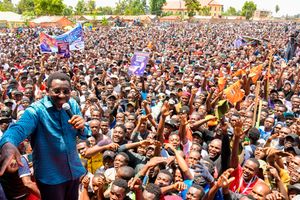
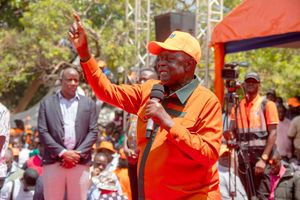
A fierce contest for control is unfolding within the Orange Democratic Movement (ODM) party ahead of its March 27 National Delegates Convention (NDC) in Nairobi.
The contest is marked by aggressive delegate mobilisation, mounting legal battles and deepening leadership wrangles, raising the stakes of what was expected to be a routine meeting to reaffirm party unity.
At the centre of the intrigue is a tribunal ruling expected on March 26, just a day before the convention, alongside disputes over leadership ratification, the exclusion of Winnie Odinga from the agenda and plans for a parallel convention linked to Secretary General Edwin Sifuna’s allies.
What should have been a routine gathering is rapidly turning into a battleground for control, as rival camps quietly mobilise ahead of the decisive meeting.
Unlike in the past, when disputes were handled within a single forum, the current standoff marks a sharp shift, with factions organising parallel conventions barely five months after the death of the party’s founding leader, Raila Odinga.
Sources say tensions over succession and the party’s future direction have intensified in recent weeks, crystallising into organised blocs.
At the heart of the contest is a strategy by Mr Sifuna’s allies to consolidate influence within key party organs and grassroots structures ahead of the 2027 elections.
The move has unsettled the Dr Oburu Oginga-led camp, which fears it could upset the delicate balance that has held the party together.
With behind-the-scenes lobbying and strategic positioning under way, the March 27 NDC is shaping up as a defining moment that could either reinforce ODM’s unity or deepen internal divisions.
The contest escalated when Mr Sifuna’s allies, aligned with the “Linda Mwananchi” faction, announced plans to hold a parallel “People’s National Delegates Convention” on the same day as the official meeting at Jamhuri Grounds.
Led by Siaya Governor James Orengo and ODM Co-Deputy Party Leader Godfrey Osotsi, the faction says its convention will provide a platform to “rescue” the party from what it terms constitutional violations and elite capture.
The move sets the stage for a political duel, with two conventions advancing competing claims to legitimacy.
“We are holding a people’s national delegates convention. It is citizen-driven,” Mr Orengo said.
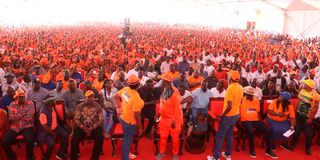
ODM delegates during a meeting at Jaramogi Oginga Odinga Foundation (JOOF) in Upper Hill, Nairobi, on March 17, 2026.
Photo credit: Wilfred Nyangaresi | Nation Media Group
Mr Osotsi described the parallel meeting as a corrective intervention, arguing that genuine delegates had been excluded from the official process.
The unfolding crisis is compounded by a case before the Political Parties Disputes Tribunal, which is expected to rule on March 26.
Filed by Vincent Chepkwony, the petition challenges the legality of ODM’s current leadership structures, including the appointment of Dr Oginga as party leader following Mr Odinga’s death.
The petitioner argues that key decisions were made without ratification by a properly constituted NDC, rendering them unconstitutional.
The case also questions the legality of the March 27 convention, raising the possibility of last-minute disruption.
The tribunal is further expected to determine the legality of Mr Sifuna’s removal as Secretary General, a decision that has been temporarily suspended.
The legal uncertainty has injected fresh tension into the process, with insiders warning that the outcome could significantly reshape the party’s power structure.
Even as the legal battle unfolds, attention has turned to efforts by rival camps to influence outcomes within the NDC framework.
Sources say Mr Oginga’s camp plans to use the convention to confirm or reject officials, while dissenting factions may push alternative candidates or disrupt the ratification process.
By pushing for individual approvals instead of a unified slate, the convention could open space for tactical interventions.
Leaders aligned to the mainstream “Linda Ground” faction have dismissed the parallel convention as illegitimate.
ODM Director of Elections, Junet Mohamed, accused rivals of attempting to fracture the party, insisting that only the Jamhuri Grounds meeting would be recognised. “This party was left to us. Nobody will be allowed to destroy it,” said the Suna East MP.
ODM National Chairperson Gladys Wanga said the party constitution clearly outlines the procedures for convening an NDC. “There will only be one NDC,” she said.
Party leaders have emphasised that the March 27 meeting is a special NDC intended to ratify decisions already made by party organs, rather than conduct fresh elections.
In a move aimed at containing rivalry, ODM has opted to avoid full-scale elections during the convention. Instead, key officials, including Dr Oginga and his deputies, will be presented to delegates for approval or rejection.
Insiders say the approach is meant to balance accountability with stability, allowing the party to avoid divisive contests while maintaining legitimacy. However, the strategy carries risks.
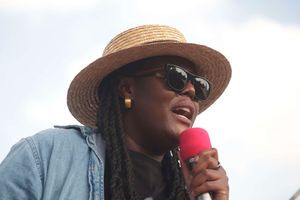
Eala MP Winnie Odinga (center) during the ODM Nairobi County delegates and officials meeting at Jaramogi Oginga Odinga Foundation in Upper Hill, Nairobi, on March 17, 2026.
Photo credit: Wilfred Nyangaresi | Nation Media Group
If delegates reject any nominees, it could trigger fresh internal battles and embolden dissenting factions.
“It is controlled democracy,” said advocate Chris Omore. “But control is never guaranteed once delegates are given a choice.”
Hovering over the process is the legacy of Raila Odinga, whose death on October 15, 2025 left a leadership vacuum. For decades, he was the party’s unifying force, managing competing interests and maintaining cohesion.
Without him, ODM is now confronting tensions long held in check by his authority.
Both factions claim to be defending his legacy—one through institutional continuity, the other through ideological positioning.
Beyond internal struggles, the NDC is expected to shape ODM’s approach to coalition politics ahead of the 2027 elections.
The party has signalled openness to working with President William Ruto’s United Democratic Alliance, a move that has unsettled some members.
Critics within the Linda Mwananchi faction warn that such alignments risk diluting ODM’s identity, while supporters argue coalition flexibility is necessary in a shifting political landscape.
Meanwhile, the political positioning of Mr Odinga’s daughter, Winnie Odinga, an East African Legislative Assembly (EALA) MP, has added another layer of intrigue.
Her possible elevation within the party has been proposed by some delegates but is not on the March 27 agenda.
Ms Wanga and Mr Mohamed said the issue would instead be considered later in the year during an ordinary NDC.
“It will not be on the agenda. It has to wait for an ordinary NDC,” Mr Mohamed said.
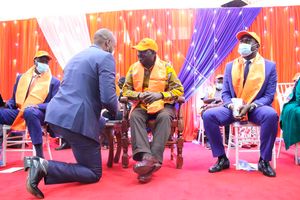
Then-ODM Party Leader, the late Raila Odinga on stage at Kasarani indoor arena after being declared the party's presidential candidate during ODM's NDC on February 26, 2022.
Photo credit: Francis Nderitu | Nation Media Group
“I want to tell her to tread very carefully. Those in the Linda Ground faction may want to use her to justify decisions that lack fair competition,” he said.
The looming convention has revived memories of ODM’s turbulent 2014 NDC, when chaos disrupted internal elections.
Party insiders say extensive planning is under way to avoid a repeat, but rising tensions and parallel mobilisation suggest risks remain.
As March 27 approaches, ODM faces a critical moment.
The convergence of legal battles, factional rivalry and competing strategies has transformed the NDC into a defining test of the party’s unity, identity and future.