Politicians, judges, lawyers and other prominent Kenyans are taking social-media disputes to court, producing injunctions, takedown orders, damages and contempt proceedings over online speech.
The cases involve posts and messages on X (formerly Twitter), Facebook, WhatsApp and TikTok, alongside disputes in which political statements or other publications later entered digital channels. Outcomes vary: some litigants obtained temporary restraint, others won damages, while some applications failed or remain pending.
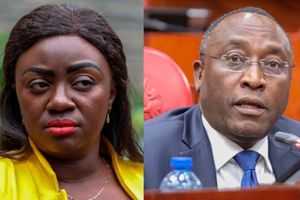
The clearest financial consequence came in the dispute involving Senate Clerk and Parliamentary Service Commission Secretary Jeremiah Nyegenye and former nominated Senator Gloria Orwoba.
On July 14, 2025, a Milimani Commercial Court magistrate awarded Mr Nyegenye Sh8 million in general damages and Sh2.5 million in exemplary and aggravated damages.
Clerk of the Senate Jeremiah Nyegenye (left) and former nominated Senator Gloria Orwoba.
Photo credit: Dennis Onsongo | Nation Media Group
The court also ordered Ms Orwoba to publish an apology on her social-media platforms and in a national newspaper.
The court rejected her reliance on parliamentary privilege because the publications were made outside Parliament. Ms Orwoba announced an appeal.
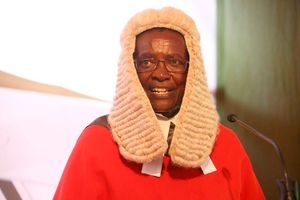
Former Chief Justice David Maraga’s case against Senior Counsel Ahmednasir Abdullahi is another high-profile example. The dispute arose from 2021 posts on Mr Ahmednasir’s X account, which had more than 1.1 million followers when the suit was filed.
Mr Maraga sued over tweets allegedly published in February 2021 alleging that he knew of a Supreme Court judge who had received a Sh220 million bribe. He argued that the allegations were false, defamatory, libellous and malicious.
The two are also embroiled in another dispute over a newspaper opinion article. Both cases are set for mention on October 27, 2026.
In November 2025, the High Court granted Mr Maraga a temporary injunction restraining Mr Ahmednasir from further publishing allegedly defamatory posts about him on X or other media. The main suit remained pending.
Former Chief Justice David Maraga (left) and Senior Counsel Ahmednasir Abdullahi.
Photo credit: Evans Habil and Billy Ogada | Nation Media Group
The judge declined the mandatory order sought to delete the earlier posts. Mr Maraga said the publications injured his reputation, while the defendant relied on truth, justification, fair comment and qualified privilege. The order was interim, not a final finding on the allegations.
Mr Ahmednasir also appears as an applicant seeking protection in another Twitter-post case. In 2020, he obtained an injunction against Njeri Thorne after the High Court found he had established a strong case arising from the contested tweets.
Justice Joseph Sergon said the court was satisfied at that stage that he had demonstrated “a rebuttable presumption of defamation”. The plaintiff argued that the defendant posted and circulated a series of defamatory, libellous and scandalous tweets directed at him.
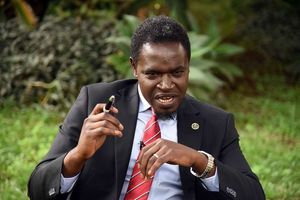
Supreme Court Judge Isaac Lenaola has filed two separate digital-publication suits. The first, against former Law Society of Kenya president Nelson Havi, arose from X posts published between September and November 2025.
In July 2026, Justice Janet Mulwa granted Mr Lenaola a temporary injunction restraining further publication on Mr Havi’s X account and other platforms. The court said he had demonstrated a strong case and potential irreparable harm, while cautioning against prejudging the trial. The court refused Justice Lenaola’s request for a mandatory injunction to delete existing posts because the evidence had not been tested at trial.
Supreme Court Judge Isaac Lenaola (left) and former Law Society of Kenya President Nelson Havi.
Photo credit: Evans Habil and Lucy Wanjiru | Nation Media Group
“While the evidence of the respective parties will be fully tested at the trial,” the judge said, the applicant had demonstrated a strong case.
Mr Havi defended the publications as truthful statements and fair comment on matters of public interest. The court recorded his denial that they were false or malicious and his reliance on material supporting his position.
Justice Lenaola’s second case involves businessman Captain Kung’u Muigai. The application concerned videos, photographs, screenshots and extracts from YouTube, TikTok, Facebook, WhatsApp and X.
The High Court granted an interim injunction in December 2025. Mr Muigai opposed the application and disputed the basis for restraining the publications. The cases remain ongoing.
Tharaka Nithi Governor Muthomi Njuki’s case illustrates what can happen after an injunction is issued. He sued Wilberforce Ntwiga, seeking damages and a “suitable and fitting apology and retraction of similar prominence as the defamatory publication” over alleged offensive online posts.
The court initially granted interim restraint. In February 2026, Justice Roselyne Lagat-Korir found Mr Ntwiga in contempt after concluding that he knowingly and deliberately breached the orders by continuing to publish posts.
“Contempt of court is not a mere technicality. It is fundamental to the authority of courts and the beginning of rule of law,” the judge said.
The court rejected those arguments, holding that the orders remained binding until varied or set aside. The case is slated to return to court on October 15, 2026.
The Kisii dispute between Governor Simba Arati and Senator Richard Onyonka shows another form of judicial restraint. Justice Nixon Sifuna issued temporary orders in June 2026 after Mr Arati complained about statements made during a dispute over Senate oversight of Kisii County.
Kisii County Governor Simba Arati (left) and Kisii Senator Richard Onyonka.
Photo credit: Evans Habil and Dennis Onsongo | Nation Media Group
The order restrained Mr Onyonka from uttering, publishing or disseminating similar material through public meetings, rallies, media briefings, WhatsApp or social media pending the inter partes hearing.
The judge preserved Mr Onyonka’s parliamentary oversight role, saying the order did not apply to statements made in Parliament or its committees while exercising that role.
Former Agriculture Cabinet Secretary and former Meru Senator Mithika Linturi’s defamation case against Governor Isaac Mutuma M’Ethingia is different.
They are embroiled in a court tussle over statements made at political rallies in Makutano and Laare in March 2026. Mr Linturi also complained about digital circulation of the statements.
Governor Isaac Mutuma (left) and former Agriculture Cabinet Secretary Senator Mithika Linturi.
Photo credit: Dennis Onsongo and Billy Ogada | Nation Media Group
In August 2026, Justice Heston Nyaga dismissed Mr Linturi’s application for an interim injunction.
“A blanket order may be deemed as a gag order on the respondent, while the applicant has no such restraint upon him,” Justice Nyaga said.
The judge also cautioned politicians against personal attacks, saying political leaders have a duty to each other and the nation to maintain mature public debate despite increasingly competitive political contests.
“The court highly discourages the lack of self-control when parties hold that political microphone,” Justice Nyaga said.
“They owe a duty to each other and the nation at large, to engage in healthy and mature political discourse, based on relevant issues and competing ideas, rather than personalized attacks on each other,” he added.
Naivasha MP Jayne Kihara’s case against former Trade Cabinet Secretary Moses Kuria arose from a January 2026 post on Mr Kuria’s X account.
Filed at the High Court in Kiambu, the suit seeks damages, a permanent injunction, an apology and retraction. It remains pending, with no final finding on liability, and is scheduled for mention on October 26, 2026.
Naivasha MP Jayne Kihara (left) and former Trade Cabinet Secretary Moses Kuria.
Photo credit: Bonface Bogita and Boniface Mwangi | Nation Media Group
“The plaintiff prays for judgement against the defendant for a permanent injunction restraining the defendant from further publishing the defamatory statements or similar words against the plaintiff. An order compelling the defendant to issue a full and unequivocal apology and retraction on the same X platform,” says Ms Kihara’s advocates.
Kikuyu MP and National Assembly Majority Leader Kimani Ichung’wah also obtained interim protection over alleged offensive social-media publications. The case concerned statements published through public forums and social-media platforms in April 2024.
He sought Sh50 million in general damages for slander and gross defamation, Sh20 million for malicious falsehood, Sh30 million in exemplary and punitive damages, and Sh50 million for psychological and emotional distress, bringing the total claim to Sh150 million.
Leader of Majority in the National Assembly Kimani Ichung'wah.
Photo credit: Boniface Mwangi | Nation Media Group
In October 2025, the court ordered the defendant, Samuel Kuria Ndung’u, to pull down, expunge, retract and erase the complained-of material from social-media platforms.
In Siaya, a 2021 dispute involving Gem MP Elisha Ochieng Odhiambo resulted in social-media user Booker Ngesa Omole being ordered by the High Court to pay Sh7.9 million over contested posts.
The court found Mr Omole liable for defamation over publications linked to a Facebook page and WhatsApp circulation concerning an NG-CDF project.
The court awarded Mr Odhiambo damages and a permanent injunction. The Court of Appeal later considered an application to suspend execution but declined to grant it.
Another High Court case involves Justice Hellen Wasilwa and lawyer Nelson Havi. Filed in 2026, it followed a demand by the judge’s lawyers over statements attributed to Mr Havi. The case is slated for ruling on November 12, 2026.
The list also contains a different reputation case involving President William Ruto’s daughter, Charlene Ruto, against author Webster Ochora Elijah. It was neither a civil defamation suit nor a social-media-origin case.
Mr Ochora was charged with impersonation after a book was allegedly authored and circulated under Charlene Ruto’s name.
Charlene Ruto, the daughter of President William Ruto.
Photo credit: Bonface Bogita | Nation Media Group
The criminal case was withdrawn in September 2025 after the parties reached an out-of-court reconciliation agreement. It included an apology accepted by Charlene and restrictions on publication, distribution and dissemination of the disputed book.
Across the cases, courts have dealt with different stages of digital disputes. Some have restrained future publication, some have refused mandatory deletion before trial, while others have awarded damages after hearing evidence.
For ordinary social-media users, the cases provide a practical lesson: a post can become evidence in a court file, while an injunction can regulate what happens next. Where a final judgment establishes liability, consequences can include financial damages, permanent restraint and other orders.
The cases also show why evidence surrounding a post matters. Courts have considered screenshots, social-media accounts, videos, electronic records, publication dates, audience reach and whether a defendant admits making the publication.
The legal balance is visible in competing arguments. Claimants seek protection of reputation and argue that continued publication causes harm that damages may not adequately repair. Defendants invoke truth, justification, fair comment, public interest and freedom of expression.
The courts have not treated every complaint alike. Some have granted temporary restraint, some have rejected it, while others have left parties to prove their cases at trial.