In Kenya, everything has a price.
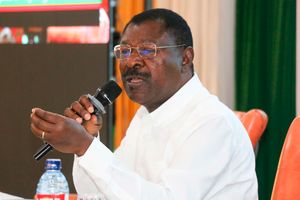
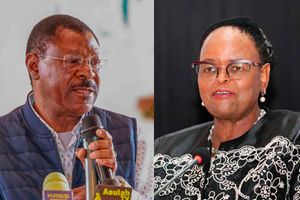
By the account of the Speaker of the National Assembly, Moses Wetang’ula, a teacher’s job costs Sh400,000, paid to a Member of Parliament for a blank appointment letter he was handed free at State House and was meant to pass on, for free to a qualified young graduate.
Hold that figure in mind while considering what the Independent Electoral and Boundaries Commission (IEBC) clarified this week.
The commission has announced that a court decision means the university degree requirement for anyone seeking elective office has been done away with, and the country has spent the days since arguing about education. It is the wrong argument. The decision matters less for the qualification it removes than for the question it forces, which is what now stands between a Kenyan and the exercise of public power.
The threshold that fell was a weak one. It measured attendance rather than judgment, and it never once measured honesty. It governed three election cycles and certified a great many leaders who went on to govern badly, along with a few who simply bought the paperwork. Anyone mourning it is mourning a filter that filtered very little.
What makes the removal of the condition consequential is the condition of everything standing behind it. Chapter Six of the Constitution was written to hold public officers to standards of integrity, competence and suitability for office.
It has been applied thinly since the day it took effect, and vetting has settled into an inspection of documents rather than of character. One bar came down this week in a system where the higher bars were never raised.
The framers had their reasons. They wanted the people who set the national agenda to have some grounding in the machinery they would run, and the rule worked on the country’s habits.
Aspirants went back to class, many of them grudgingly. Others forged certificates, which is a backhanded sort of respect. Politicians who wanted the seat found themselves talking about the schools in their own backyards.
Begin, then, with what the rule never fixed. Many voters believe their MP builds the highway through the constituency, when the work belongs to the roads agencies. A road opens during a legislator’s term and the credit attaches to the legislator.
Mwingi Central MP Gideon Mulyungi reportedly recently threatened to stop a Canadian aid organisation from sinking boreholes in his constituency because it had not consulted him. The thirsty crowd in front of him cheered. He has an education.
Prof Githu Muigai has put the counterargument in its sharpest form. A Kenyan who scores a mean grade of E in the secondary school examination has every right to apply to a public university. No university will admit him, because the institution sets a cut-off.
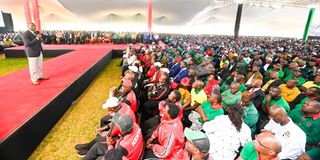
President William Ruto and Deputy President Kithure Kindiki meet teachers at State House, Nairobi on September 13, 2025.
Photo credit: Pool
Should the same man sue for the right to open a patient on a table, he would lose, because entry to that profession carries conditions written to protect the person on the table. Politics, Prof Muigai argues, is no less consequential. A rusty scalpel does damage either way.
Sheila Masinde, executive director of Transparency International Kenya, accepts the force of that and still declines the framing.
“A degree, on its own, is neither a certificate of integrity nor a guarantee of competent leadership,” she said. “Equally, the absence of a degree should not automatically be equated with incompetence, dishonesty or unfitness for public office.”
“The danger, therefore, is not that Kenyans without university degrees will participate in leadership,” Masinde said. “The danger is that we may lower one eligibility threshold without strengthening the constitutional safeguards that should prevent persons with demonstrable integrity concerns, history of corruption, abuse of office, electoral offences or other serious ethical shortcomings from occupying public office.”
Qualifications may no longer be required, but a forged certificate was always a separate matter; a question of character rather than of eligibility. She warns too against the snobbery running through this argument on both sides.
“Highly educated persons can engage in corruption and abuse of office just as those without university degrees can provide exemplary public service,” she said.
The real problem has a name in Kenya, and the name is a question.
In 1994, Magayu Magayu published a short story called “Do You Know Anybody?” A man goes to a public hospital, cannot produce a connection and dies waiting. The phrase entered the language as shorthand for a country where a job, a licence, a hospital bed or a birth certificate moves according to who can be telephoned rather than what the law provides.
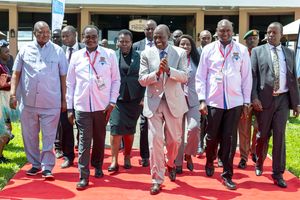
President William Ruto reportedly promised to allocate teaching jobs letters to followers of the Akorino Church at State House.
Teachers Service Commission (TSC) headquarters in Upper Hill, Nairobi.
Photo credit: File | Nation Media Group
The Deputy President promised elders that those who had lost their jobs would get them back. Then Wetang'ula explained the mechanics. MPs he takes to State House are handed 10 blank letters apiece for qualified constituents. By his own account, they do not hand them on. They sell them at Sh400,000 each. The commission denies that any of this happens.
Consider what that account contains. An independent commission’s hiring power was absorbed by the executive, then converted into currency by legislators. The outrage that followed concerned the price.
The usurpation went almost unremarked, which tells you how ordinary the arrangement has become. Teachers who filed applications and waited their turn watch classmates posted within weeks of graduation.
Families sell inherited land to buy a job that is supposed to cost nothing. Nor is the practice confined to the schools. Admission letters are said to be for sale across the civil service, the Kenya Defence Forces, the National Police Service, the traffic police and the National Intelligence Service.
“We are literally experiencing a moment where our country is being auctioned,” said Mwaura Kabata, a former vice president of the Law Society of Kenya. “Qualified Kenyan professionals cannot get into national service without greasing palms of politicians.”
The people who pay for it, he added, are those at the receiving end of the service, “from children in education to members of the public.”
What unsettles him is the silence that followed. “If the Speaker of the National Assembly can admit this and not a single investigation is mounted on him and those embarrassing legislators, then where is our country heading,” he said. “What is the use of formal education and professionalism if there exists a shortcut to success?”