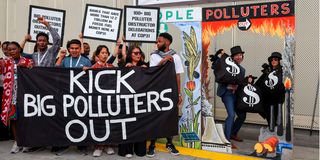
Barely a week into the 31st Conference of Parties (COP31) in Antalya, Türkiye, the annual climate summit has settled into what has become an all too familiar rhythm, with delegates disagreeing on the agenda way before the meeting kicked off.
On Monday, the negotiators finally adopted the summit’s formal agenda but without a separate item sought by African countries on tripling adaptation finance.
As far as COP processes go, the issue may still be discussed elsewhere, but it will not come with the force of a formal item. That means there will be no dedicated process to settle what the pledge means, how it will be delivered or how progress will be measured.
For the casual observer, this may look like too much ado about nothing. But in multilateral negotiations, what makes it onto the agenda often attracts the requisite diplomatic bandwidth to move it forward.
While success is never guaranteed, items on the agenda are assigned a formal process, a timetable and, eventually, a measure of accountability.
What is left out may still be discussed, but it is easier to postpone and ignore.
Indeed, for Africa, the dispute goes to the heart of whether COP31 can move the world from mere commitments to changes people can see and feel in their daily lives.
And there is no shortage of evidence that even formal pledges at these annual gatherings, can still fall through the cracks, with little or no follow up.
At COP 30 in Belém last year, for instance, countries agreed to pursue at least a tripling of adaptation finance by 2035.
But a year later, there is still no agreement on the baseline, the amount, how the money will be delivered or how progress will be measured. That is why African negotiators are pushing to secure those details in a political text that could set the direction of the Antalya summit.
And the scale of the financing gap is staggering. The United Nations Environment Programme (Unep) estimates that developing countries will need about $305 billion a year for adaptation by 2035. Yet international public adaptation finance flows reached only $28.2 billion–31.7 billion in 2024. This means that even if the tripling aspiration is met, it would cover only 20–29 per cent of projected need.
For East Africa, every delayed promise or broken pledge translates to real harm in daily lives.
One season of floods or failed rains can wipe out a harvest, damage a feeder road or deplete a household’s hard-earned savings.
This is why African delegates attending COP 31 must not relent in demanding justice for the continent. And they must not settle for blanket pledges with no accountability mechanisms.
First, they must insist that adaptation finance becomes measurable. Countries need to agree what the tripling is measured against, when the money must be delivered and how progress will be reviewed.
They must also consider the kind of finance on offer. Loans, for example, may help fund some investments, but they also serve to deepen the debt pressures that already limit climate action in many countries.
Further, money that is difficult to access or arrives after a disaster will do little for the communities that need it most.
The energy debate presents another test for the Antalya meeting. Türkiye’s “35 by 35” initiative seeks to raise electricity’s share of global energy consumption from about 23 per cent to 35 per cent by 2035.
The idea is to accelerate the shift towards electric technologies in key sectors such as transportation, buildings and industrial processes.
East Africa has an advantage here. In Kenya, geothermal, hydro and wind account for up to 90 per cent of the country’ s interconnected electricity generation. Uganda’s grid generated 89 per cent of its electricity from hydro-power in 2025.
This is a strong renewable base, but it also increases the region’s exposure to climate harm due to its dependence on reliable rainfall and other weather patterns. That is why the region must treat climate resilience as a question of energy security.
But the deeper dispute in Antalya is over fossil fuels. At COP28, countries agreed to transition away from fossil fuels in energy systems. COP30 did not secure explicit phase-out language in its negotiated outcome. Brazil’s presidency has since developed a roadmap for implementing the transition, but countries are divided over whether it should be recognised in a COP31 political decision.
In East Africa, this cannot be treated as a distant debate. Uganda and Tanzania for instance, are advancing the East African Crude Oil Pipeline, while governments across the region continue to weigh hydrocarbons as a route to development.
To be sure, the argument for fairness is legitimate and cannot be wished away. African countries have the right to develop, just as wealthier countries did.
But in light of a possible global shift in the coming decades, African governments must also consider whether these new oil and gas investments could leave them with stranded assets and fewer resources to build a cleaner economy.
Of course, COP31 cannot resolve every disagreement. But with one week already gone , the growing danger seems to be that the summit could leave the hardest questions to COP32 which is scheduled for Addis Ababa, Ethiopia in 2027.
That would be a costly deferral and a bitter irony, because every question Antalya postpones, will be inherited by an African COP presidency, with less time to act and the stakes higher still.
Dr Ageyo is the Editor in Chief of Nation Media Group - Uganda. He holds a PhD in media studies with research interests in science, environment and climate change communication