In East Africa, we now know, thanks to the El Niño predictions, that the weather has a way of resisting neat headlines.
Predictions often do not seem to pan out as expected; rainfall does not arrive everywhere at once, and it may never arrive where it is most anticipated.
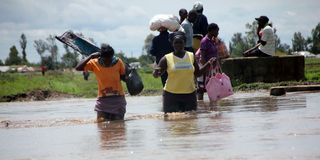
But the arrival of rainfall and how much of it hits the ground are not the only measures of what El Niño seasons portend.
Yet, in most public conversations, the main questions surrounding this season’s El Niño have largely been framed in terms of whether the rains have arrived, and whether the meteorologists got it right.
A new report released by two international bodies, however, is seeking to widen the debate as East African countries prepare for this year’s climate summit in Türkiye.
The Food and Agriculture Organization of the United Nations (FAO), and the Intergovernmental Authority on Development (Igad) are warning that heavy rain and flooding could increase the risk of Rift Valley fever across Eastern Africa.
This means that governments should not just prepare for more rains and possible flooding, but, rather, they should expand their plans to cover medium- to longer-term indirect impacts of El Niño such as disease and other disruptions.
FAO and Igad identify Ethiopia, Kenya, Somalia, South Sudan, Tanzania and Uganda as facing the highest current risk. They say the risk is also rising in Burundi and Rwanda.
Of course, the FAO and Igad alert does not declare that an outbreak is inevitable, but it does indicate that conditions favourable to transmission of the disease are expected to increase between October and January 2027, and that governments should act while there is still time.
And that is the real purpose of an early warning - an opportunity to take action before it is too late.
Rift Valley fever is a viral disease that can threaten human health, kill young animals, cause abortions in livestock and undermine the livelihoods that communities depend on. It affects cattle, sheep, goats and camels, and can sometimes infect people as well.
Indeed, the route from rain to disease is not mysterious, yet it is easy to overlook. The virus that causes the disease is spread by mosquitoes, which tend to find more breeding sites during flooding. Heavy rains can also disrupt veterinary services and make it harder to monitor animals or reach affected communities. And if the virus is present, livestock movements may help it spread faster. This means that a forecast of this nature is rarely ever just about the weather. It is almost always a health and economic warning as well.
That is because whenever a disease such as Rift Valley fever is allowed to spread among livestock, farmers and pastoralists lose animals and income, and the people who handle infected animals may also become ill. Those losses in turn, affect food supplies, household security and public health.
The forecast should, therefore, enable authorities to put in place protective measures long before cases appear. For instance, they can monitor animal illness, prepare vaccines and supplies, alert livestock keepers, and coordinate across borders, without the frenzy of an active crisis.
For Eastern Africa, history has compelling lessons to draw from. In the 1997–98 El Niño, exceptionally heavy rain and flooding in parts of Kenya and Somalia accompanied one of the largest ever recorded Rift Valley fever outbreaks in the region.
The outbreaks affected millions of domestic animals and devastated pastoralist economies and herds. The strict regional and international animal quarantine and trade restrictions that followed only served to compound the painful losses.
While the forecast does not guarantee that this history will repeat itself, it is a stark reminder that the risk is real and should be taken seriously.
FAO and Igad are urging countries to strengthen risk-based surveillance, prepare vaccines and essential supplies, and coordinate across sectors and borders. That means health and environmental agencies in the whole region must share information and act together.
For pastoralists, farmers and other people who handle livestock, preparation must include clear, practical advice. People should know how to report unusual animal illness, how to reduce mosquito bites and how to handle sick animals, carcasses and animal products safely.
Those messages must reach communities in forms and languages they can use, and not remain inside technical alerts shared between agencies.
At the same time, authorities need to make surveillance, vaccination and protective supplies accessible before floods make movement more difficult.
For sure, residents should wait for the rains to enable them to plant their crops and get nourishment for livestock. But the larger lesson for the region is that the adverse impacts may not stop with the heavy downpours and the ensuing deluges, whenever they will show up.
Instead, the effects may move through food systems, public health, transport, water and livelihoods.
That is why the real test for the FAO and Igad early warning must be whether it is used to help people and institutions reduce foreseeable harm.
Dr Ageyo is the Editor-in-Chief of Nation Media Group - Uganda. He holds a PhD in media studies with research interests in science, environment and climate change communication.