When the World Bank’s arbitration body begins hearing a case filed by Travizory Border Security SA, Kenya will face a twin test: to fend off a Sh2.2 billion claim by the Swiss firm, or risk exposing governance weaknesses that similar cases have previously laid bare in the same forum.
Travizory was at the centre of President William Ruto’s ambitious plan to convert Kenya into a visa-free country.
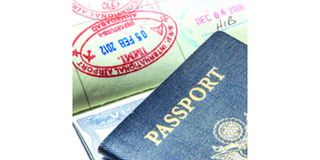
Through that plan, foreign nationals would, instead of applying for visas capped by a specific period, they would seek electronic travel authorisation (ETA) just days before departing for Kenya.
The Swiss firm approached Kenya on October 3, 2023 through a Privately Initiated Proposal (PIP) "for the design, building, owning and operating a next generation integrated Border Management System".
After Kenya terminated its relationship with the Swiss firm, it filed the arbitration claim.
Travizory filed a claim before the International Centre for Settlement of Investment Disputes (ICSID) – an arbitration body under the World Bank – on December 16, 2025 and later nominated British-American Cyrus Benson as arbitrator.
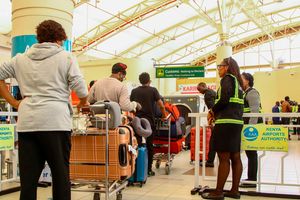
A Swiss firm’s ETA contract with Kenya attracted controversy, with questions over the procurement process and secrecy in payment terms.
Photo credit: File
On February 26, Mr Benson accepted his nomination by Travizory. The next move is for Kenya to approve or disagree with Mr Benson’s nomination.
While the World Bank website indicates the nomination by Travizory and Mr Benson’s acceptance, it is still unclear whether Kenya has accepted or objected to the British-American, who is a partner in the London office of law firm Gibson, Dunn & Crutcher.
Attorney-General Dorcas Oduor, the principal legal advisor to the government and its chief legal representative, did not respond to our queries by the time of going to press.
The Swiss firm’s ETA contract with Kenya attracted controversy, with questions over the procurement process and secrecy in payment terms.
Next week, Travizory enters another round of controversy, but 2,100 kilometres from Nairobi.
Seychelles President Patrick Herminie is expected to unveil a commission of inquiry into Travizory over a similar border management system, in which the country could have lost an equivalent of Sh587.3 million.
On January 27, President Herminie promised his citizens the investigation into Travizory during a State of the Nation address.
Attorney-General Dorcas Oduor.
Photo credit: File | Nation Media Group
"Soon, we will witness the swearing-in of the judge who will lead the investigation into Travizory, a company whose contract was a major fraud and which today owes the State 65 million rupees – all arising under the previous administration," the Seychellois President said in his address.
In Nairobi, only the eyes of very few high ranking government officers have been laid on the documents Travizory filed at The Hague-based arbitration body.
A government official not authorised to speak publicly on the matter, but who is aware of the case, said that the arbitration documents cannot be made public as the process includes a confidentiality clause. "Very few people in government are privy and they cannot share it for now," the officer said.
While Travizory’s claim remains a secret, confidential documents seen by the Nation indicate that the Swiss firm sent the government an invoice for $17.237 million (Sh2.2 billion) from the Kenyan Government on April 2, 2025.
That means that the firm’s primary claim is likely for payment of the Sh2.2 billion it claims was owed at the time of contract termination.
Before the matter was filed, Travizory had accused the government of moving to a system that was corrupted off of the Swiss firm’s software, and indication that it could have claimed damages for the same.
The ETA project was one of the first projects in which the Kenya Kwanza administration chose to use the software as a service (SaaS) model. Under this model, vendors lease or subscribe to software developed or owned by another firm for a specific period, rather than purchase the same.
Auditor-General Nancy Gathungu.
Photo credit: File | Nation
But the relationship went sour after Kenya dumped Travizory and went for another system whose developer and owner the Interior ministry is yet to make public. That system is housed on the eCitizen platform.
In its April, 2025 demand for payment, Travizory demanded $9.275 million (Sh1.204 billion) in fees for processing security data of 4.032 million applicants between January, 2024 and March, 2025.
It also included $2.612 million (Sh339.3 million) for service provider fees. Travizory charged the fees for processing 246,098 ETAs in the same period.
Travizory also billed Kenya for a governance lapse. The firm demanded $2.971 million (Sh386 million) for operating without a contract for three months to March, 2025.
Just a month before Travizory issued the Sh2.2 billion invoice, then PS for the State Department of Citizen Services, Prof Julius Bitok, pleaded with the Swiss firm to release funds collected from ETA applicants between January, 2024 and March, 2025.
Auditor-General Nancy Gathungu in her report on the Interior ministry for the financial year ending June, 2025 says that Travizory failed to remit Sh927 million collected from ETA applicants.