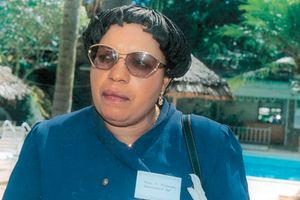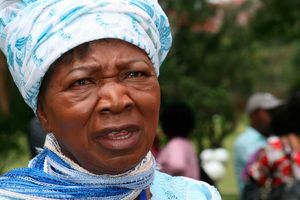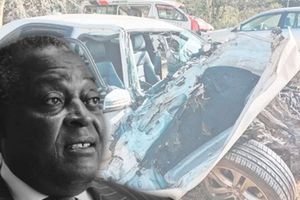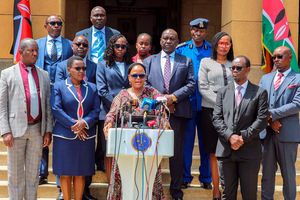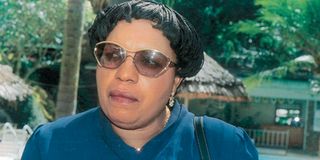
Catherine Nyamato is revered as the first Gusii woman to break the patriarchal ceiling in the 1990s by entering Parliament, though through nomination by the then ruling party, Kanu.

Today, Kenya’s National Assembly has a large number of women, albeit still below the constitutional requirement. This was not always the case. When Catherine Nyamato was nominated as an MP fresh from participating in the United Nations Fourth Conference on Women in Beijing in 1995, she was only one of four women in parliament.
In fact, Nyamato made history by becoming the first woman from Gusii (Nyamira and Kisii counties) to serve as a nominated Member of Parliament between 1995 and 1997.
Many people of our generation still recall her vibrant campaign to represent the people of West Mugirango as their MP in 1992. As a woman running on an opposition ticket, the Democratic Party of Kenya, at the height of the Kanu autocracy, this was an onerous task. Now add to this the male chauvinism and cultural stereotypes of Gusii. It took a brave heart to take on autocracy and misogyny at the same time. But this is who Nyamato was. A brave and courageous woman who continued to speak the truth, challenged cultural norms and shattered stereotypes on women in power.
Let us be clear. It was not easy, and it came at a great cost to her and her family. They first used sexual slurs against her and accused her of being a divorcee, like they insulted all other women in the democratic movement. When this did not work as she was openly dotted on by her late husband John Silas Nyamato and their children, Ernest, Peter, Roselyn, Maureen and Judy, she was accused of “sitting on her husband” and even of gender-based violence against him.
What an ironic accusation for a woman who consistently advocated against GBV! At the National Assembly, she used her platform to break the cultural barriers to women’s leadership and advocated for girls’ education at a time when boys were largely favoured over girls.
Working with communities in Kisii, Nyamira, Kuria and other parts of the country, she advocated for an end to the cultural practice of female genital mutilation, early or child marriages, sexual and gender-based violence, elder abuse, and the lynching of older persons – especially women in Gusii.
Over the years, Nyamato supported widows and single mothers who knew that she was one of the few who would give them a listening ear and pathways to economic empowerment. Her brilliance, wisdom, charisma, resourcefulness, humility, kindness, and generosity, without expecting anything in return, were unparalleled.
She educated numerous students and opened her home to many more. We recall a story she told us of how arsonists burnt down her farm in Chemelil during the 2007/8 post-election violence. By their own confession, some of the arsonists were her farm workers whose children she was educating. This did not deter them from asking for Nyamato’s help and profusely seeking forgiveness. She obliged and paid the school fees. Nyamato was a dedicated proponent of democracy and championed the need to create space for women’s participation in political and other areas of leadership. She inspired and mentored a great number of women of all ages, authors of this article included, who remember and fondly refer to her as Mama Catherine.
She founded, led, and participated in several grassroots, national, regional, and international organisations.
They include the Federation of Women Groups, which was probably among the first non-governmental organisations in Kenya to attain United Nations Consultative Status. She was also a respected and effective leader in the Kenya Chapter of the international, Women in Democracy movement, where she mentored several women around the world on democracy and leadership. Her role in advocacy for the 2010 Constitution cannot go unnoticed. She was an advocate for the gender rule now ingrained in our Constitution.
A politician par excellence, she was a founding member of the Kenya Women Political Caucus and political parties such as the United Green Movement.
Nyamato was also a woman of faith, a staunch practising Catholic whose faith guided her in her purpose-driven, bold leadership and work in the communities that she served. While we remember, honour and celebrate her posthumously, we also acknowledge that she was the classic example of how women who stand up and speak out against harmful cultural practices and discriminatory and oppressive systems suffer fierce social backlash.
Nyamato suffered the brunt of misogynistic backlash from men and women for vying for elective political leadership positions. The propaganda machinery that was used against her over the years ranged from vicious, deeply personal attacks aimed at tarnishing her reputation and demeaning her in the eyes of the electorate and her family. For this, we owe Mama Catherine an apology.
An apology for going against the grain and shattering the glass ceiling so we may stand on her shoulders.
Despite it all, Nyamato persisted in her commitment to the causes that she believed in. Most recently, she stood in solidarity with the Utu Coalition during the Covid pandemic to defend the rights and dignity of the four women who were lynched in Marani, Kisii County. She was also vocal against the abductions and killings following the GenZ protests.
We express deep gratitude to Nyamato for all the great work that she did to uplift the lives of the most vulnerable among us.
We also extend a long-overdue apology to Mama Catherine for the insults, lies, and malice of the propaganda machinery that were fashioned to make her leadership invisible and irrelevant.
We pass our condolences to her children and other loved ones and thank them profusely for sharing their mother with the world. She was a great light to many and will be missed immensely.
We are honoured to have known, worked with, and been loved by Mama Catherine.
Dr Roselyn Akombe is a Governance and Peacebuilding practitioner in New York, while Dr A. Kerubo Abuya is Adjunct Faculty, Transformative Leadership Program, California Institute of Integral Studies.