In each of the four gospels of the Bible, the climax of the narrative is the passion and violent death of Jesus of Nazareth, believed by his followers to have come back to life as the Christ or Redeemer. Later, Christian liturgists summarised this tenet in the formula: “Christ has died, Christ is risen, Christ will come again”, encompassing the past, present and future.
The holiest and most solemn days in the calendar of the Church bear the name Easter or Paschal Triduum. They begin on the evening of Holy Thursday with the celebration of the Lord’s Supper and end on Easter Sunday during evening prayer.
While some disciples of Jesus saw him as the quintessential, silent victim in the face of injustice (Acts 8:13), other followers portray him as a courageous, non-violent defender of the truth and of the oppressed. During his appearance before the high priest, Jesus protested the violence against him and demanded:“If I have spoken the truth, why do you strike me?” (John 18:23)
In the stories of his trial before Jewish religious leaders and Roman authorities, he tells the truth not only as-is but also as-it-ought-to-be. He not only claims to speak the truth, but also asserts that he has lived by the same truth (John 18:20). It is this courage and consistency between word and action that has inspired many leaders, especially those of the non-violent movement.
This type of integrated agreement between word and action is found in moral authorities including St. Josephine Bakhita, St Teresa of Kolkata and the Servant of God Maurice Cardinal Otunga.
Christ as a person of integrity, who lived what he believed, is found not only in Christian holy writ but also in extra-biblical writings. One of the best-known sources about Jesus outside of the Bible is his mention by the Jewish historian Flavius Josephus. Writing in his book Antiquities of the Jews around 94 CE, this scholar refers to Jesus twice. First, Josephus describes Jesus as “a wise teacher who performed marvellous works and was crucified by Pilate” (Antiquities, 18). Later, the respected historian mentions the killing of James, “the brother of Jesus who was called Christ”. Most scholars regard these references as authentic and not subsequent interpolations or additions.
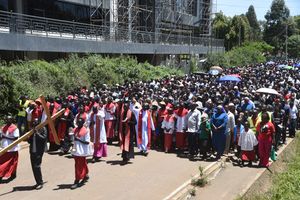
Catholic faithful enact Jesus Christ suffering during a solemn Way of the Cross procession from Holy Family Basilica through Nairobi’s central business district on April 3, 2026. Clergy and worshippers carry a large wooden cross as they reenact the Passion of Christ during Good Friday.
Photo credit: Wilfred Nyangaresi| Nation Media Group
Various schools of thought have responded in different ways to the story of the crucifixion and resurrection of Jesus and the meaning of these events. From the outset, there were doubters who considered coming back to life as simply impossible. From Europe and North America, the very regions that sent missionaries to Africa, there have always been schools of thought that are sceptical and even hostile to the idea of the resurrection. One formulation of this approach is the God is dead theology. That philosophical and theological movement had its origins in the thinking of Friedrich Nietzsche (1844-1900) and discounts the almighty God of Christianity, including claims of the resurrection of Jesus.
Resurrection, second coming
Sceptics of the resurrection are to be found in our own lands. Commenting on the death of Jesus, the celebrated poet Okot ‘p Bitek, in “African Religions in Western Scholarship”, asks: “If his father wants him to die for others, why does Jesus cry on the cross: ‘My God, my God, why hast thou forsaken me’?”.
There are defenders of the resurrection in the African condition. Philosopher-cum-theologian John S. Mbiti argues in “New Testament Eschatology in an African Background” that Africans already knew God as their creator, parent and provider before the coming of missionaries from the West. The radically new proclamation by the evangelisers was the resurrection and second coming of Jesus Christ.
Easter is a time to reflect on, interrogate and celebrate basic religious beliefs. We live in a world that is experiencing the negative consequences of armed conflict. In Kenya, there are signs of anxiety as the country gears towards the 2027 General Election.
Therefore, we all need to pursue the path of justice and peace championed by the Risen Christ, whose first words were: “Peace be with you!” (John 20:21).
The first article of creed announced and celebrated by the apostles was the resurrection of Jesus as the Christ.
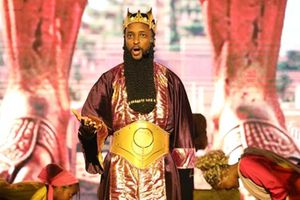
A portrait of Jesus Christ.
Photo credit: Pool
We live in a world that is experiencing the negative consequences of armed conflict, including the US-Israel war against Iran. In Kenya, there are signs of anxiety as the country gears towards the 2027 General Election.
Therefore, we all need to pursue the path of justice and peace championed by the Risen Christ, whose first words were: “Peace be with you!” (John 20:21).