I join leaders of our nation and colleagues at the Bar in mourning the passing of Justice Mohamed Kadhar Ibrahim, a serving Judge of the Supreme Court of Kenya. His death marks the loss of a jurist who understood, perhaps more keenly than most, the solemn burden of judgment and the humility required of those entrusted with it.
Judging is a sacred task. Judges occupy that rare and hallowed space where human beings, conscious of their own fallibility, are nevertheless called upon to decide the fate of others. Islam, the faith to which Justice Ibrahim belonged, captures the gravity of this responsibility with striking clarity.
It teaches that judges fall into three categories: only one is destined for Paradise, the judge who knows what is right and judges accordingly; the others are condemned for tyranny or ignorance. It is a sobering reminder that the law is not merely a profession, but a moral calling.
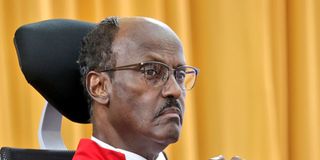
Supreme Court Judge Mohamed Ibrahim at the Supreme Court of Kenya on August 28, 2017.
Photo credit: File | Nation Media Group
Justice Ibrahim belonged to that first and rare category. At the High Court, and later at the Supreme Court of Kenya, he discharged his duties with honesty, independence, and an unwavering commitment to justice as he understood it. He neither courted popularity nor bowed to expedience. His judgments reflected careful thought, moral seriousness, and fidelity to the rule of law.
Throughout his career, Justice Ibrahim resisted the familiar temptations of power, fame, and fortune that so often beset public life in our country.
He was, by temperament and conduct, among the most humble judges ever to serve in Kenya’s Superior Courts. Yet his humility never translated into timidity. He was courageous when courage was costly. During the struggle for Kenya’s Second Liberation, Mohamed Ibrahim, then an advocate, was detained without trial in July 1990, a testament to his principled commitment to justice even beyond the courtroom.
Perhaps most telling of his character was his attitude toward accountability. Justice Ibrahim was a judge who did not fear scrutiny, nor resent criticism.
When questioned by the Vetting of Judges and Magistrates Board over a backlog of judgments, arising in the context of ill-health and overwhelming workload, he responded not with defensiveness or evasion, but with candour, responsibility, and remorse. He acknowledged his shortcomings, accepted fault, and expressed sincere regret to the litigants affected. Such humility is rare; among judges, it is exceptional.
Justice Ibrahim’s life and career stand as a quiet rebuke to arrogance in office and a powerful reminder that greatness in judging lies not in infallibility, but in integrity. He served Kenya with distinction, competence, honesty, fearlessness, and deep conscientiousness.
That his passing coincides with the conclusion of his service at the apex court invites reflection on a life faithfully lived. In the words of Scripture, Justice Ibrahim fought the good fight, finished the race, and kept the faith.
May Allah grant Eternal Peace to the Soul of Justice Mohamed Kadhar Ibrahim, and may his example continue to guide those entrusted with the heavy responsibility of judging others.