Premium
Solve varsities’ mess

University education is a vital source of the high-calibre manpower that the country needs for its development. However, this is only possible if it is offered by credible institutions that guarantee quality training for the learners to gain the knowledge, skills and expertise.
There has lately been a proliferation of universities, both public and private, whose number is now estimated at 80, and some of which have questionable capacity in facilities, management and staffing.
At stake, especially in the poorly run public universities, is the fate of more than 400,000 students or 60 per cent of the total enrolment.


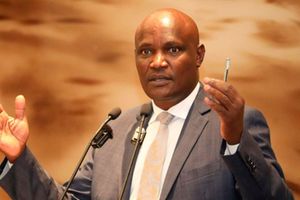
Education Cabinet Secretary Julius Ogamba has told the National Assembly’s Public Investments Committee on Governance and Education that 21 out of the existing 43 public universities are actually non-performing. And he has blamed political patronage and ethnic considerations in the appointment of vice-chancellors and university council members.
To rectify this, he says members of the university councils have to undergo background checks to determine their suitability.
While 20 of the universities are doing well, the CS is concerned that 21 institutions are not and yet they have more than 60 per cent or 400,000 out of the enrolment of more than 800,000 students.
The question that arises is what to do with that huge number of students should these poorly managed institutions be axed by the government.
Auditor-General Nancy Gathungu has also questioned why some of the universities are operating without councils and are in violation of the ethnic and gender balance requirement in staffing and appointments.
One of the measures the Education ministry is taking is to ensure that the applicants for appointment to university councils are vetted to determine their qualifications and suitability.
There is a need to ensure that the right people are chosen to efficiently run these institutions and realise their key mandate of providing quality manpower training.