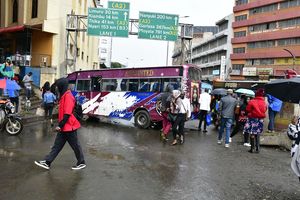
As Nairobi awakens each morning to the familiar symphony of car horns and diesel fumes, millions of our citizens navigate a city that has forgotten how to walk.
I remember my early school days taking a matatu from Ridgeways to Muthaiga Primary School, a mere five-kilometer journey that should have been perfect for a morning walk through Karura Forest.
Instead, we would sometimes spend over an hour trapped in traffic, covering a distance that takes just seven minutes in the absence of congestion.
This is not merely about convenience. The absence of proper pedestrian walkways represents a public health crisis, safety nightmare, and economic miscalculation that demands immediate attention.
Just as we recognise the urgent need for proper drainage systems or metro infrastructure, walkable pathways are equally fundamental to our city's survival.
The current state is dangerous in multiple ways. Where walkways exist, they've become crime hotspots because they're neglected and poorly lit, with even police dismissing them as places "no serious person would use."
This creates a vicious cycle: petty thieves exploit abandoned infrastructure, making walking even less attractive, further reducing foot traffic, and creating more opportunities for crime.
Yet this very problem proves that investing in pedestrian infrastructure isn't just about mobility but about urban security through design.
Adults in walkable neighborhoods are 1.5 times more likely to engage in adequate physical activity and significantly less likely to suffer obesity, diabetes, and heart disease.
For Nairobi, where non-communicable diseases are rising rapidly, this represents preventive healthcare that costs far less than treating lifestyle diseases later.
Mental health benefits are equally profound. Our chaotic transport system: overcrowded matatus and reckless boda bodas weaving through pedestrians in the city centre worsens Nairobi's mounting stress and depression crisis.
The daily battle for matatu space and constant anxiety of navigating dangerous roads take a tremendous psychological toll that peaceful, safe pedestrian infrastructure could significantly alleviate.
The transformation is possible because others have done it. In the 1970s, Dutch cities such as Amsterdam were as car-dominated as Nairobi is today.
Today, Amsterdam has 38 per cent bicycle usage, resulting in far fewer transportation emissions, obesity rates, and traffic fatalities.
Our neighbour too, Rwanda has shown what's possible. Since 2016, Kigali has held bi-weekly car-free days, established 13km of bicycle lanes, and created the permanent "Imbuga City Walk"—a 520-metre car-free corridor in the city centre.
Kigali now records over 1,500 cyclists per hour on major streets, proving that African cities can lead in sustainable urban mobility.
The economic argument is equally compelling. Studies show each additional walkability point increases home values significantly.
For Nairobi, this means investing in walkable neighbourhoods directly increases property values and county revenue.
More fundamentally, walkable cities are more productive cities. When people move efficiently without cars, transportation costs decrease, disposable income increases, and local businesses benefit from foot traffic.
Imagine workers arriving at offices cheerful and energised from a pleasant morning walk, rather than arriving stressed and gloomy after battling with aggressive kamageras.
This mental state directly impacts workplace productivity and the overall economic output of our city.
What can be done immediately? Nairobi County should conduct comprehensive audits and repair the most dangerous walkway sections, prioritizing routes around schools, hospitals, and markets.
Using paint, bollards, and barriers, protected pedestrian corridors can be created rapidly along major roads and streets.
Following Kigali's model, monthly car-free Sundays in the CBD would provide immediate relief.
Most critically, strict enforcement must remove vehicles and vendors illegally occupying existing sidewalks but this requires political good will.
Medium-term actions should focus on creating connected walkway networks linking residential areas to employment centers, ensuring all public transport stations connect through safe walkways, and implementing universal design standards.
A Green Streets Programme incorporating trees and landscaping would address drainage while creating pleasant walking environments.
Long-term vision requires gradually expanding car-free areas beyond the CBD, redesigning major streets to allocate space proportionally to users.
If 60 per cent of road users in Nairobi are pedestrians, they should receive 60 per cent of space, not 10 per cent as is currently the case.
As Kenya's capital and East Africa's economic hub, Nairobi sets regional standards. Our success or failure will influence planning decisions in Kampala, Dar es Salaam, or Addis Ababa.
We have an opportunity to leapfrog car-dependent mistakes and create an African model of sustainable urban development, positioning Kenya as a climate-conscious planning leader.
This systemic failure has made walking stigmatised as poverty when it should represent environmental consciousness and urban sophistication.
In Amsterdam, Copenhagen, and increasingly Kigali, walking and cycling are marks of sophistication, not hardship. We've somehow inverted this logic, making walking dangerous and cycling impossible.
Nairobi's four million residents walk daily, often risking their lives to do so. They deserve better. And the time to act is now.
Let us begin walking toward the Nairobi we need. This open letter represents the urgent voice of Nairobi's pedestrians, the majority who have been rendered invisible in our planning processes for too long.
The writer is a whistleblower, strategy consultant, and a startup mentor, www.nelsonamenya.com