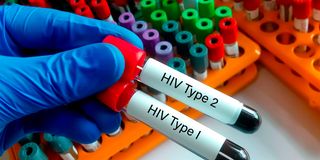
I have long been struck by how readily health conditions are moralised in the workplace, and how rapidly stigma replaces evidence. HIV is one of the most stigmatised conditions. This is despite decades of medical progress and a strong legal framework for the protection of people living with HIV. How does a person’s labour rights diminish because they are living with HIV?
The contentious case, PRJ v Kenya Defence Forces, involved a young man who, after successfully applying to join the KDF, was HIV tested as part of the recruitment process and retested while undergoing training, but without pre- or post-test counselling and without his informed consent, and was then expelled from the training school in public after being informed, in the presence of other recruits, that he was HIV positive.
The Tribunal held that KDF is not exempt from the HIV and Aids Prevention and Control Act, 2006 (HAPCA), and that informed consent and pre- and post-test counselling are required, and that denying a qualified recruit access to employment on the basis of HIV status alone amounts to unlawful discrimination.
The Tribunal found that KDF violated the law through discriminatory exclusion and unlawful testing procedures, awarded damages, and directed the military to review its recruitment policies in light of scientific developments and constitutional values. Being HIV positive is not basis to undermine labour rights of an individual
This decision attracted diverse comments. Some argued that military service should not have to conform to ordinary rules of employment. Others stated that HIV+ as an automatic marker of medical unfitness.
What failed to take centre stage in the public debate were the more fundamental legal questions: whether HIV is, in itself, a health condition that should bar a person from any form of employment; whether an employer has the power to compel HIV testing; whether an employee can be required to disclose their HIV status; or whether termination of employment can lawfully be based on that status.
These questions do not arise in a legal vacuum. They sit within a well-established framework that includes the Constitution of Kenya, the HIV and Aids Prevention and Control Act of 2006, Employment and Labour relations legislation, Data Protection act and a number of decided cases.
Forced and pre-employment HIV testing
In VMK v Catholic University of Eastern Africa, the court examined the treatment of a female employee who, despite doing the same work as her male colleagues, was kept on casual and short-term contracts for more than seven years while the men held permanent positions.
After successfully interviewing for a permanent role, she was required to undergo a medical examination during which she was tested for HIV without her knowledge or consent. Her HIV status was later disclosed to her employer.
From that point, she was denied permanent employment, paid significantly less than her male counterparts, denied paid maternity leave, and eventually dismissed after becoming pregnant. The court found that HIV status is not a basis for denying employment, promotion, or equal pay. Mandatory HIV testing, forced disclosure, unequal pay, denial of maternity leave, and firing based on HIV status or pregnancy are illegal.
Privacy is not optional in employment
Closely linked to HIV testing is the issue of privacy and confidentiality, an area where violations are routine and often deeply damaging. In EMA v World Neighbours and Another, an employee’s HIV status found its way into insurance and employment decisions following disclosure by a medical facility. The routine sharing of HIV status by health providers with insurers had become normalised, despite being discriminatory and unlawful in many circumstances.
The Tribunal went further, declaring insurance exclusions that single out people living with HIV to be illegal and void. HIV status is private, protected, and cannot be shared simply because it is administratively convenient or buried in contractual fine print.
This protection is also reinforced by the Constitution, which guarantees the right to privacy, and by the Data Protection Act, which strictly limits how sensitive personal data, including health information, may be collected, processed, or disclosed. Forced or casual disclosure of HIV status is a constitutional and statutory violation, with legal consequences for institutions that treat personal health data as expendable.
In VM v RS & another, The HIV and AIDS Tribunal examined a case where a domestic worker faced dismissal after her employers directed her to take an HIV test at a selected facility of their choice.
The Tribunal held that a HIV test should not form part of a domestic employment relationship and that there was no evidence that HIV could be transmitted through the preparation of food and that on the facts, the respondent had unlawfully discriminated against the applicant by denying her employment on the basis of her actual or perceived HIV status. The Tribunal awarded damages to the claimant and held that fear and stigma cannot justify the exclusion of a person from employment.
What these court decisions mean
These decisions make one point clear: no employer operates above the Constitution or the law when it comes to HIV. HIV is not a marker of medical unfitness, particularly in light of modern treatment that allows people living with HIV to lead full, productive, and non-infectious lives.
These rulings compel a broader reckoning with outdated recruitment and employment practices and affirm that all employers, civilian, uniformed, public, or private must align their policies with science, dignity, and constitutional safeguards.