“My people perish for lack of knowledge,” prophet Hosea warned. In politics, that ignorance is doubly expensive: it injures the governed and, sooner or later, the leaders themselves. It is therefore useful – if only as an act of political hygiene – to reflect on the common mistakes politicians make, including those of us who imagine ourselves immune to them.
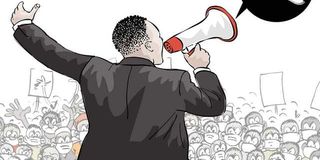
The first and most common error is talking too much when given a microphone. It may be at a wedding, a funeral, a parents’ meeting, a parliamentary debate or the launch of a development project.
Wherever a public address system exists, temptation follows. The longer a politician speaks, the higher the probability of error. Over-promising becomes irresistible and under-delivering almost guaranteed. In politics, promises are like babies – sweet to conceive, painful to deliver.
Long speeches, contrary to popular belief, rarely inspire. Unless one is Fidel Castro or Hugo Chávez – and even then only to the already converted – verbosity numbs audiences into polite boredom. Many politicians assume speeches move people. They do, but only briefly. A speech is like chang’aa: you imbibe it, feel briefly elated and wake up later with a migraine and uncomfortable questions. Only two categories of politicians can afford long speeches: opposition leaders, who have little else but words, and senators, whose constitutional design mercifully shields them from relentless development expectations. For the rest, action must replace argument. Robert Greene captured this bluntly in The 48 Laws of Power: win through actions, not arguments, and always say less than necessary.
Closely related to over-speaking is the undignified habit of begging for applause. A politician should never ask, “Wapi makofi?” If a speech is good, applause will arrive unprompted. If it does not, soliciting it only confirms what the audience already suspects. Requested applause is like forced laughter in a bad sitcom – loud, awkward and deeply revealing.
Equally counter-productive is interrogating the crowd. Questions such as “Are you happy?”, “Do you know so-and-so?”, “Why are you not clapping?” or “Mko na njaa?” adds little value. An audience is not gathered to sit an oral examination. It is there to listen. Excessive questioning often signals a speaker’s inability to read body language and emotional temperature. Wisdom lies in observation, not interrogation.
Then there is the delicate social trap familiar to politicians: the question: “Do you remember me?” A blunt “No” may be honest, but it is politically fatal. Politics demands sociability, not forensic accuracy.
A safer response is polite ambiguity – “This face looks very familiar” – followed by a graceful diversion. In public life, it is often better to preserve goodwill than to protect memory.
Another frequent misstep is excessive self-reference. Leaders should speak less about themselves and more about ideas. First-person language – “I did this, I went there, I studied here” – should be rationed. Public service is not a biography launch. Voters are not interested in your favourite music, your family anecdotes or your academic pedigree. They care about roads, water, schools, health and opportunity. Any leader who repeatedly advertises where they went to school often reveals an insecurity that no degree can cure.
Heckling and booing present another test of political maturity. Most booing comes from small, organised clusters, not the majority. Responding to hecklers only magnifies them, drawing attention away from the silent, attentive audience that matters most. If hostility begins to swell, the wiser course is to shorten the speech and exit. As the Kiswahili proverb advises, one should never wrestle a pig in the mud; you both get dirty, but the pig enjoys it.
Modern politics also suffers from an unhealthy obsession with crowd size. Many politicians insist on speaking only to massive gatherings, often manufactured through mobilisation fees. “Ground iko aje?” “Kuna watu?” “Mobilise.” Artificial crowds distort reality and dull political instincts. They create the illusion of popularity while masking genuine public sentiment. Small gatherings, by contrast, often offer truer feedback. Jesus himself reminded us that many are called, but few are chosen. Five convinced individuals can spread a political message more effectively than a million hired spectators whose principal motivation is lunch. After all, Jesus had only 12 disciples. Two thousand years later, He commands billions of followers.
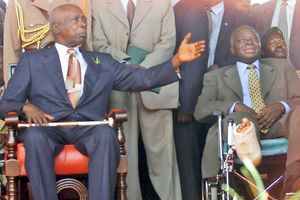
Finally, perhaps the most dangerous mistake is entitlement – the belief that voters owe a leader re-election. That attitude is the seed of autocracy. Leadership is not a right but a trust, renewed periodically at the ballot. Serve because it is morally right and because posterity demands it, but always remember that the people retain the final verdict.
History is unsentimental. Winston Churchill led Britain through its darkest hour and defeated Hitler, yet lost the 1945 election to the unassuming Clement Attlee. Gratitude, it seems, has a short political shelf-life. Closer home, Julius Gikonyo Kiano, the first Kenyan to earn a doctorate, once represented Kiharu. So respected was he that legend credited him with the ability to read minds. Unlike most politicians, he never distributed cash; people donated goats to him out of reverence. By the 1970s, Kiharu enjoyed piped water – then a luxury – largely because of his leadership. Yet he lost to Kenneth Matiba, who bluntly reminded voters that water, however useful, was not milk.
The lesson is sobering but liberating: do good for goodness’ sake. Power passes. Elections surprise. Life moves on. And, somewhere, another baby is born.