Mr Speaker Sir, allow me, first of all, to recognise the wise and sagacious leadership of His Excellency the President. We acknowledge the inspiration he provides on stewardship of our economy, and specifically the Bottom-Up Economic Transformation Agenda, BETA, which forms the pillar of our journey to Singapore.
Establishment of the bread-based, excuse me, broad-based, government has resulted in unparalleled peace and stability. I must extend immense gratitude for the opportunity granted to serve this great nation. A few of us have become living examples of how those previously excluded from the high table through years of marginalisation and discrimination can also get opportunity to enjoy the spoils.
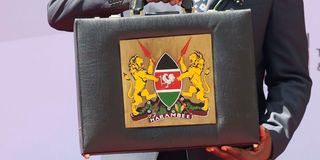
However, Mr Speaker, Sir, after nearly two years in office as Cabinet Secretary for the National Treasury, I have come to the painful realisation that I was handed a poisoned chalice.
Mr Speaker Sir, we can no longer give the rosy picture of an ever-expanding budget, now rising to nearly Sh5 trillion, when the expected revenues nowhere near that amount. Honourable members, we must cut the suit to fit the cloth. We must abandon the profligacy of the past decade and more, and plan only according to available resources rather than political promises.
While we have suffered external shocks outside our control—such as the United States-Israeli war on Iran, the Russian invasion of Ukraine and the Covid-19 pandemic—we will no longer use those factors as excuses, but simply incorporate those realities in our budget-making.
Mr Speaker Sir, for the 2026-27 fiscal year, we had initially forecast a total expenditure of some Sh4.8 trillion, to be financed by estimated revenue of some Sh3.6 trillion, amounting to a projected fiscal deficit of about Sh1.2 trillion.
That budget is not sustainable and must be slashed in accordance with realistic rather than fanciful projections. I therefore propose to reduce the overall spending projections to Sh2.8 trillion, to be financed entirely by tax revenues set at that target.
Mr Speaker Sir, the adjustments we must make will be painful, especially considering a punishing and irresponsible debt burden of around Sh12.9 trillion that forces us to spend more than 50 per cent of our revenue on debt servicing at the expense of investment in health, education, roads, agriculture, water and other productive pursuits.
While making drastic spending cuts elsewhere, we must continue to meet our debt obligations. However, in partnership with development partners and our major creditors, we are carrying out a forensic audit of our debt books. Where we find instances of odious debt, those responsible will be held personally liable. In the meantime, we aim to reduce recurrent expenditure from Sh3.5 trillion to Sh2.5 trillion, while increasing development expenditure from Sh750 billion to Sh1 trillion.
Mr Speaker Sir, a quick look will show, to borrow street jargon, that the “math is not mathing”. Indeed, it might be a Mission Impossible to achieve strict spending cuts while balancing the books and ensuring that critical development and social services are not starved.
The theme for this budget, however, is not simply book-keeping, but principles by which those in leadership must lead by example.
Henceforth, belt-tightening is not for those without belts. We will start with State House and the Office of the Deputy President, where 50 per cent budget cuts can be easily done without impacting essential services. It will be about cutting theft and waste. No more private jets, helicopter flights, obscene motorcades and diversion of public funds to political campaigns. The “confidential” budgets misused by the two offices and some key Cabinet dockets, such as Interior, stand withdrawn.
Similar cuts will be applied to ministerial offices and further downstream. Cabinet secretaries will be limited to one official motor vehicle, locally-assembled, of no more than 1,600cc, with one driver-cum-security officer. Travel will be limited to strictly ministerial functions, with no more public funding of trips for political rallies, funerals and harambee rallies.
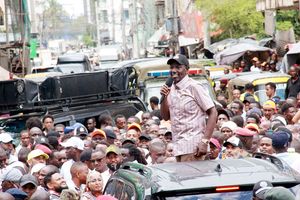
It is also time to remember that the era of roadside policy declarations was supposed to have ended with the single-party dictatorship. Therefore, any individuals promising spending on projects not budgeted for must be taken as liars.
Finally, Mr Speaker Sir, the journey to Singapore is still on. However, we will not get there simply on empty promises, but on moral and cultural reset.
Those leading that journey must be men and women of unmatched skills and unimpeachable integrity. Those who sabotage that journey through waste and plunder will be charged with nothing less than treason, and duly executed if found guilty. Singapore was not built by thieves.
Mr Gaitho, an independent journalist, is former NMG Managing Editor for Special Projects. [email protected]