A first-time visitor to Kenya during an election period might be excused for believing that the country is in a state of free economic fall.
This is because Kenya is scheduled to hold its general and presidential elections on August 10, 2027, and politicians are typically falling over themselves in search of the precious political capital. In such circumstances, it becomes very difficult to separate facts from propaganda.
The reality, however, is that Kenya has shown strong macroeconomic resilience in the last four years (2022-2026), officially retaining its title as East Africa's largest economy by nominal Gross Domestic Product (GDP).
Kenya averaged a steady real GDP growth rate of five per cent between 2022 and 2025, outperforming both the global average (3.3 percent) and sub-Saharan Africa average (3.8 percent).
Globally, Kenya is categorised as a developing lower-middle-income economy, with a nominal GDP ranking sitting consistently between 62nd and 64th largest economy in the world.
While the country ranks highly in overall volume of economic production, its global GDP per capita sits much lower at 148th globally. This reflects the reality that Kenya's economic output is shared across a large growing population, estimated at about 58.98 million, and ranking 26th most populous country in the world. While Kenya's dollar-denominated GDP reached $151.15 billion in 2026, initially surpassing Ethiopia's $127.15 billion (subsequent debasing moved its valuation to $210.70, pushing it above Kenya), the country's real growth rate actually trailed some neighbours. For instance, in 2025/2026, nations such as Ethiopia (9.2 percent), Rwanda (7.4 percent) and Uganda (6.2 percent) recorded faster expansions.
Foreign exchange reserves
Kenya's economy suffered relative neglect in the 2013-2022 decade when little investment was directed to productive sectors (agriculture, manufacturing, tourism, mining, blue economy, services sector and ICT), stunting its growth. Based on IMF October 2026 World Economic Outlook data, Kenya ranks the 7th largest economy in Africa, behind South Africa, Egypt, Nigeria, Ageria, Morocco, and Angola.
Kenya's fortunes have surged over the last four years due to a number of domestic factors. Notably, the Foreign Direct Investment (FDI) inflows achieved record growth, more than doubling to $2.74 billion in the 12 months leading to September 2026. Equally noteworthy is the accumulated foreign exchange reserves, which reached $14.7 billion by late 2026; supplying approximately 5.9 months of imports.
In addition, there has been marked capital attraction. For instance, the Kenya Pipeline Company IPO raised Sh106.3 billion, while the 2026 Africa Forward Summit in Nairobi unlocked over Sh3.5 trillion in income investment pledges. Furthermore, there have been appreciable sector rebounds. For instance, the powerful revival in tourism (over two million arrivals) and double-digit expansions in accommodation and mining have spearheaded the post-Covid-19 resurgence. The resilience of the Kenyan economy over the last four years is largely attributed to its diversified structure and strategic currency actions.
Unlike many African giants (e.g. Nigeria and Angola), the Kenyan economy does not rely on oil or gas exports. Its momentum is supported broadly by tech, financial services, logistics and agriculture. The recovery of the Kenya Shilling against the US Dollar (from Sh160 in 2022 to Sh129 since April 10, 2024) preserved its dollar-denominated valuation.
Contemporaneously, proactive bond buybacks (eg redemption of short-term expensive in favour of longer-term cheaper Eurobonds), and debt restructuring effectively reined-in potential financing distress. These financial engineering arrangements have rescued the Kenyan economy from imminent distress, including offshore loan default that had been forecast.
The economy is not completely out of the woods yet, but there is improvement compared to August 2022. Major credit rating agencies, including Moody's, have upgraded Kenya's creditworthiness, assigning it a B3, with a positive outlook, from the Caa1 (which had denied the country access to low-cost concessional loans). Kenya must, however, not sit on its laurels. To unlock its true potential, and march toward upper-middle income status, the country should focus on improving governance, formalising its economy and expanding regional trade. According to World Bank's 34th Kenya Economic Update, addressing governance flaws and anti-corruption initiatives could boost the country's GDP by upto 20 percent by 2035.
The large informal sector (estimated at about 45 percent of the economy) poses a major concern regarding revenue collection due to poor tax administration reach, causing persistent budget gaps. Consequently, the fiscal consolidation efforts are grossly undermined as the government is forced to continue relying on external loans for budget financing, exacerbating an already worrisome debt distress situation.
Infrastructure developments
Reducing the informal sector will also help in formalising job creation by shifting the labour pool away from its current informality (where 83.8 percent of workers are engaged) towards decent high-productivity formal jobs.
To scale up manufacturing for exports, Kenya needs to actively deepen trade frameworks beyond its traditional EAC market, to encompass the African Continental Free Trade Area (AfCFTA). Currently, EAC is Kenya's single largest export destination, absorbing the lion's share (76 percent-77 percent) of its exports to the African continent.
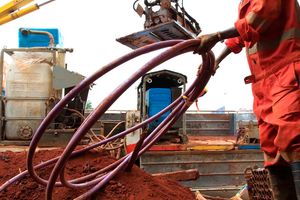
The AfCFTA represents Kenya's broader continental reach, serving as a framework to scale manufacturing value outside EAC strongholds into West, Central and Southern Africa. On average, therefore, Kenya's economy is on an upward trajectory, buoyed largely by infrastructure developments and the affordable housing programmes that are steadily creating employment opportunities across the country.
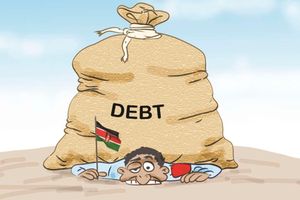
That notwithstanding, several pressures present notable downside risks to the medium-term outlook. The debt distress is a great impediment to the economic expansion as public debt sits above 70 percent of GDP. Interest repayments alone gobble roughly one-third of all government revenues, leaving minimal cushion for governance and developmental infrastructure.
The renewed spikes on fuel and food prices, with inflation climbing to 7.3 percent in late 2026, is already piling pressure on household spending power. Equally critical is the geopolitical and climate externalities. Heightened trade shipping costs from global (Middle Eastern) conflicts, alongside unpredictable weather patterns affecting agricultural yields, remain persistent systemic risks.
Kenya must proactively develop mitigation measures to enhance economic resilience in a highly volatile and unpredictable global landscape. A key element in enhancing economic resilience is the deepening of capital formation, which is extremely sensitive to market-risk information.
Professor Ongore is a Public Finance and Corporate Governance Scholar based at the Technical University of Kenya. [email protected]