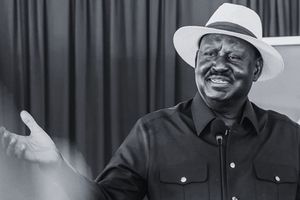
Raila Odinga is damaged goods in progressive circles of Kenya’s politics, but even a broken clock is right twice in a day. His statement on ending the Constituencies Development Fund provides one such occasion.
The Supreme Court and the High Court have twice ruled that the fund is unconstitutional: first because it blurs the separation of executive functions from legislative and oversight roles; and second because it establishes a third site for the delivery of services over and above the national government and the counties.
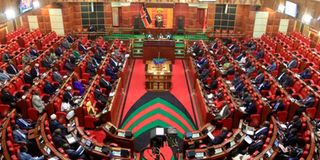
The High Court bench that decided the case filed by Wanjiru Gikonyo against CDF observed that in view of various ongoing projects, and to avoid serious disruption, the fund would cease operations on June 30, 2026. Parliament promised to appeal the decision, even though the chances of success are minimal. That is probably why there are threats by MPs to entrench the fund in the Constitution, however crudely.
CDF has come to epitomise development at the grassroots over the past two decades, emerging as a correction to the punitive political competition that characterised the return of multiparty politics in the 1990s, but it has also evolved its own deformities, which cannot be cured.
The Constituencies Development Fund was created in 2003 to cure the abuse of resource allocation for development to reward political support while punishing opposition. The law creating the fund set aside 2.5 per cent of national revenue for development at the constituency level, which was to be deployed to health and education infrastructure. Although some constituencies chalked up important successes, the fund also became a pork barrel for sitting Members of Parliament and was regularly cited for financial malfeasance in reports by the Auditor-General.
The 2010 Constitution split development mandates between the national and county governments, and decreed that the equitable share of revenue allocated to the county governments shall not be less than 15 per cent, thus dislodging CDF from its perch.
Although devolution through counties cured the historical skewed allocation of development resources that CDF had sought to address, the fund had grown on people -- especially the Members of Parliament who used it as a slush fund to buy public support.
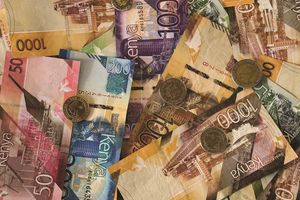
The Sh57 billion allocated to constituencies in this year’s budget not only duplicates functions that are being performed by other government programmes but also intrudes into social mandates that have been constitutionally mandated to the counties. It places MPs at the serving end of the visible eating queue.
The Supreme Court was prescient in observing in 2022 that “allowing legislators any role, even a merely ceremonial role in discharging a mandate that belongs to the executive branch at either the national or the county level, would promote conflict of interest and compromise their oversight role”.
Last year, President William Ruto told MPs: “CDF puts at your disposal close to Sh600 million in your term of five years. Friends, with Sh600 million, if you cannot win an election then ‘wewe ni bure kabisa’ [you are totally worthless].” This is the face of parliamentary corruption.
Kenya’s lived reality provides proof of the danger of CDF, where legislators have taken active flight from their oversight role to hide in so-called development — distributing school bursaries alongside county governors and the Ministry of Education. It is not unusual for the National Assembly to refuse to debate or pass Bills until CDF allocation is released.
The erstwhile patrimonial distribution of development resources at the national level has only been dispersed to 290 centres in the constituencies, where the complaints of favouritism are miniaturised. CDF has provincialised national elected leaders and accustomed them to only look out for what can be directly delivered to their local electors at the constituency, without regard to the damage being wreaked on the national budget.
Besides this major flaw, the implementation of CDF has been fraught with problems. The report of the Auditor-General for the year 2024/25 noted that the National Government Constituencies Development Fund had not complied with laws and regulations. Only 23 out of 290 constituencies received a clean of bill from the Auditor-General, while 263 had a qualified opinion.
Many funds had weak or inadequate internal controls that compromised the accountability. The audit also revealed that the 290 constituencies had Sh26.72 billion in unutilised funds as at June 30, 2024. And because MPs have a constitutional mandate to provide oversight on spending, their involvement in the implementation of projects in constituencies they represent throws up conflicts of interest they cannot reasonably be expected to eschew.
The pathologies of NG-CDF are replicated in other copycat specialised funds, which create multiple expenditure centres that are present opportunities for financial malfeasance. It is not for lack of expertise, but rather because elected leaders insist on having a slush fund to curry favour. In the process, the constitutional duties of representation, oversight and legislation remain unattractive and are left unattended.
The writer is a board member of the Kenya Human Rights Commission and writes in his individual capacity. @kwamchetsi; [email protected]